
FukuokaGuide
Fukuoka Day 1 Itinerary: Airport to Hakata and the Nakasu Yatai Stalls
Free shuttle bus vs. direct city bus choices, noodle firmness ordering formulas, and yatai one-drink etiquette.
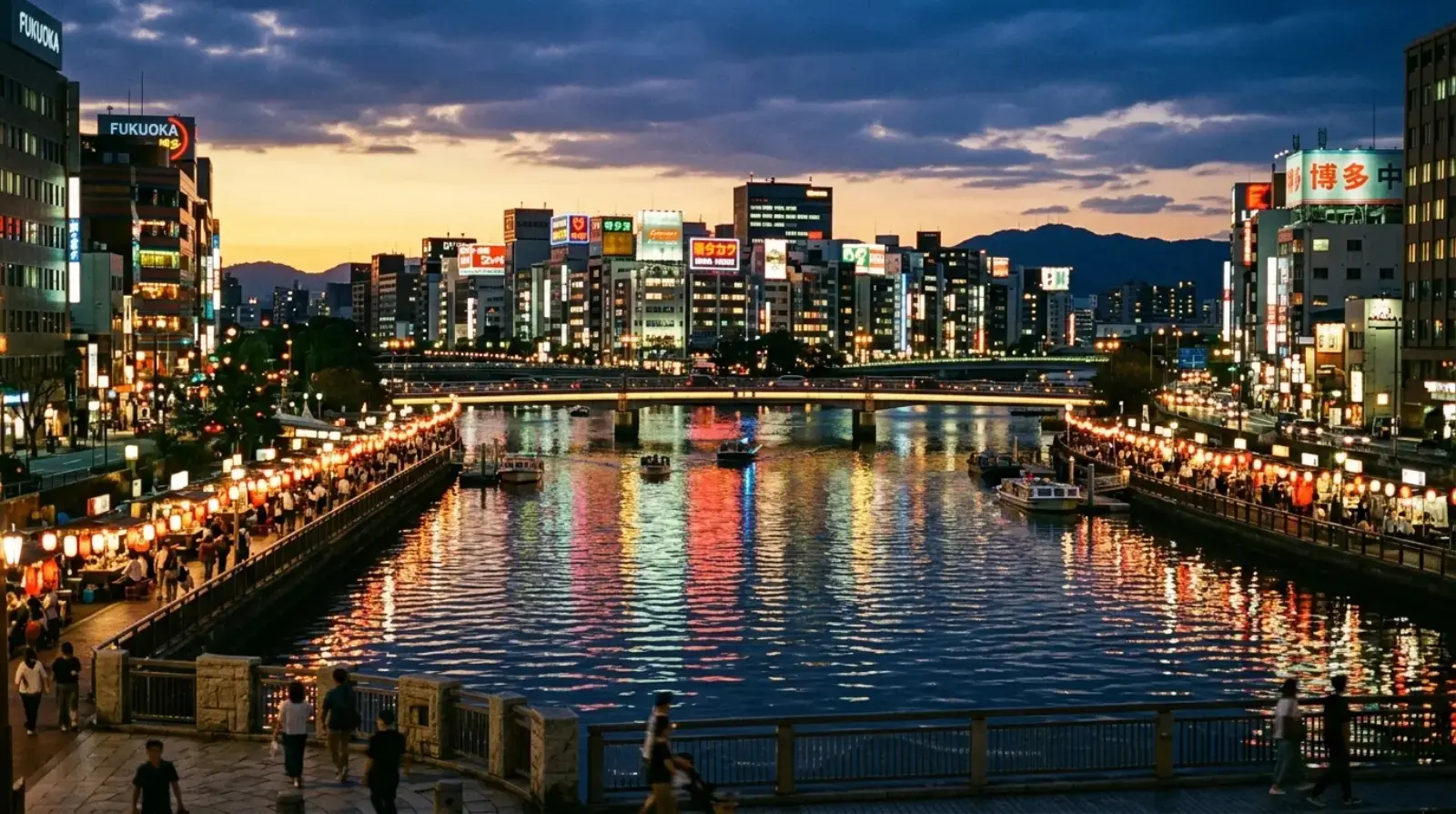
Fukuoka Airport (FUK) Escape: The Two-Stop Subway Miracle and Direct Bus
Fukuoka International Airport (FUK) occupies a miraculously advantageous urban footprint unmatched by virtually any major global metropolitan gateway. Clearing inbound immigration and passport control seldom exceeds twenty minutes, and reaching the pulsating transit nexus of Hakata Station requires a mere five-minute subway dash. Nonetheless, knowing whether to board the domestic terminal shuttle or catch a direct municipal bus makes all the difference.
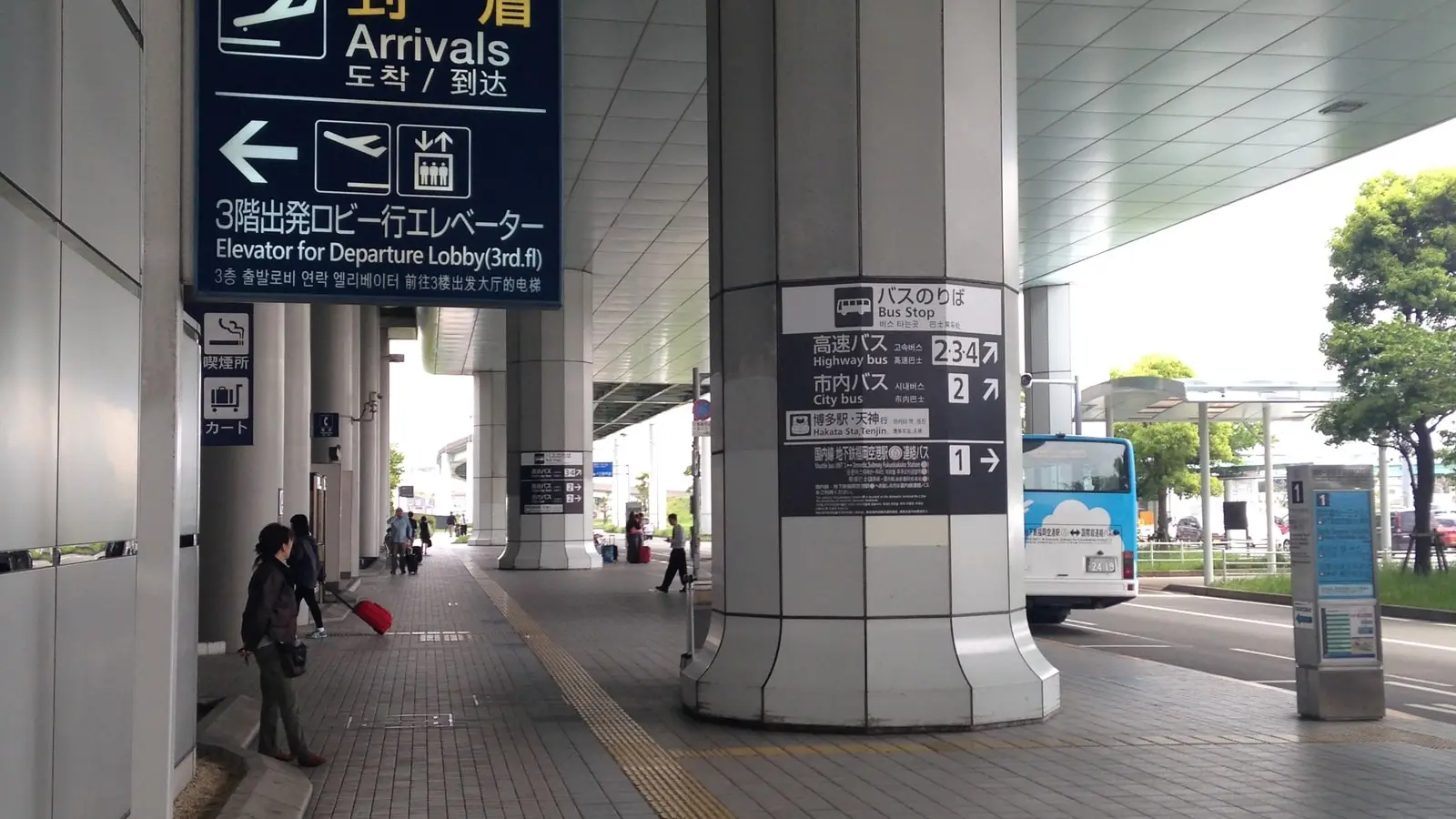
The Fukuoka City Subway Kuko Line terminal is situated exclusively beneath the Domestic Terminal building rather than the International complex. To ride the rail, exiting travelers cross to International Bus Bay 1 to board the complimentary blue transit shuttle, which circumvents the active runway perimeter for ten to fifteen minutes before reaching the domestic terminal entrance, where escalators plunge downward to the subway gates.
If maneuvering bulky four-wheel suitcases makes shuttle transfers unattractive, an exceptional secret lies at International Bus Bay 2: the direct Nishitetsu expressway city bus to Hakata Station. At 310 JPY per ticket, it costs barely pennies more than the 260 JPY subway fare while whisking travelers directly to Hakata Station Hakata-guchi plaza in eighteen minutes with zero intermediate bag lifting.
For small travel groups of three or four companions, or travelers accompanying seniors, hailing a standard street taxi from the rank outside arrivals is remarkably economical. Because downtown Hakata lies barely three kilometers away, meter fares average 1,500 to 2,000 JPY total, rendering private curbside drop-offs virtually price-competitive with individual public transit tickets.
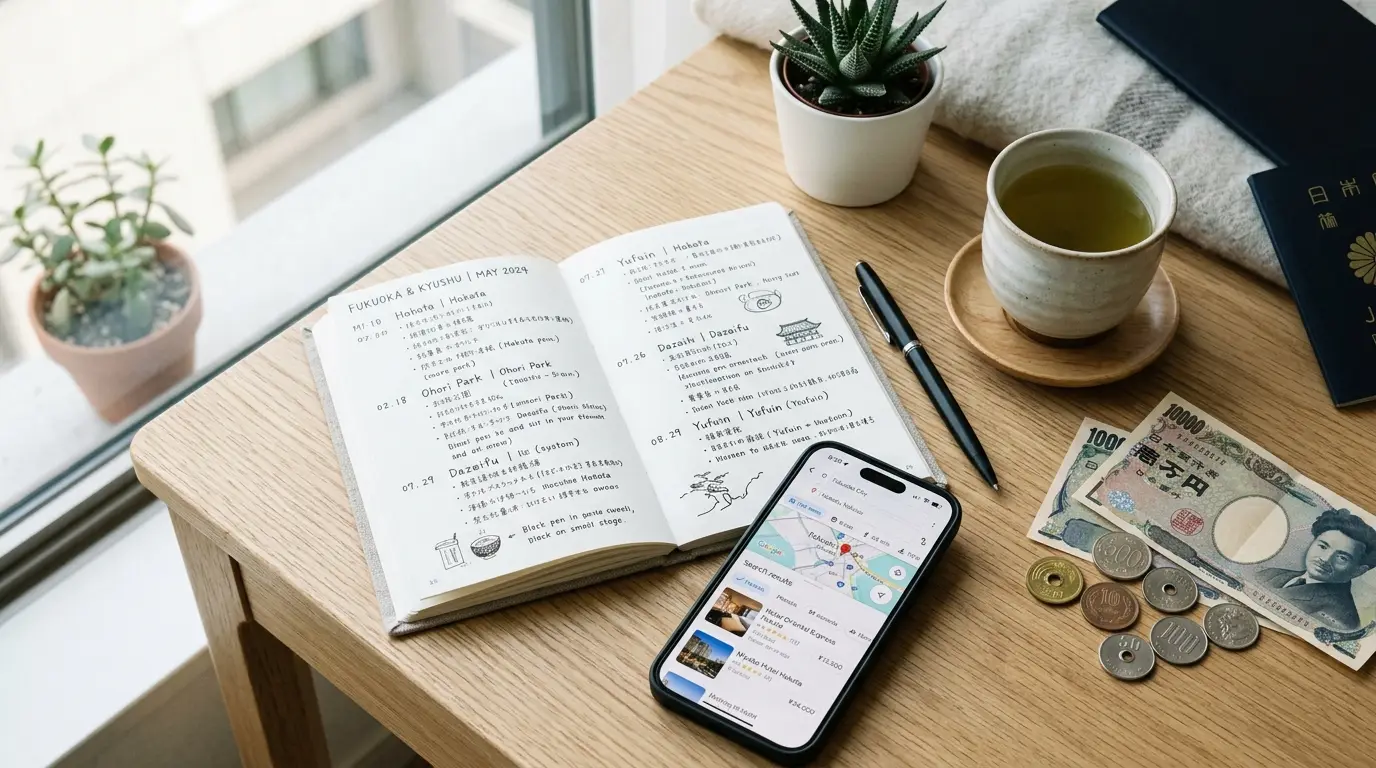
Hakata vs. Tenjin: Early Baggage Storage and Station Locker Mastery
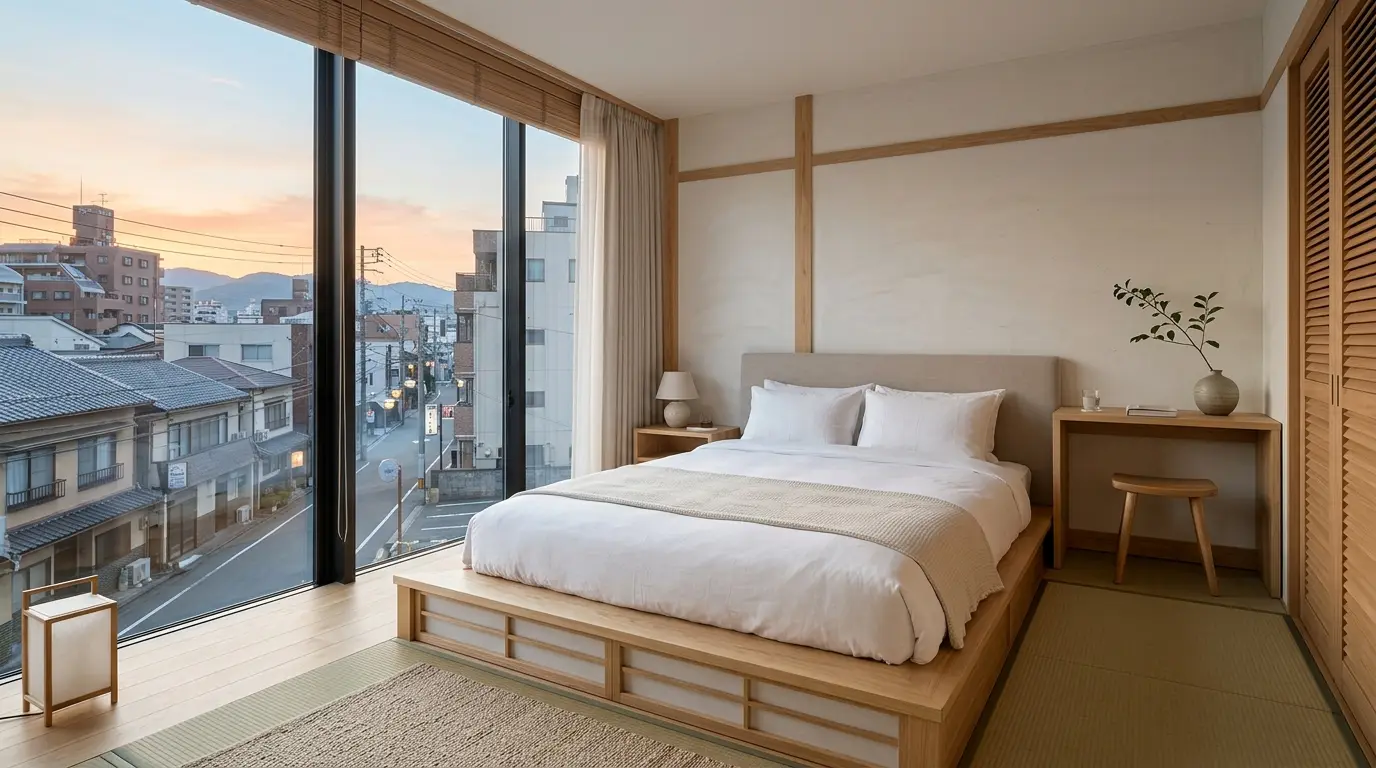
Fukuoka's arrival base divides cleanly between Hakata, the regional transit and Shinkansen powerhouse, and Tenjin, the trendy downtown shopping and cafe district. Because the two hubs sit just three subway stops (five minutes) apart, dropping off heavy baggage before the standard 3:00 PM check-in hour is essential to establishing your day-one walking radius.
The most economical practice is always rolling suitcases directly to your reserved hotel lobby and asking the reception staff to safe-keep bags prior to official room assignment. Both business hotels and boutique towers gladly issue numbered claim checks and secure your luggage free of charge. Immediately photograph your claim ticket with your phone to avoid misplacement anxieties.
If your accommodations sit several blocks from the station and an immediate drop feels inconvenient, Hakata Station houses extensive coin locker clusters across its Central Concourse, Chikushi (east) entrance, and Hakata (west) exit. Lockers accept either contactless IC transportation cards (Suica, Pasmo, Icoca) or 100-yen coins, with jumbo luggage compartments priced between 800 and 1,000 JPY.
Should main station lockers read fully occupied during weekend midday peaks, bypass queues by looking for the staffed luggage storage counters in and around the station. Once bags are stowed, slip into comfortable footwear and set out unencumbered.
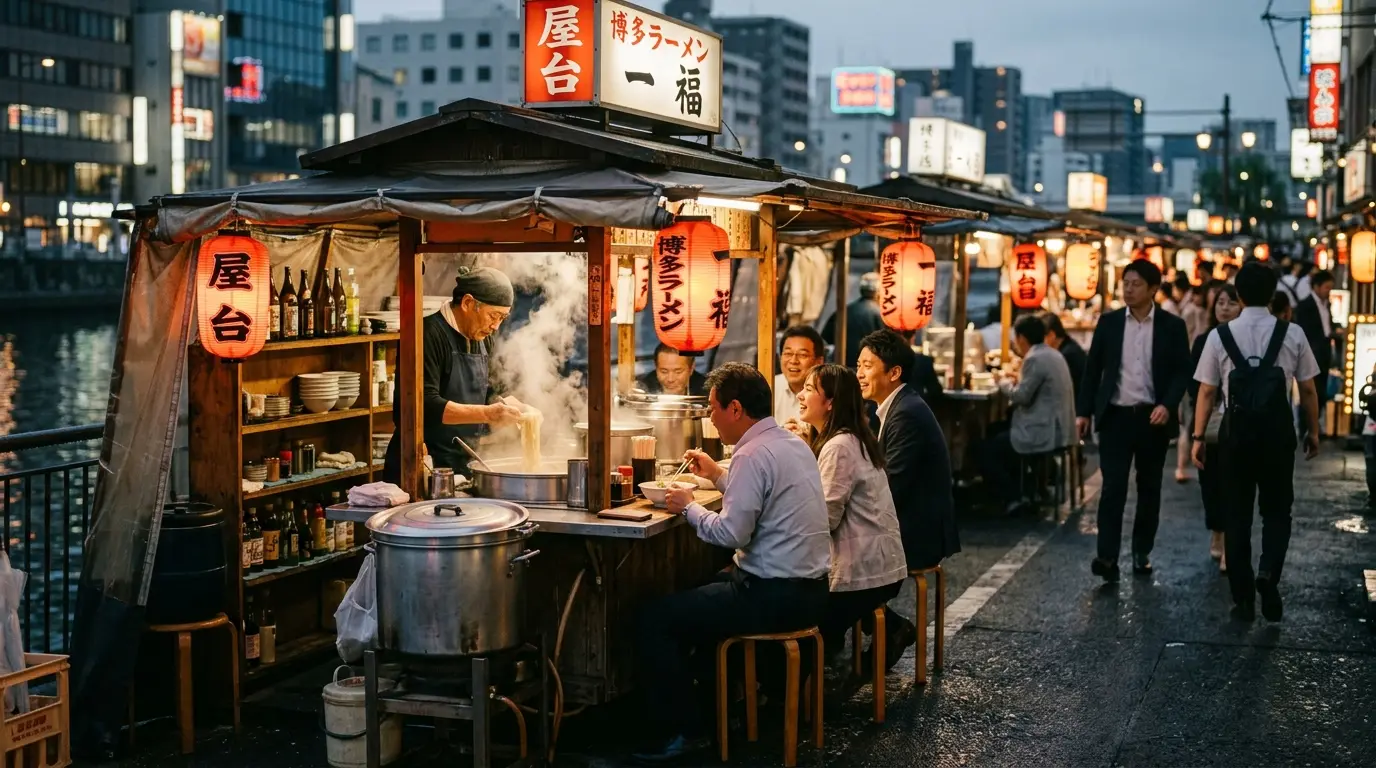
The Frictionless First Meal: Hakata Tonkotsu Ramen, Firmness, and Kaedama
With luggage secured by 1:00 PM, your inaugural meal honors the crown jewel of Kyushu gastronomy: rich, savory Hakata tonkotsu ramen (博多とんこつラーメン). Stepping into historic noodle parlors along Hakata Menkaido (the noodle arcade on the second floor of Hakata Deitos) or backstreet neighborhood counters welcomes diners with the intoxicating aroma of slow-simmered pork marrow.
After purchasing a basic ramen ticket at the automated vending machine (券売機), the attendant's first query addresses noodle firmness ('Men no katasa'). Because Hakata ramen utilizes ultra-thin, straight wheat noodles (hosomen), local custom universally dictates requesting 'Barikata' (very firm) or 'Kata' (firm), preserving an appetizing toothsome snap in the piping hot soup.
If you prefer softer textures, requesting 'Futsu' (regular) is acceptable, but sampling 'Kata' is the true hallmark of authentic Kyushu dining. Condiment trays feature roasted sesame seeds (surigoma), crimson pickled ginger (beni shoga), whole garlic cloves with hand presses, and fiery pickled mustard greens (karashi takana). Sip the unadorned broth first, then grind generous sesame seeds to amplify nutty aromatics.
As your bowl reaches its final third, remember the cardinal rule: never finish the broth prematurely. While maintaining half a bowl of warm soup, raise a hand and call 'Kaedama onegaishimasu' to summon an additional steaming portion of fresh noodles for roughly 150 to 200 JPY. Press a fresh clove of garlic and fold in a pinch of takana to compose a completely reinvented second act.
When rising from the wooden counter, offer the kitchen staff a courteous 'Gochisosama deshita' (thank you for the feast). The chef's vigorous, echoing farewell provides a heartfelt induction into Hakata's culinary pride.
Sunset Stroll Along Ohori Park and Nakasu Yatai Stall Culture
As the afternoon clocks pass 4:00 PM, hop aboard the subway for a ten-minute ride west to serene Ohori Park (Ohori Koen). Modeled after Hangzhou's historic West Lake and once serving as the outer moat for Fukuoka Castle, this expansive aquatic promenade offers peaceful weeping willows and shimmering waters that glow during golden hour. Crossing the stone islet bridges while sipping a chilled matcha latte from the lakeside Starbucks provides supreme relaxation.
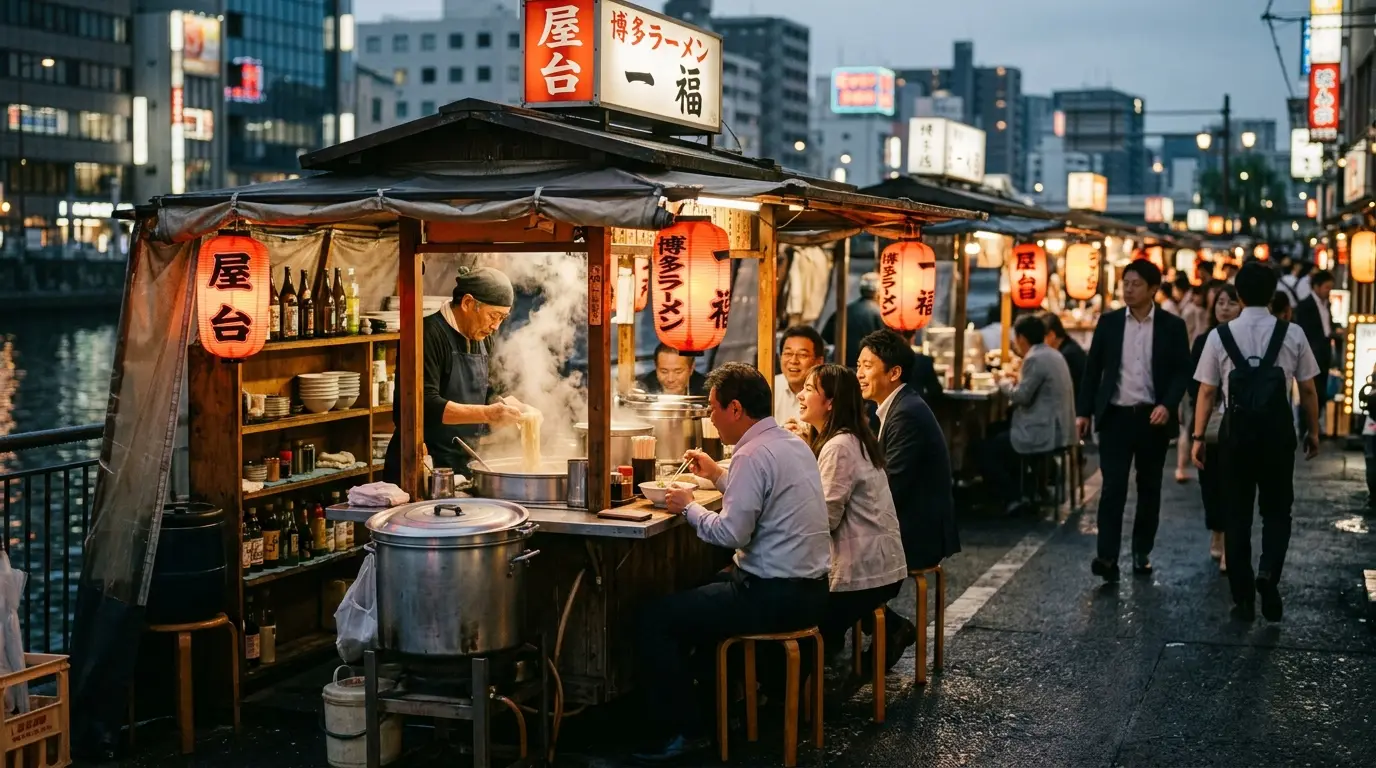
By 6:30 PM, dusk descends over the city, and the banks of the Nakasu (中洲) riverway ignite with golden incandescent bulbs and fluttering red noren curtains. As neon billboards shimmer across the rippling water, the intoxicating sounds of bubbling oden cauldrons, sizzling teppan grills, and laughing patrons signal the opening of Fukuoka's legendary Yatai street food stalls.
Securing a stool at a yatai requires understanding time-honored communal etiquette. Because each open-air cart accommodates only eight to ten seated diners, ordering a minimum of one beverage and one food item per person is mandatory. Request a frosty draft beer (namabiiru) alongside a bowl of dashi-braised oden, pan-fried mentaiko dumplings, or yakitori chicken skewers to immerse yourself in local camaraderie.
Exercise caution regarding unlicensed operators: look for stalls displaying prominent, transparent Japanese and English menu pricing to avoid unexpected cover charges (otoushi). Many yatai still take cash only, so ensure your wallet carries crisp 1,000-yen notes before sliding beneath the canvas.
Lawson and 7-Eleven Raids: Mentaiko Secrets and Restful Recovery
Before returning to your hotel room, a concluding expedition into a neighborhood 7-Eleven, Lawson, or FamilyMart equips you with quintessential Kyushu evening comforts. Convenience stores across Fukuoka showcase distinctive regional food products unseen throughout Tokyo or Osaka, headlined by gourmet rice balls stuffed with spicy cured pollock roe (Mentaiko onigiri).
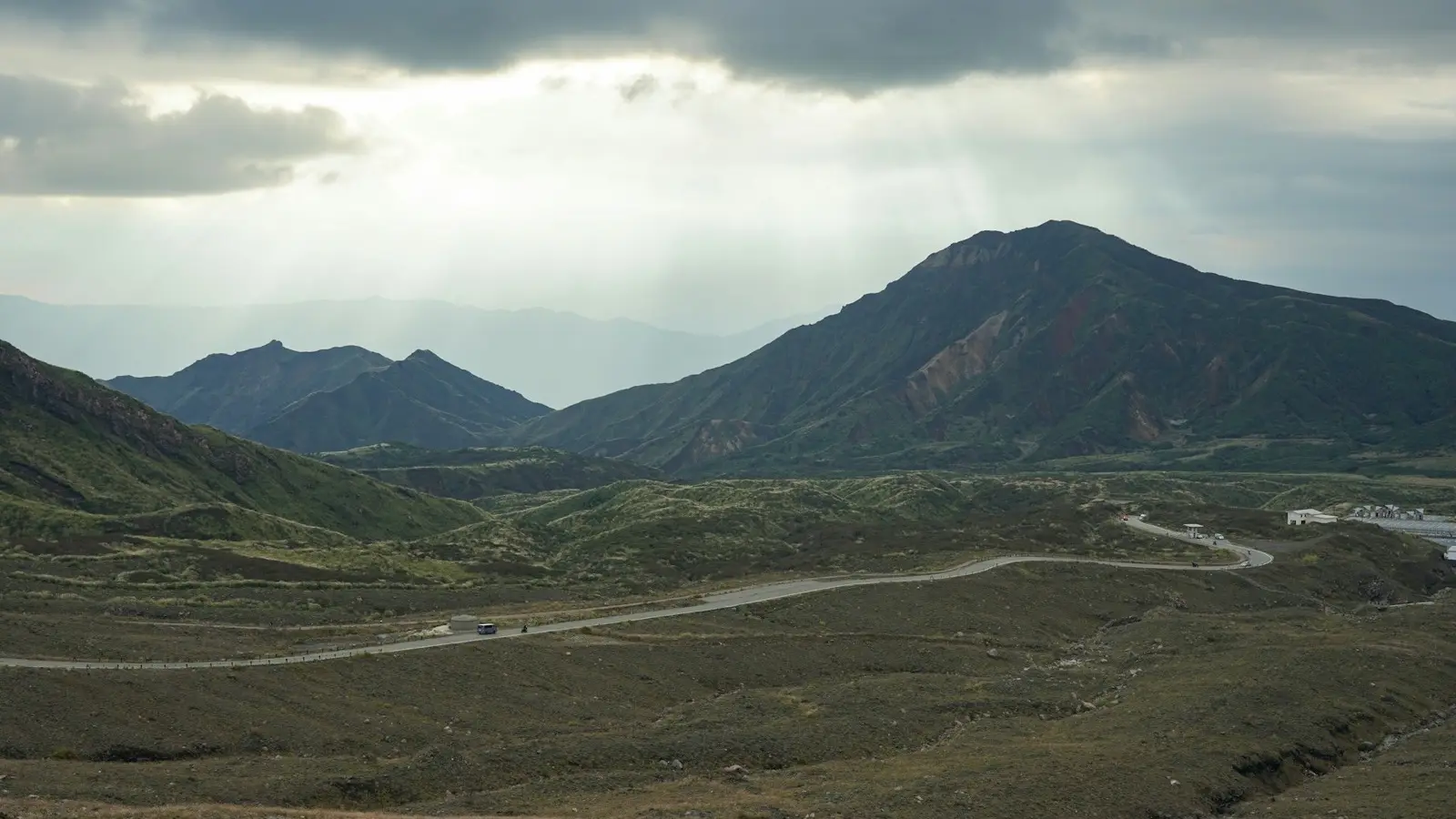
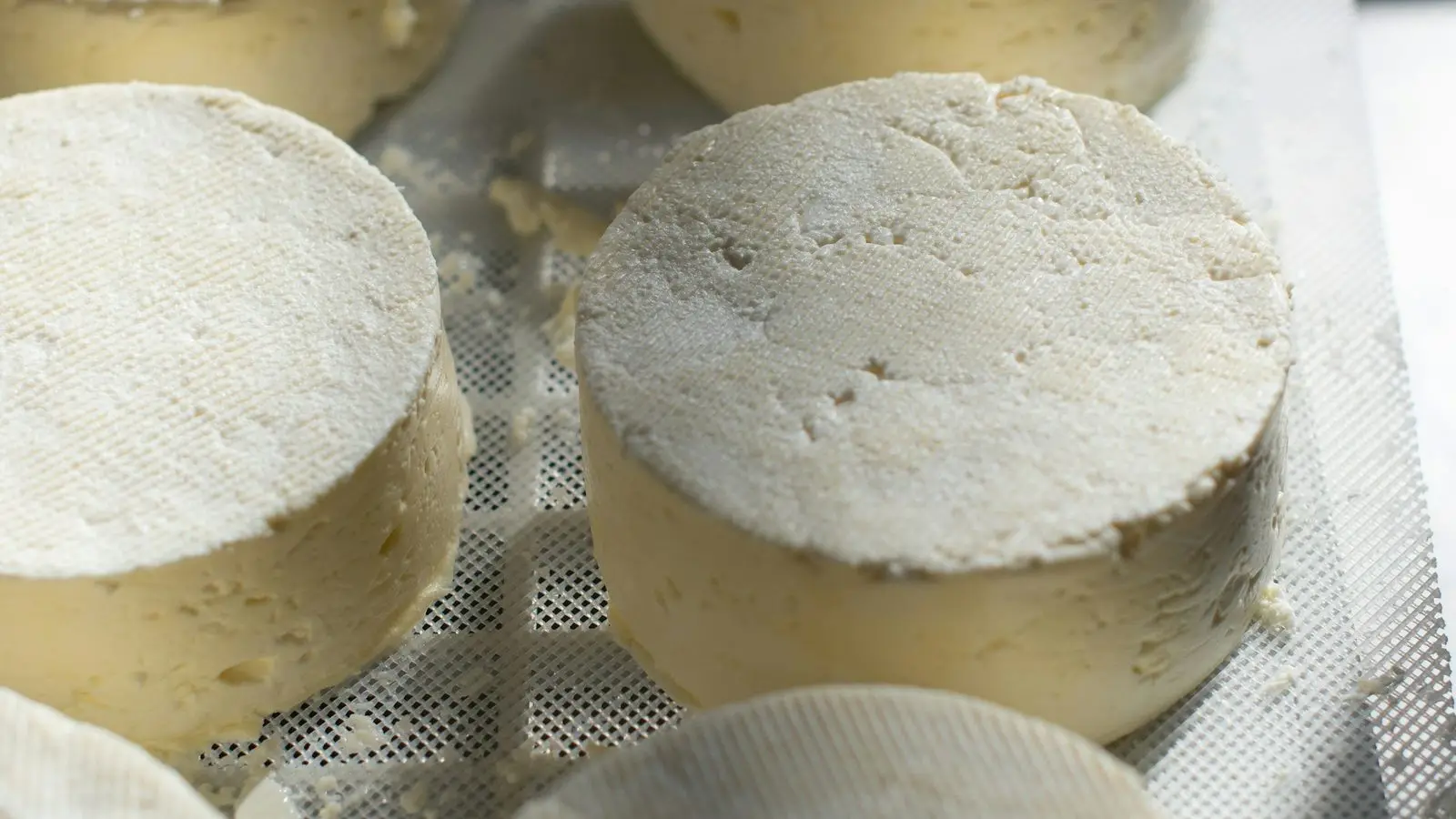
In the dairy cooler, seek out rich probiotic drinkable yogurts and milk bottles sourced directly from Mount Aso pastures in neighboring Kumamoto. In the frozen dessert bins, claim Kyushu's beloved soul-food ice cream bar: the iconic 'Black Mon Blanc', featuring creamy vanilla ice cream encased in crunchy chocolate and biscuit crumbs.
If your hotel sits adjacent to a 24-hour supermarket (Sunny or MaxValu) or Don Quijote Tenjin, consider picking up squeeze-tubes of spicy mentai mayonnaise or Hakata Torimon sweet butter pastries at the tax-free counter (tax-exempt over 5,000 JPY). Pre-purchasing regional souvenirs on night one eliminates departure day baggage stress.
Back in your guest room, soak in a deep hot tub to soothe flight stiffness, then step onto your private balcony with a crisp can of Sapporo Black Label and your mentaiko snack. Thanks to Fukuoka's effortless airport transit, day one concludes with zero fatigue and maximum anticipation for your Kyushu adventure.
Frequently Asked Questions
Field-tested answers to transit navigation, neighborhood choices, and payment traps.
Q1.What is the fastest and most efficient transport from Fukuoka Airport to Hakata or Tenjin?
Q2.How do diners specify noodle firmness and request extra noodles (Kaedama) in Hakata ramen shops?
Q3.What are the essential etiquette rules and estimated costs when visiting Nakasu yatai stalls?
Q4.Where can travelers store luggage when Hakata Station coin lockers are fully occupied?
The Smart Traveler's Essential Toolkit
Prepare instant mobile data, private airport transfers, and skip-the-line passes in one place.
Pick a base in Fukuoka by your route
Choose the places you want to see and get the neighbourhood with the shortest travel.
Compare Fukuoka Hotel Rates
Find the cheapest channel across Agoda and major booking engines with Tripdify.
Share This Guide with Your Companions
When shared via chat or social media, a curated summary card is sent along.
Recommended Guides
How to Book Fukuoka Hotels Cheaply: Four-Star Rates in Tenjin and Hakata
A complete guide comparing Hakata Station vs Tenjin hotel zones, avoiding DCC currency markup with JPY payments, and handling local accommodation taxes.
Getting Around Fukuoka: Subway Lines and Where to Stay in Hakata or Tenjin
How to bypass crowded airport terminal shuttles with direct buses in Fukuoka, master contactless subway gates, and pick the best base between Hakata and Tenjin.
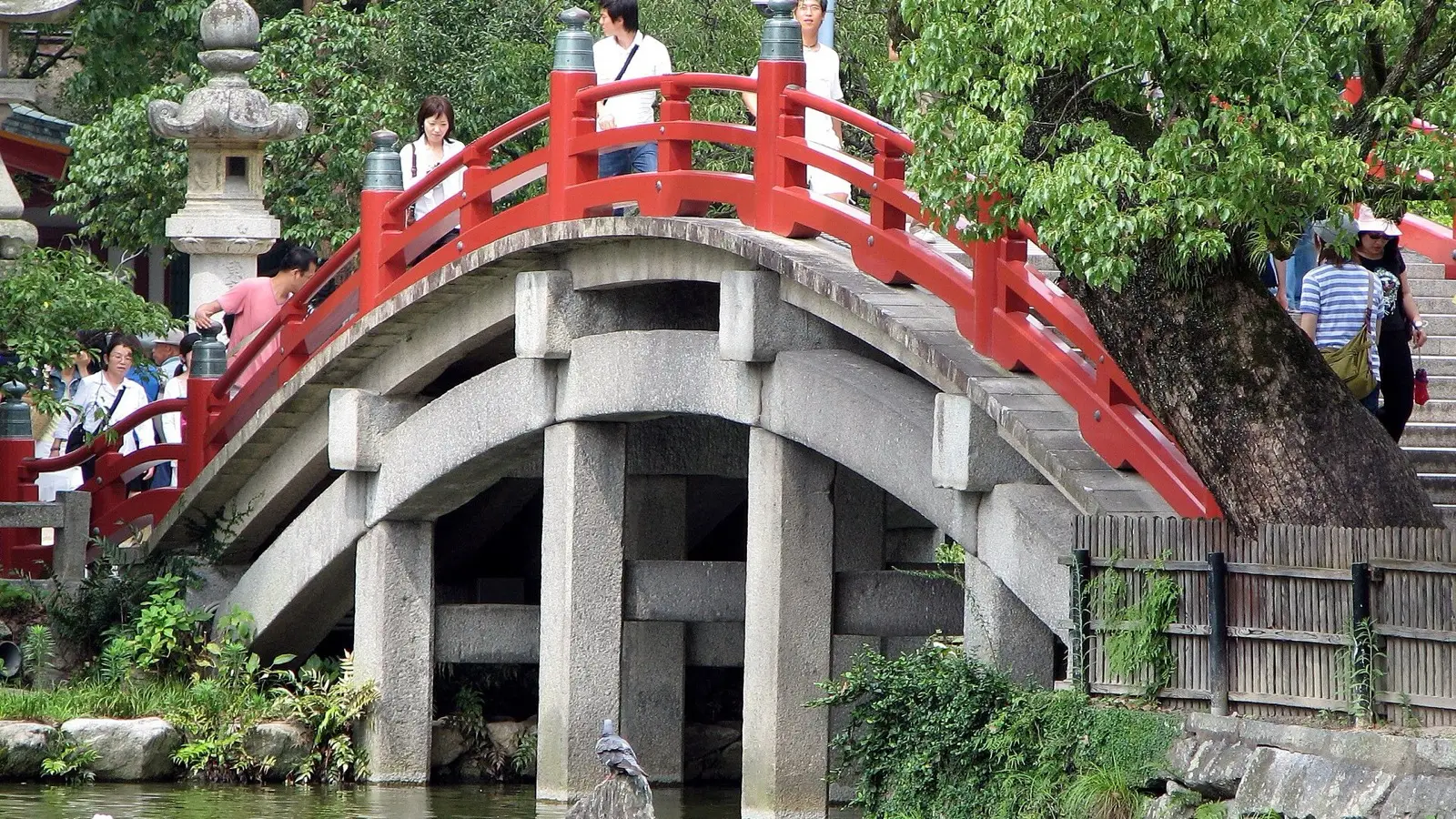
Fukuoka Day 2 Itinerary: Dazaifu, Ohori Park, Tenjin Shopping and Motsunabe
Day 2 immerses you in Fukuoka's finest cultural textures: riding the Nishitetsu express to ancient Dazaifu Tenmangu for crispy plum rice cakes, unwinding along the weeping willows of Ohori Park, exploring Tenjin Underground Mall's vaulted corridors, and dining over bubbling motsunabe beef offal hotpots.
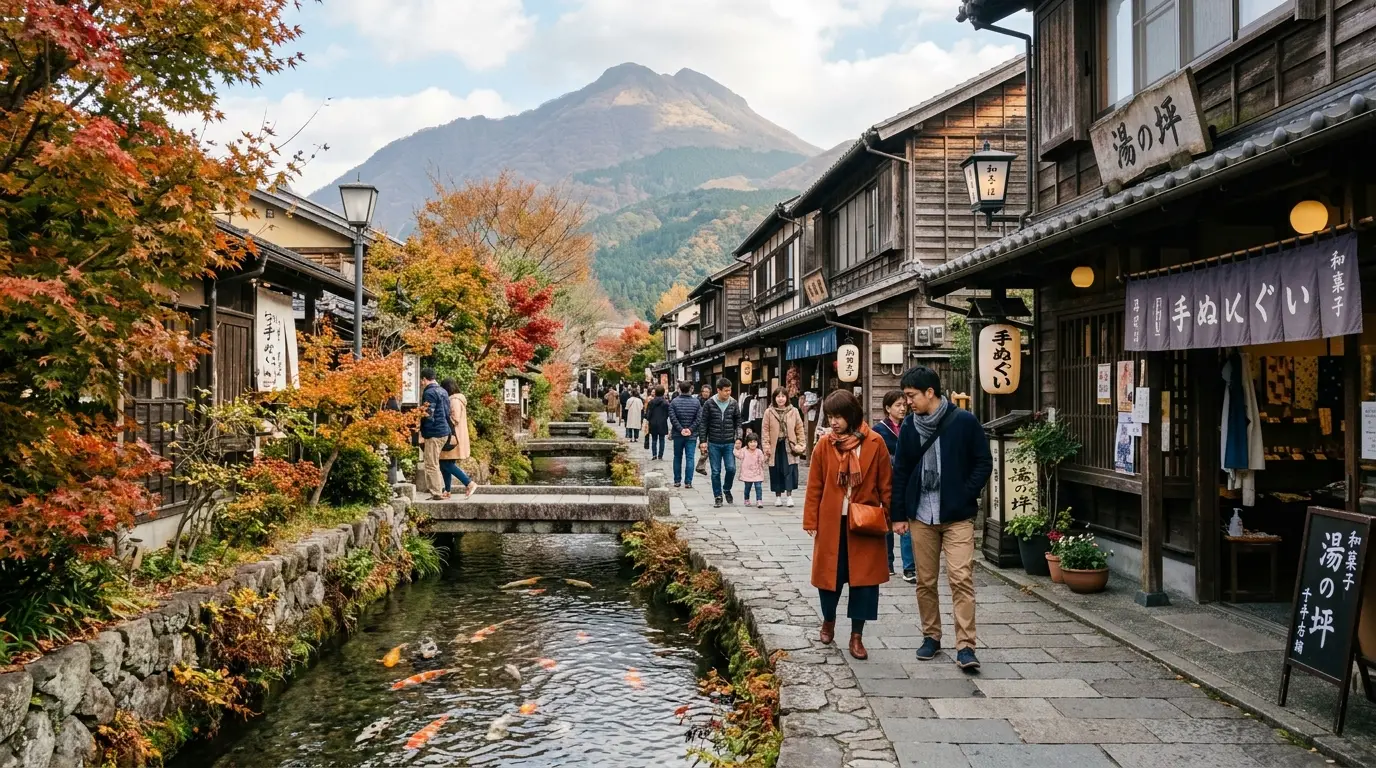
Fukuoka Day 3 Itinerary: Kushida Shrine, Canal City and Hakata Station Shopping
The ultimate finale for your Fukuoka journey: morning serenity at eighth-century Kushida Shrine, dynamic musical water shows at Canal City Hakata, souvenir hauls at Hakata Hankyu, and world-class subway airport transit clocking in at just five minutes flat.
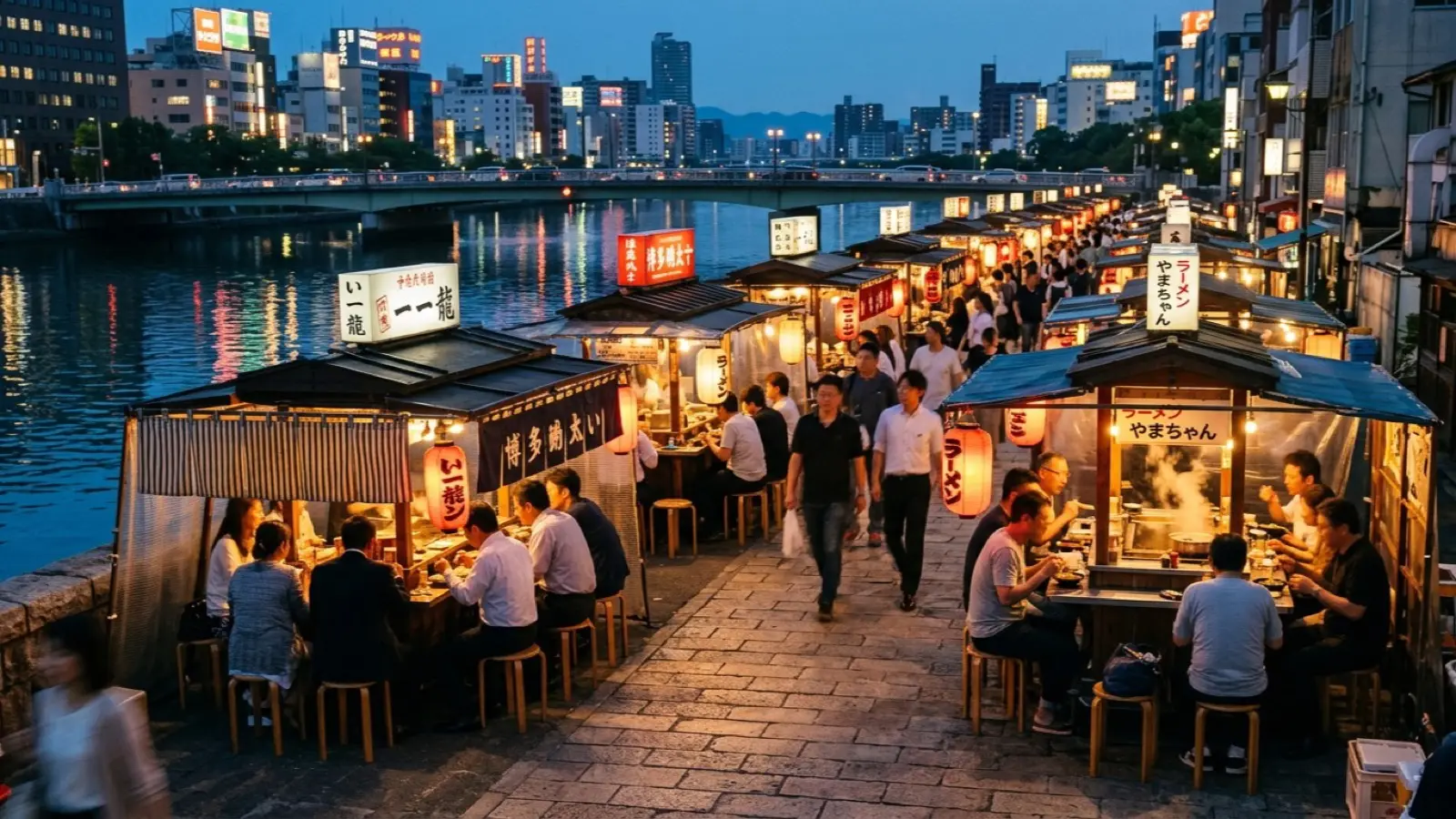
How to Use a Fukuoka Yatai: Ordering in Nakasu Without Overpaying
As twilight settles over the Naka River and red noren banners unfurl, Fukuoka's legendary street food scene comes alive. From seat fees and drink mandates to district rivalries across Nakasu, Tenjin, and Nagahama, here is how to savor Fukuoka's open-air yatai stalls like a seasoned local.
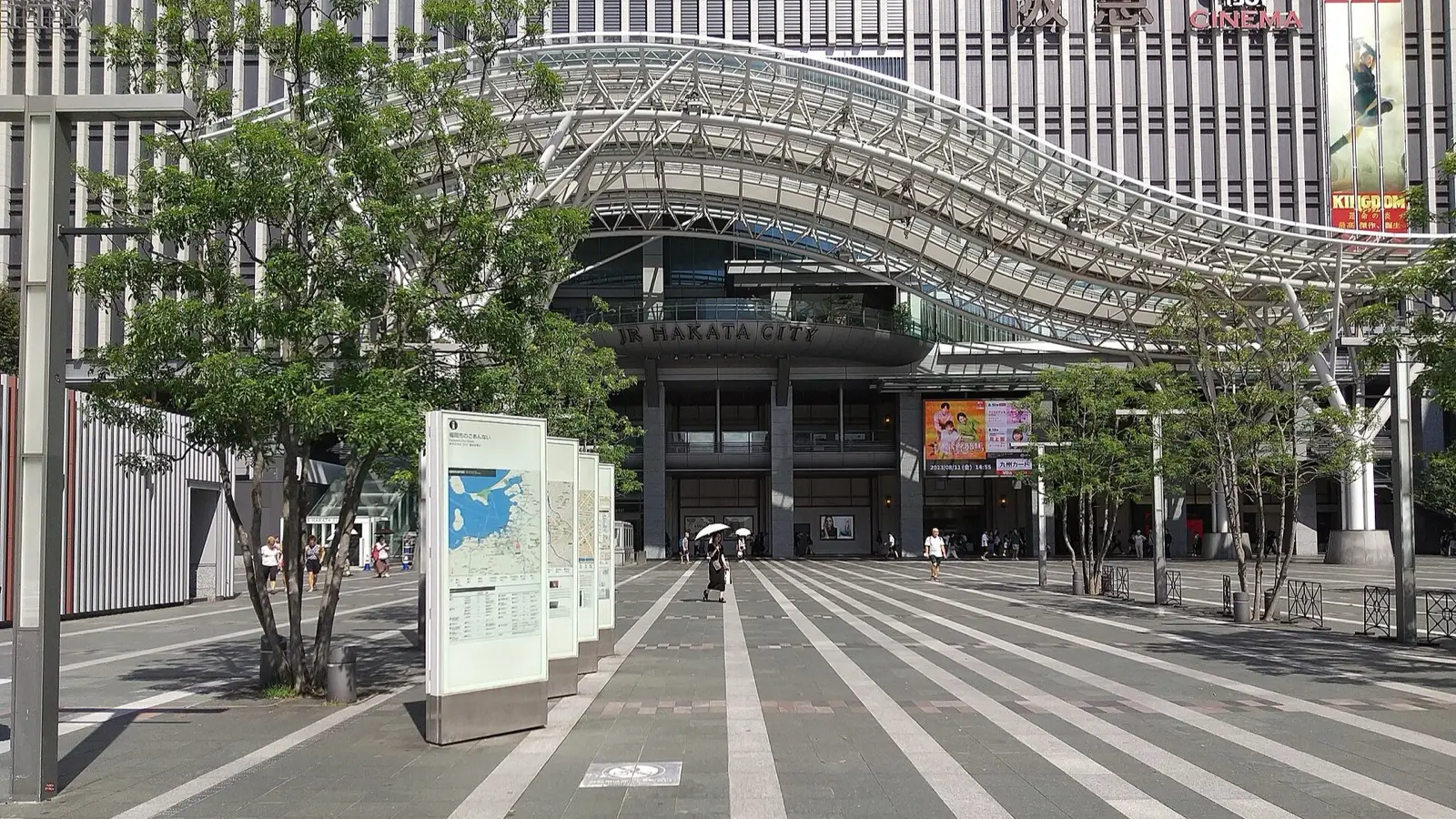
Best Hotels in Fukuoka: Hakata Station or Tenjin
The eternal question when planning a trip to Fukuoka is whether to stay in Hakata or Tenjin. From Hakata Station's unrivaled transit power just five minutes by subway from the airport, to Tenjin's lively department stores and nightlife, plus riverside Nakasu in between, we curate four standout stays tailored to your travel priorities.
The Overseas Car Rental Playbook: Japan Zero-NOC Cover, Geneva Permits, and Accident Protocols
Exploring the secluded hot spring hamlets and coastal scenic bypasses of Kyushu, Hokkaido, or Okinawa by rental car unlocks unparalleled freedom that regional rail cannot match. Yet self-driving abroad harbors hidden regulatory and financial pitfalls that derail holidays before turning the ignition key. Many international travelers arrive at Japanese rental depots carrying standard domestic English driver licenses, only to be turned away because Japan strictly requires an original physical Geneva Convention 1949 International Driving Permit. Furthermore, settling for basic collision damage waivers (CDW) leaves drivers liable for steep Non-Operation Charges (NOC) when minor scratches occur, while failing to file a formal police report voids coverage entirely. This guide outlines every critical checkpoint, from foolproof permit validation and zero-deductible NOC packages to 360-degree vehicle inspection videos and regional expressway pass savings.
Dawn at Fukuoka Dazaifu Tenmangu: Warm Umegae Mochi, Sacred Ox Statues, and Verdant Shrine Gardens
Revered as the final resting place of Sugawara no Michizane, the patron deity of scholarship and literature, Dazaifu Tenmangu stands as Kyushu's most celebrated historic Shinto shrine. Yet visiting at midday frequently plunges travelers into dense crowds of tour groups, megaphone announcements, and packed souvenir corridors. The authentic soul of Dazaifu reveals itself only to those who arrive early at 8:00 AM. In the cool dawn mist, Shinji Pond mirrors ancient weeping willows as you step onto the three arched vermilion bridges known as Taikobashi, symbolizing the spiritual passage through past, present, and future. From gently rubbing the polished horns of the bronze sacred ox statues for academic luck to savoring piping-hot, griddled Umegae-mochi rice cakes stamped with plum crests, this peaceful morning itinerary unveils the serene heart of Fukuoka heritage.
5 Best Value Hotels in Fukuoka Tenjin: 11-Minute Direct Airport Subway, Shopping Hubs, and Onsen Baths
When selecting an urban sanctuary in Fukuoka, travelers perpetually weigh the competing virtues of Hakata versus Tenjin. While Hakata Station reigns supreme for bullet train intercity transit and Kyushu rail loops, Tenjin captures the lifestyle heart of the city, placing premier department stores including Iwataya, Parco, and Daimaru alongside trendy Daimyo boutiques within effortless footfall. Moreover, the Fukuoka City Subway whisks passengers from the airport terminal directly into central Tenjin in just 11 minutes, while Nishitetsu Fukuoka Station provides swift rail departures to Dazaifu Tenmangu shrine. However, finding tranquility amidst bustling neon requires insider curation. Here are five downtown value hotels, boasting soothing natural onsen hot spring baths, complimentary evening noodles, and peaceful acoustic insulation.
Fukuoka Airport to Hakata and Tenjin: The 5-Minute Subway Miracle, Free Shuttle, Bus, and 1,500 Yen Taxis
Fukuoka Airport boasts arguably the finest urban accessibility of any major Asian hub. By subway, Hakata Station is just two stops and five minutes away for 260 yen, with Tenjin reached in eleven. However, the International Terminal lacks a direct train station, requiring travelers to take a free shuttle bus to the Domestic terminal or board a direct 310-yen highway coach. For parties of two or more, taking a 1,500-yen metered taxi directly to your hotel doorstep is vastly more convenient.
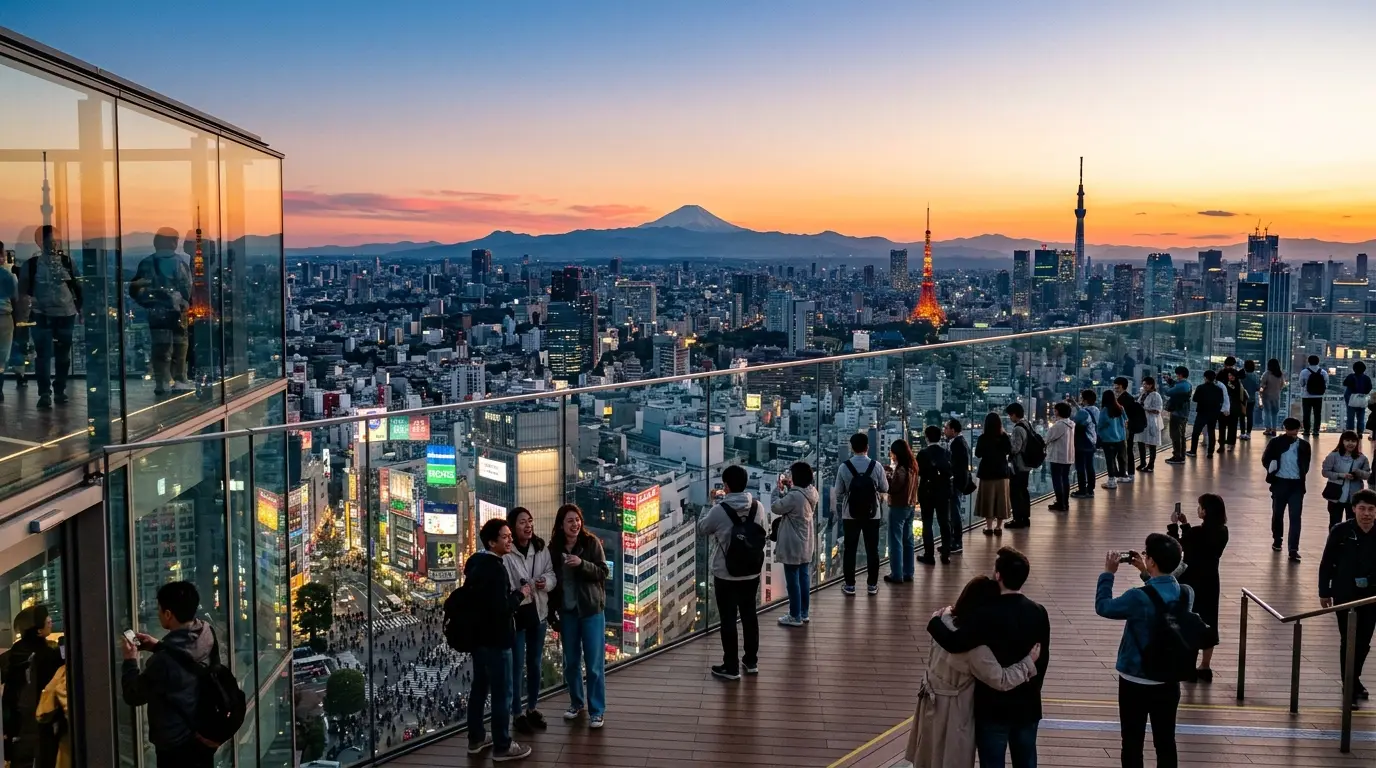
Where to Stay in Tokyo: Shinjuku vs Shibuya vs Ginza
Comparing room footprints across Shinjuku, Ginza, and Ueno, locking in sudden 14-day cancellation drops, and eliminating DCC fees with clean Yen checkout.
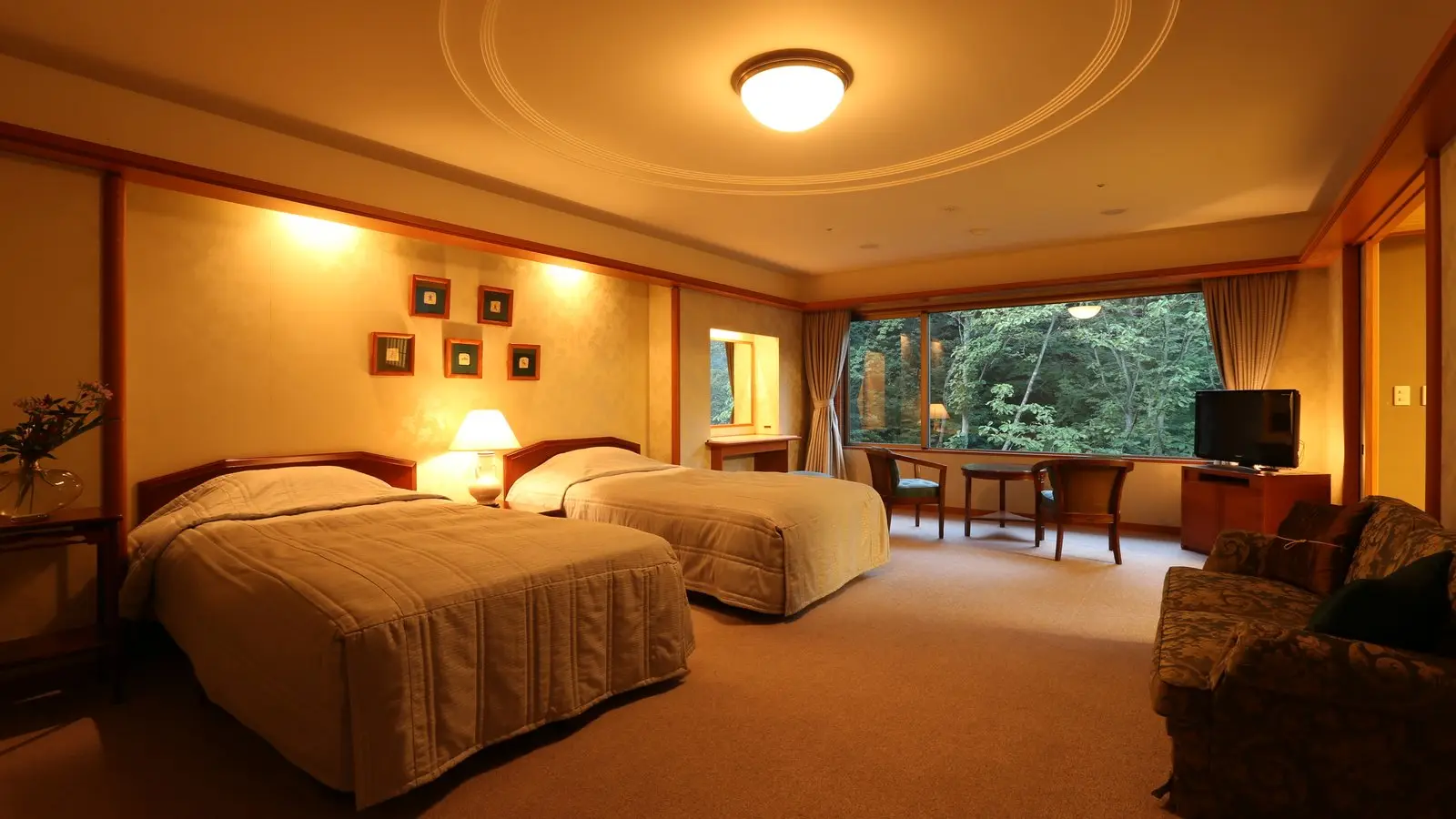
7 Budget Hotels in Tokyo Under $100 on the Yamanote Line
Even amid yen fluctuations, central Tokyo hotel rates have soared. Learn how to secure Yamanote loop line hotels at half the price of Shinjuku, compare onsen bath chains like Dormy Inn, trigger secret Agoda VIP and Booking.com Genius discounts, and dodge hidden currency fees with yen settlement.