
OsakaGuide
Osaka Day 2 Itinerary: Osaka Castle, Umeda Sky Building and Shinsekai Kushikatsu
Imposing stone ramparts and peaceful morning moats, futuristic architectural skywalks in Kita Umeda, crimson Ferris wheels, and nostalgic Shinsekai skewer alleys.
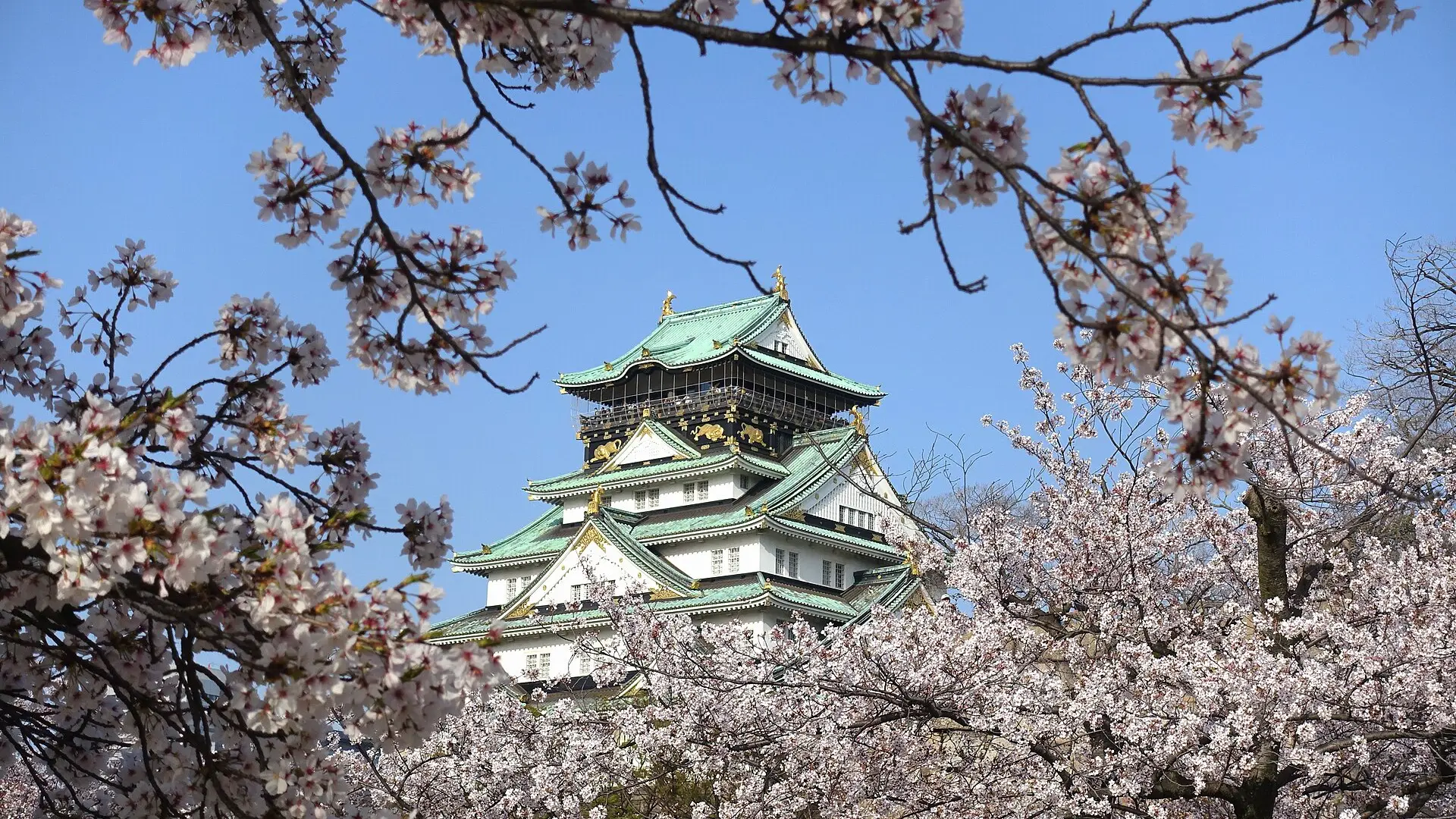
Osaka Castle Park and Tenshukaku: Peaceful Morning Stone Ramparts
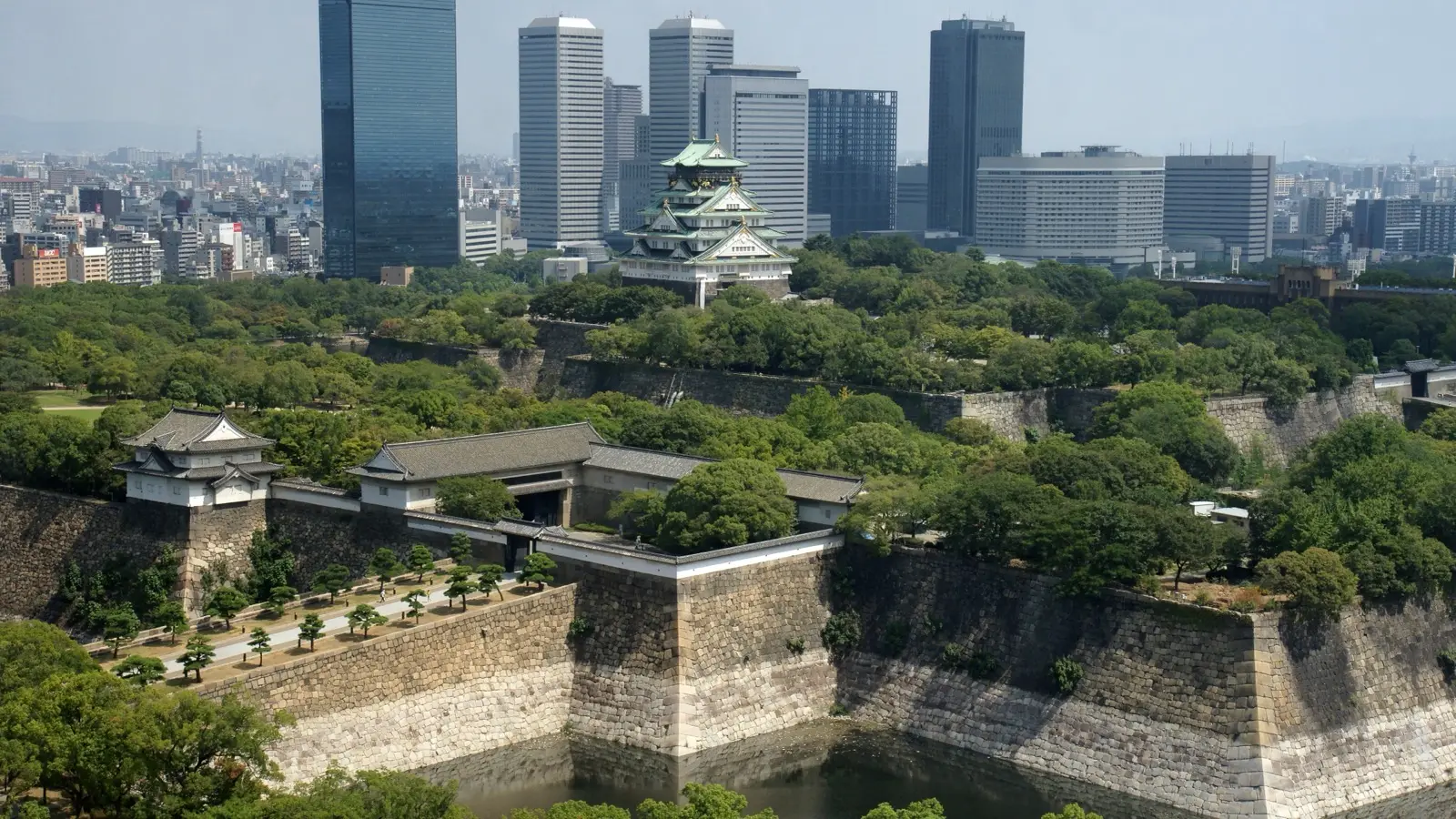
Begin your second day in Osaka within the sprawling historic grounds of Osaka Castle, commissioned by Toyotomi Hideyoshi as the seat of a unified Japan. While tour coaches congest the main pathways past 10:00 AM, entering through the monumental Otemon Gate around 9:00 AM allows you to absorb the majestic timber joinery and sheer stone grandeur in uninterrupted serenity.
Crossing the threshold reveals the colossal Takoishi (Octopus Rock), a monolithic granite block weighing over one hundred tons fitted flawlessly into the defensive walls without mortar. Strolling gently along the wide paths bordered by centuries-old pines and still waters creates an introspective atmosphere that contrasts sharply with the bustling metropolis surrounding it.
Climbing to the eighth-floor observation deck of the Tenshukaku keep reveals a breathtaking 360-degree panorama of the Osaka plain framed by modern glass skyscrapers. Inside the museum, meticulously curated samurai armor suits, folding screen battle paintings, and tactical dioramas vividly bring to life the turbulent Sengoku warring states period.
Before heading to the subway, take a reflective stroll through the Nishinomaru Garden on the fortress's southwest flank. Framed by expansive lawns, seasonal cherry blossoms, and weeping willows, this pristine garden presents the most photogenic angle of the castle keep in the clear morning sunlight.
Kita Umeda's Modern Pulse: Grand Front and Depachika Delicacies
Boarding the subway from Osaka Business Park station transfers you smoothly to Umeda station, shifting your environment instantly from feudal stonework into a pulsing, futuristic commercial capital. Stepping out into the sprawling pedestrian concourses above Osaka Station reveals Grand Front Osaka and LUCUA, twin titans of contemporary Japanese urbanism.
For lunch, plunge into the Barchica gourmet basement of LUCUA or ascend to the twelfth floor of the flagship Hankyu Department Store. Savoring thick, handmade Sanuki udon steeped in golden dashi broth or artisanal wagyu hamburg steaks with demi-glace sauce replenishes your reserves after a brisk morning of exploration.
After lunch, meander through the legendary basement depachika of Hankyu Umeda. Vitrines overflow with seasonal fruit daifuku mochi, artisanal Baumkuchen cakes, and gold-packaged Bâton d'or luxury butter sticks, resembling high-end jewelry displays more than confectionery counters.
Crossing the elevated glass walkways between Grand Front towers provides an exceptional vantage point for observing the kinetic energy beneath the colossal curved glass roof of Osaka Station City.
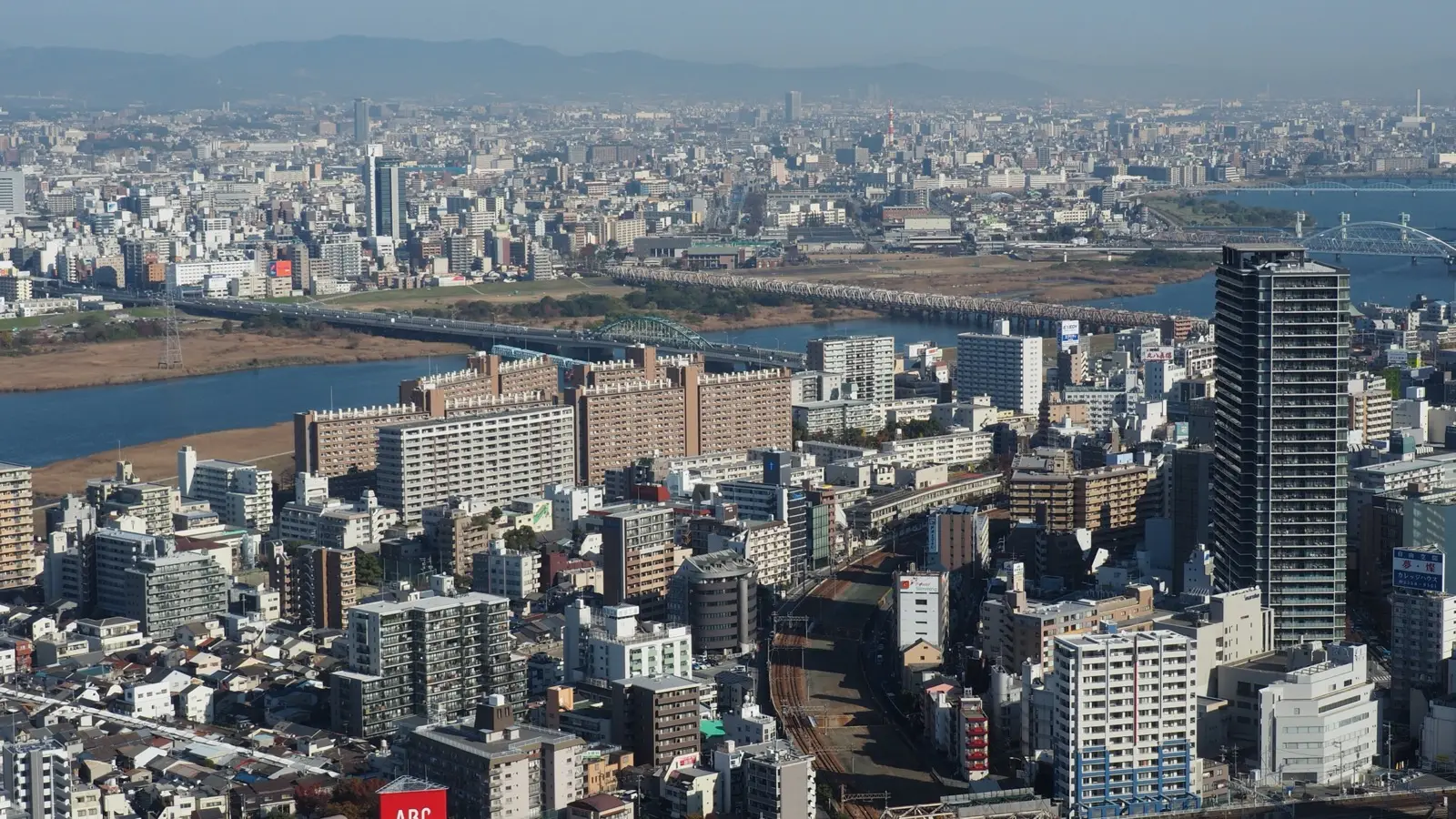
Umeda Sky Building Floating Garden and the HEP FIVE Wheel
Walking ten minutes northwest of Osaka Station brings you to the foot of Umeda Sky Building, an architectural triumph selected by international critics among the world's top visionary buildings. Connecting two forty-story skyscraper towers via an aerial circular bridge 173 meters aloft, the structure resembles a science-fiction gateway suspended in clouds.
Ascending through the futuristic glass-encased escalator tunnel between floors thirty-five and thirty-nine delivers an intoxicating sensation of floating through empty space. Stepping onto the open-air Sky Walk on the rooftop exposes you to brisk alpine breezes and an uninhibited 360-degree vista sweeping across the Yodo River, Osaka Bay, and the distant Rokko mountains of Kobe.
By twilight, the rooftop walkway's luminescent phosphorescent paving stones begin to glow like a celestial galaxy underfoot. Whether bathed in radiant daylight or saturated with amber sunset hues, this elevated vantage point provides the ultimate cinematic perspective of the Kansai metropolis.
Following your Sky Building excursion, head eastward toward the Hankyu district to board the vivid scarlet HEP FIVE Ferris wheel mounted directly atop the shopping complex. Reaching the peak of its 75-meter diameter rotation puts you face-to-face with the gleaming rail corridors and dense urban geometry of Osaka at a thrilling mid-level perspective.
Each private gondola is equipped with Bluetooth speakers, allowing you to pair your smartphone and soundtrack your fifteen-minute aerial voyage above the vibrant shopping avenues below.
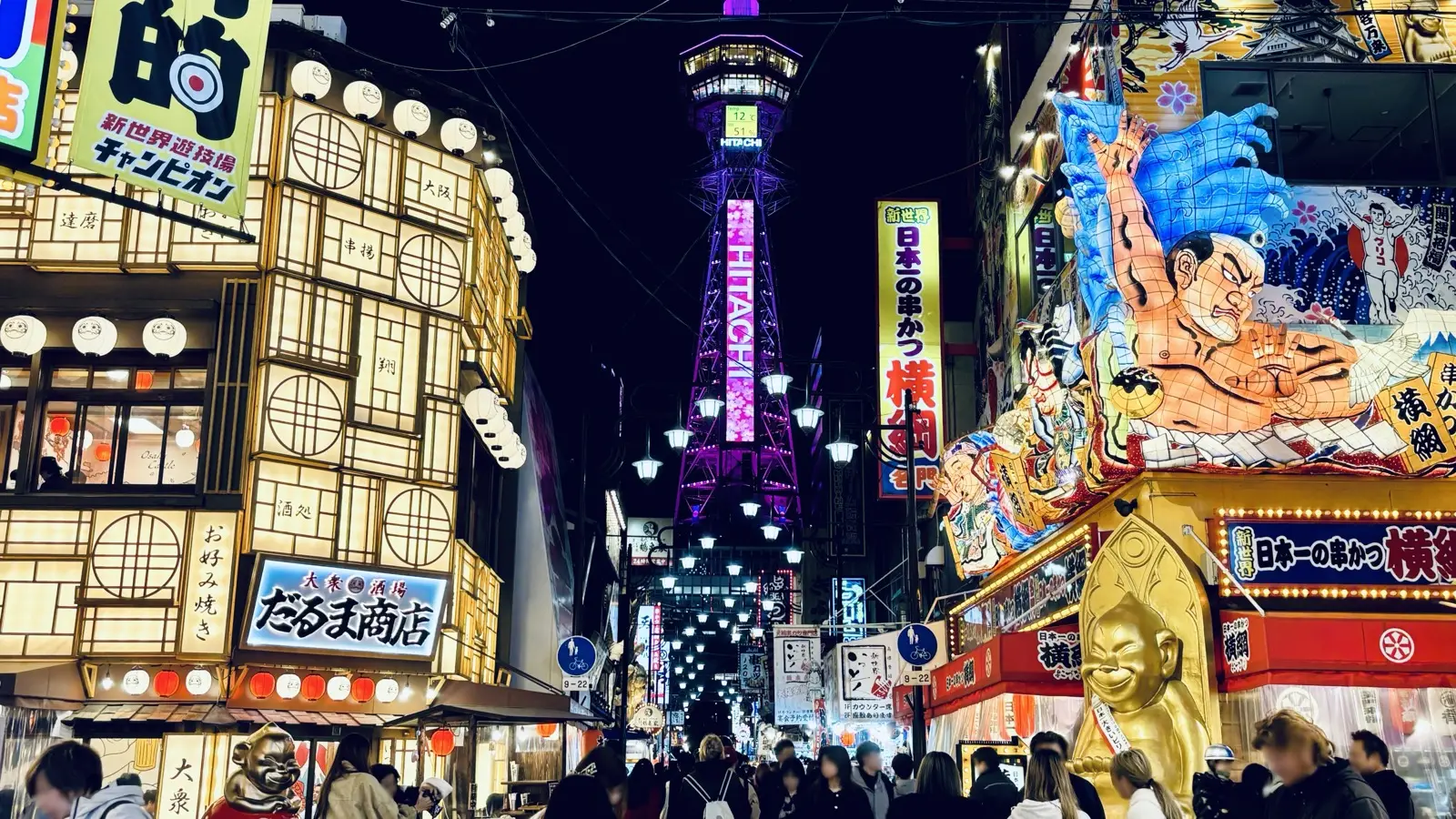
Retro Soul in Shinsekai: Tsutenkaku Tower and Billiken Shrines
Boarding the Midosuji Line southward to Dobutsuen-mae station brings you to Shinsekai (New World), an unvarnished district preserving the authentic populist heartbeat of post-war Osaka. Neon signboards, oversized three-dimensional blowfish lanterns, and festive noren curtains crowd the narrow streets like an authentic film set from the 1970s.
Towering 108 meters above the central crossing stands Tsutenkaku, the enduring landmark tower of southern Osaka. On its fifth-floor observatory sits the cherished wooden statue of Billiken, the 'God of Things as They Ought to Be.' Visitors reverently rub the soles of Billiken's feet, an endearing regional tradition believed to bestow financial prosperity and academic success.
Adrenaline seekers can venture onto Tip Tsutenkaku, an open-air cantilevered glass viewing balcony protruding into midair, or test the Tower Slider, a spiral tube slide spiraling 60 meters down the tower's exterior in just ten seconds. Both attractions embody Osaka's distinctive blend of comedic wit and daring theatricality.
Wandering the historic Janjan Yokocho covered arcade reveals old-school smartball pinball parlors, open-air shogi chess clubs, and lively banter among local regulars. The palpable warmth and unpretentious camaraderie illustrate why Osaka is celebrated as Japan's friendliest cultural capital.
Shinsekai Kushikatsu Alleys: Golden Skewers and Cold Draught Beer
The crowning sensory experience of Shinsekai is settling into a counter at an authentic kushikatsu tavern for freshly fried skewers and frosty mugs of draft beer. Heritage institutions like Kushikatsu Daruma (operating since 1929) and Tengu fry skewered beef, lotus root, plump prawns, and quail eggs in ultra-crisp, featherlight panko coatings.
Crispy on the exterior yet moist and flavorful within, each skewer pairs sublimely with ice-cold Asahi Super Dry or local draft lagers. Savoring the crisp crunch while watching master fryers manage boiling oil vats behind the counter provides the ultimate comfort food dining ritual after a long walking day.
Remember the golden rule of traditional Osaka kushikatsu dining: never double-dip a skewer into the communal sauce tub after taking a bite. To add extra seasoning to a partially eaten skewer, use the complimentary crisp cabbage leaves as an improvised ladle to scoop sauce neatly onto your skewer.
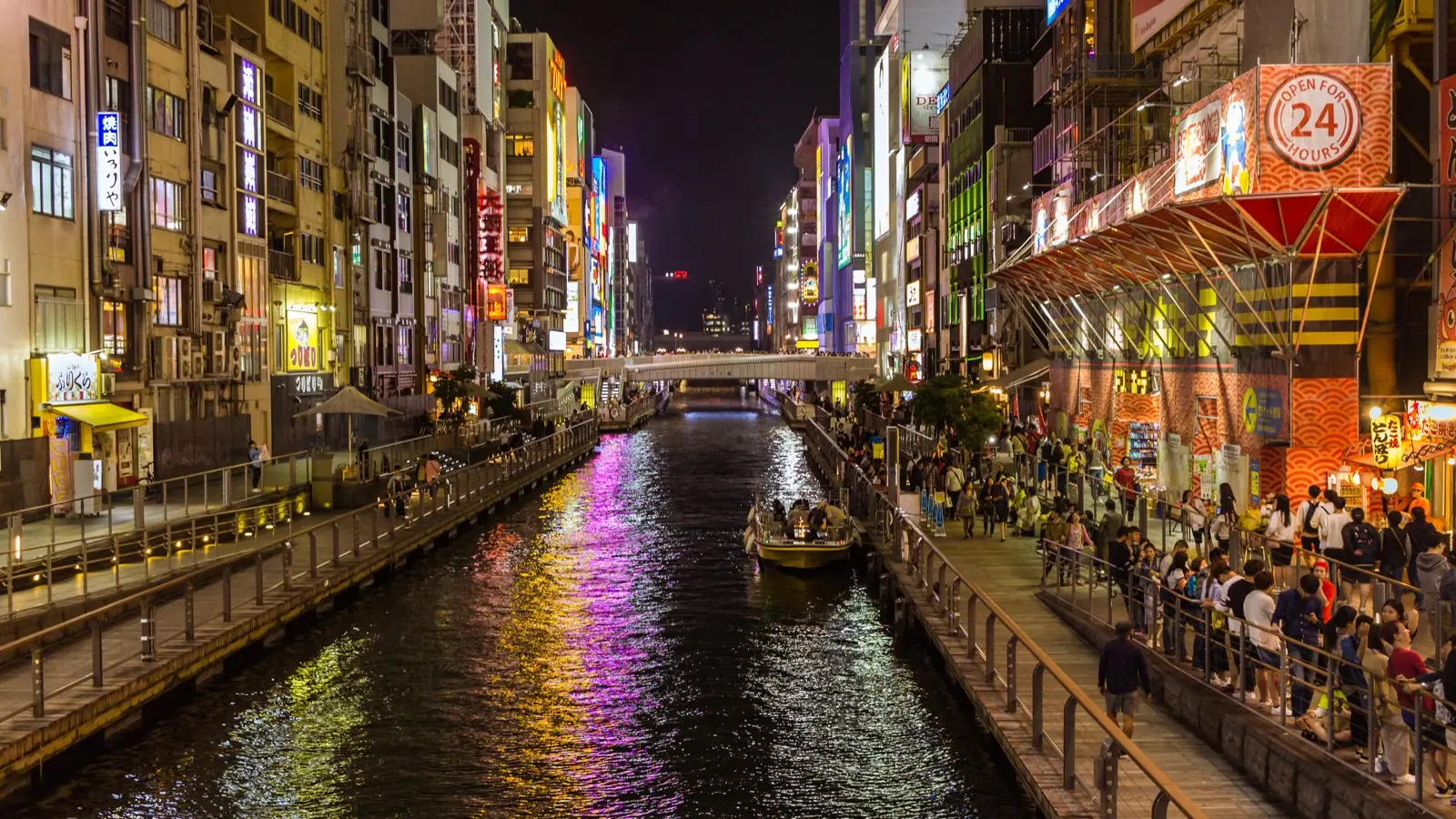
Concluding your evening, ride the Midosuji subway back to Namba and enjoy a leisurely midnight stroll beside the Dotonbori canal. Watching the radiant reflection of the Glico Man billboard rippling over the dark water puts a triumphant exclamation point on an extraordinary second day in Osaka.
Frequently Asked Questions
Field-tested answers to transit navigation, neighborhood choices, and payment traps.
Q1.What is the best time of day to ascend the Osaka Castle keep?
Q2.Which offers a better skyline view: Umeda Sky Building or the HEP FIVE Ferris wheel?
Q3.Why is double-dipping strictly prohibited at traditional kushikatsu counters?
Q4.Which transit pass provides the best value for Osaka Day 2 itineraries?
The Smart Traveler's Essential Toolkit
Prepare instant mobile data, private airport transfers, and skip-the-line passes in one place.
Pick a base in Osaka by your route
Choose the places you want to see and get the neighbourhood with the shortest travel.
Compare Osaka Hotel Rates
Find the cheapest channel across Agoda and major booking engines with Tripdify.
Share This Guide with Your Companions
When shared via chat or social media, a curated summary card is sent along.
Recommended Guides
Osaka Itinerary: Dotonbori and Umeda in Two Nights
Osaka is Japan culinary powerhouse where feasting is an art. Navigate Rapi:t airport transfers, Namba vs Umeda hotels, and street food corridors with veteran precision.
Osaka or Kyoto: Where to Base Yourself and Whether to Split the Stay
Why splitting short Kansai trips across multiple hotels exhausts travelers, navigating Haruka vs. Rapi:t airport rail lines, and choosing between Umeda hubs and Gion alleys.
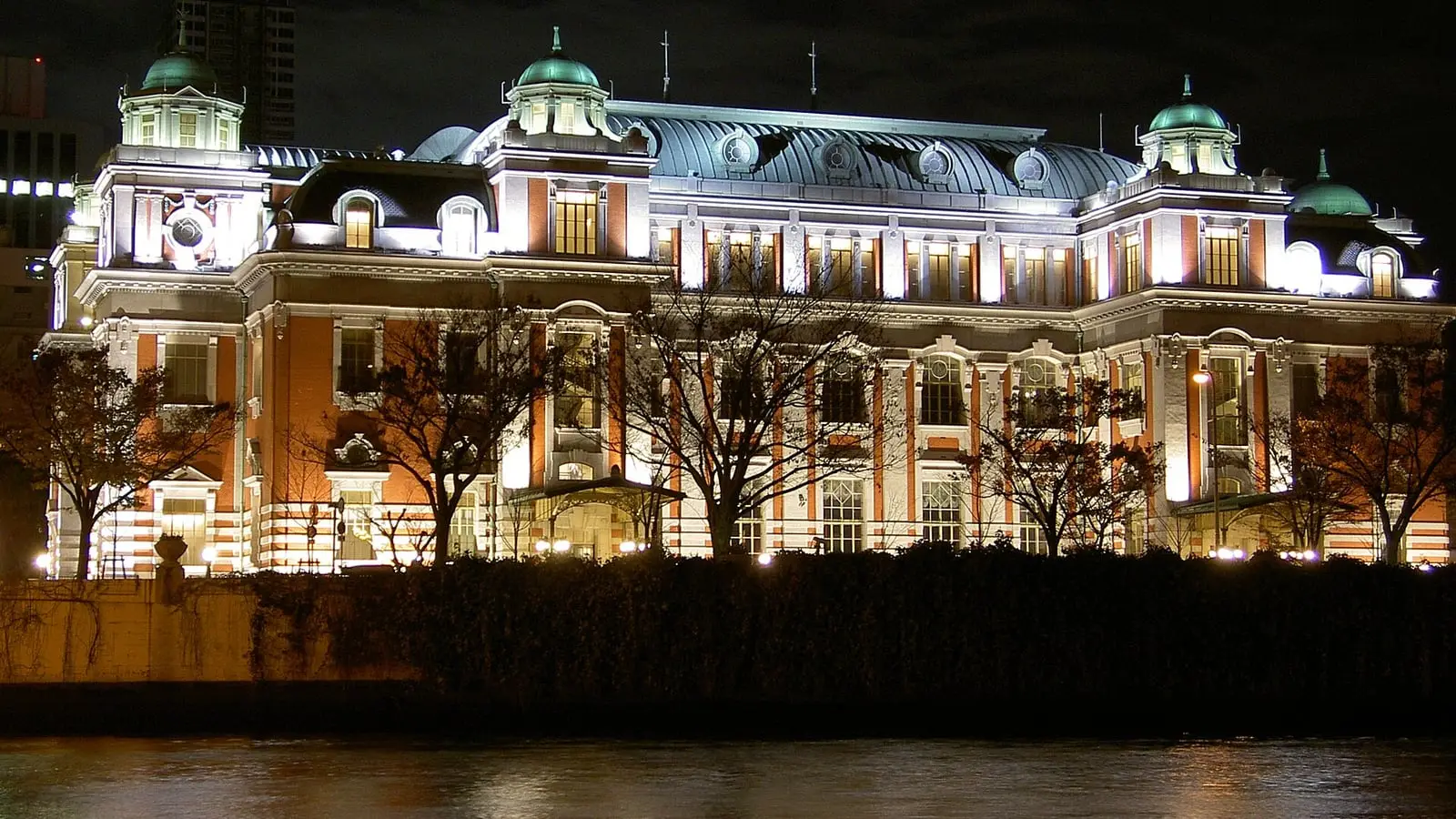
Where to Stay in Osaka: Umeda vs Namba Compared
Behind Osaka's vibrant culinary spirit and affable banter lies a sharp geographic contrast between northern corporate efficiency and southern commercial chaos. Choosing between the labyrinth of Umeda and the neon crowds of Namba dictates your transit ease to Kyoto and Kansai Airport. Here is an unvarnished field guide to selecting strategically sound lodging and avoiding neighborhood missteps.
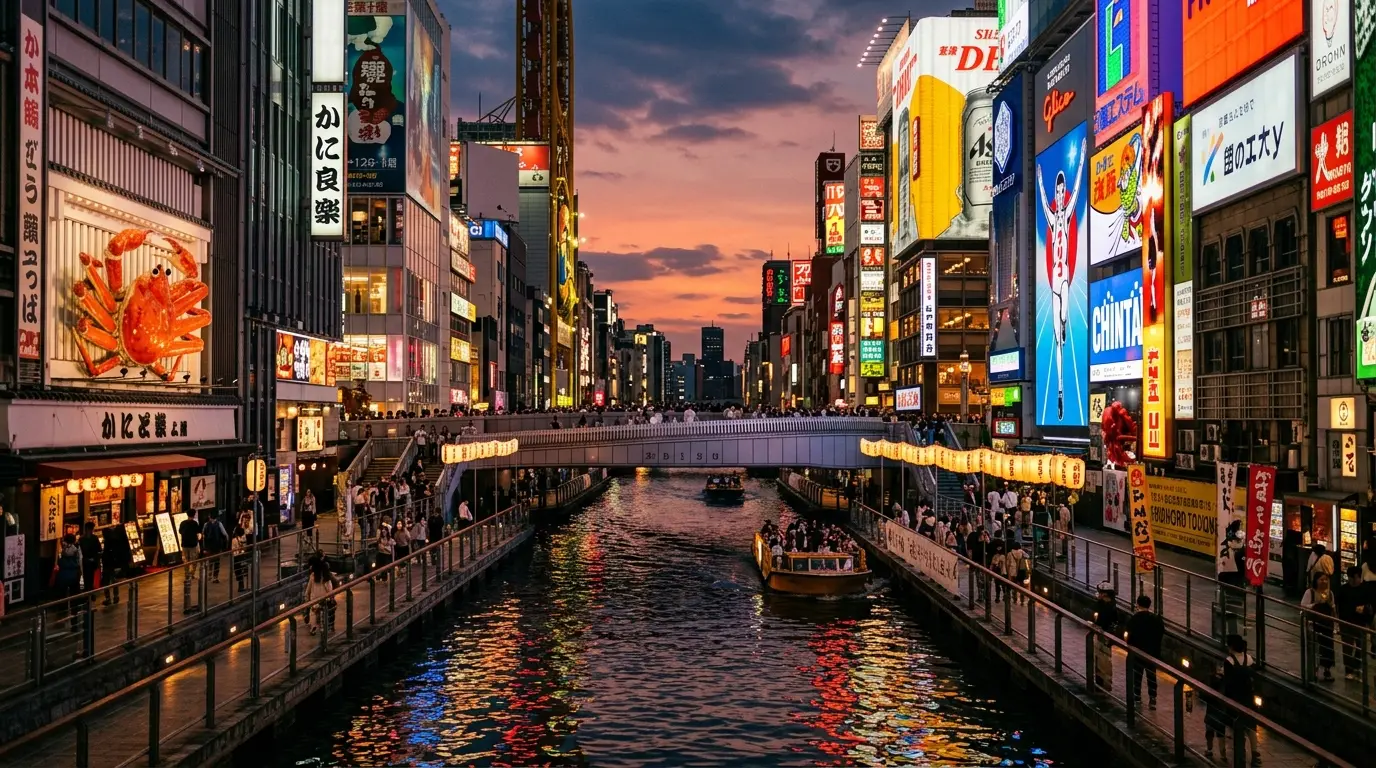
Osaka Day 1 Itinerary: Kansai Airport to Namba and Your First Night in Dotonbori
From boarding the 34-minute Nankai Rapi:t train at Kansai Airport to navigating Namba Station, mastering takoyaki ordering and kushikatsu sauce rules, and taking a sunset Dotonbori canal cruise. A frictionless masterclass for your first 24 hours in Osaka.
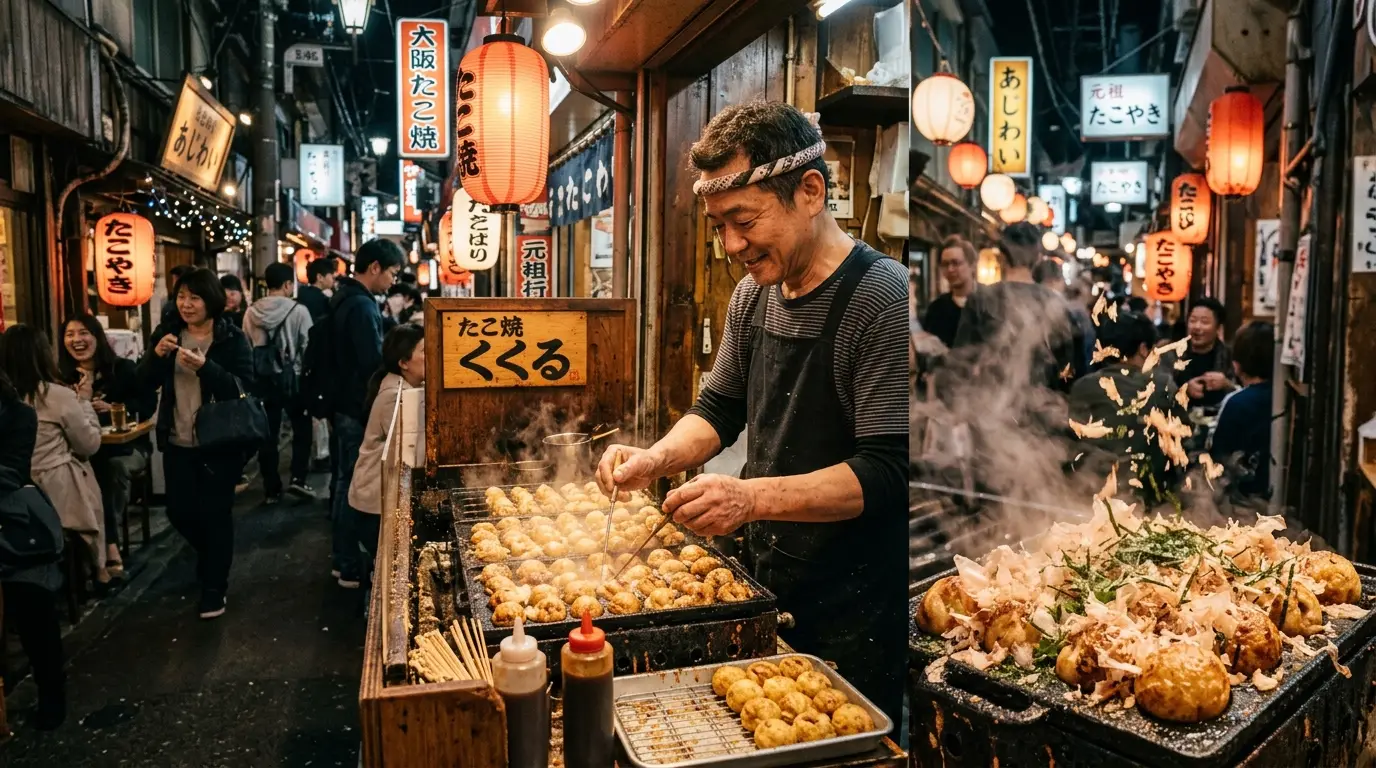
Osaka Day 3 Itinerary: Kuromon Market, Shinsaibashi Shopping and the Airport Run
The definitive closing chapter to your Osaka journey: fresh sashimi feasts at Kuromon Market, vintage shopping along Amerikamura, covered retail in Shinsaibashi, and 34-minute express transit to Kansai Airport (KIX) aboard the iconic Nankai Rapi:t.
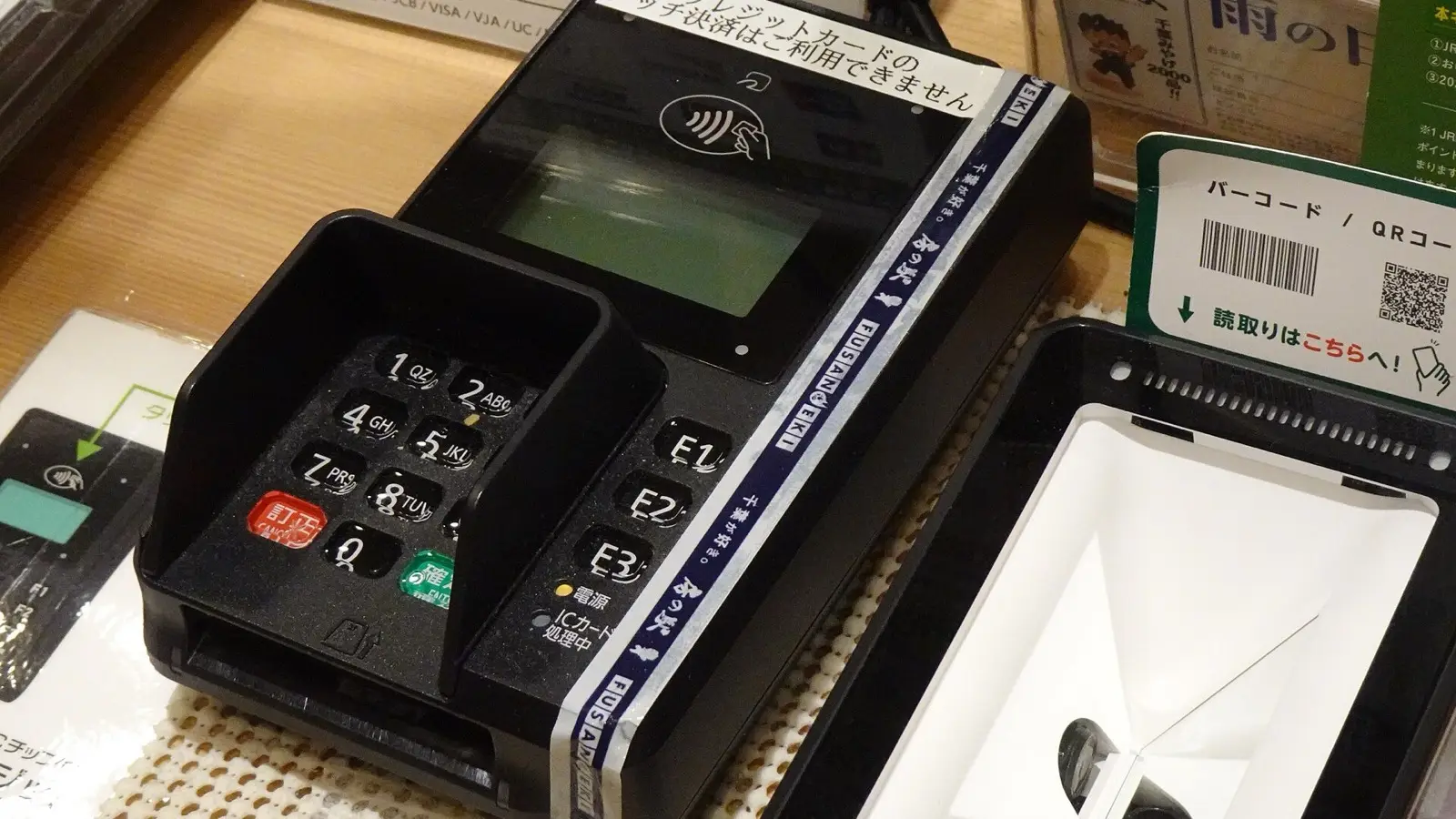
Travel Card or Credit Card Abroad: Which Wins and When
A practical breakdown comparing multi-currency travel debit cards against premium credit card travel rewards, highlighting standalone ATM traps and hotel deposit holds.
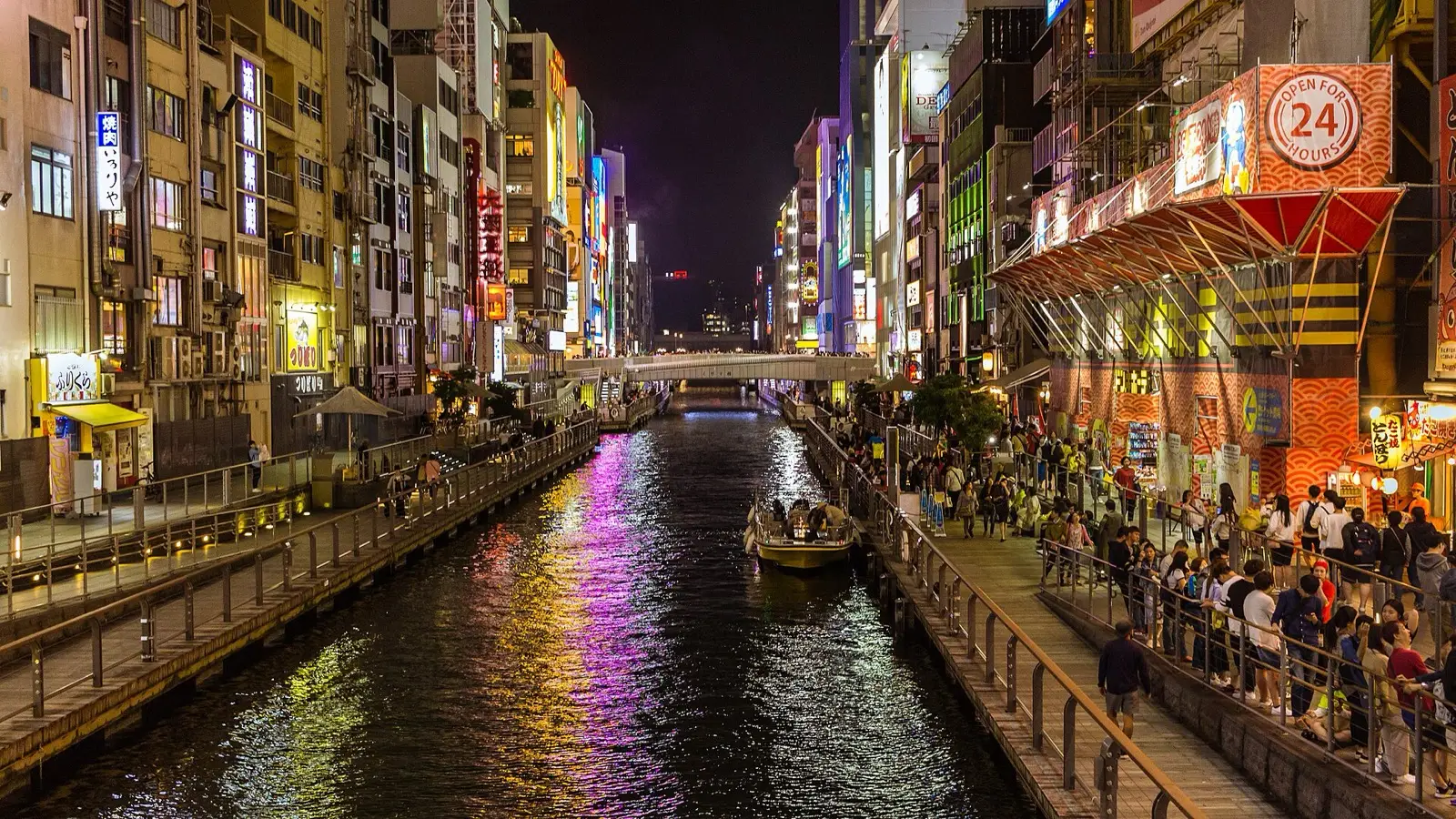
Best Hotels in Osaka: Namba vs Umeda vs Tennoji Compared
Selecting the ideal neighborhood base dictates the pace and ease of your entire Osaka itinerary. From the neon nightlife, late-night dining, and Nankai Rapi:t airport express links of Namba and Shinsaibashi, to the unmatched rail connectivity to Kyoto and Kobe found in Umeda, and the affordable panoramic luxury of Tennoji anchored by Abeno Harukas, this neighborhood curation breaks down top accommodations for every travel style.
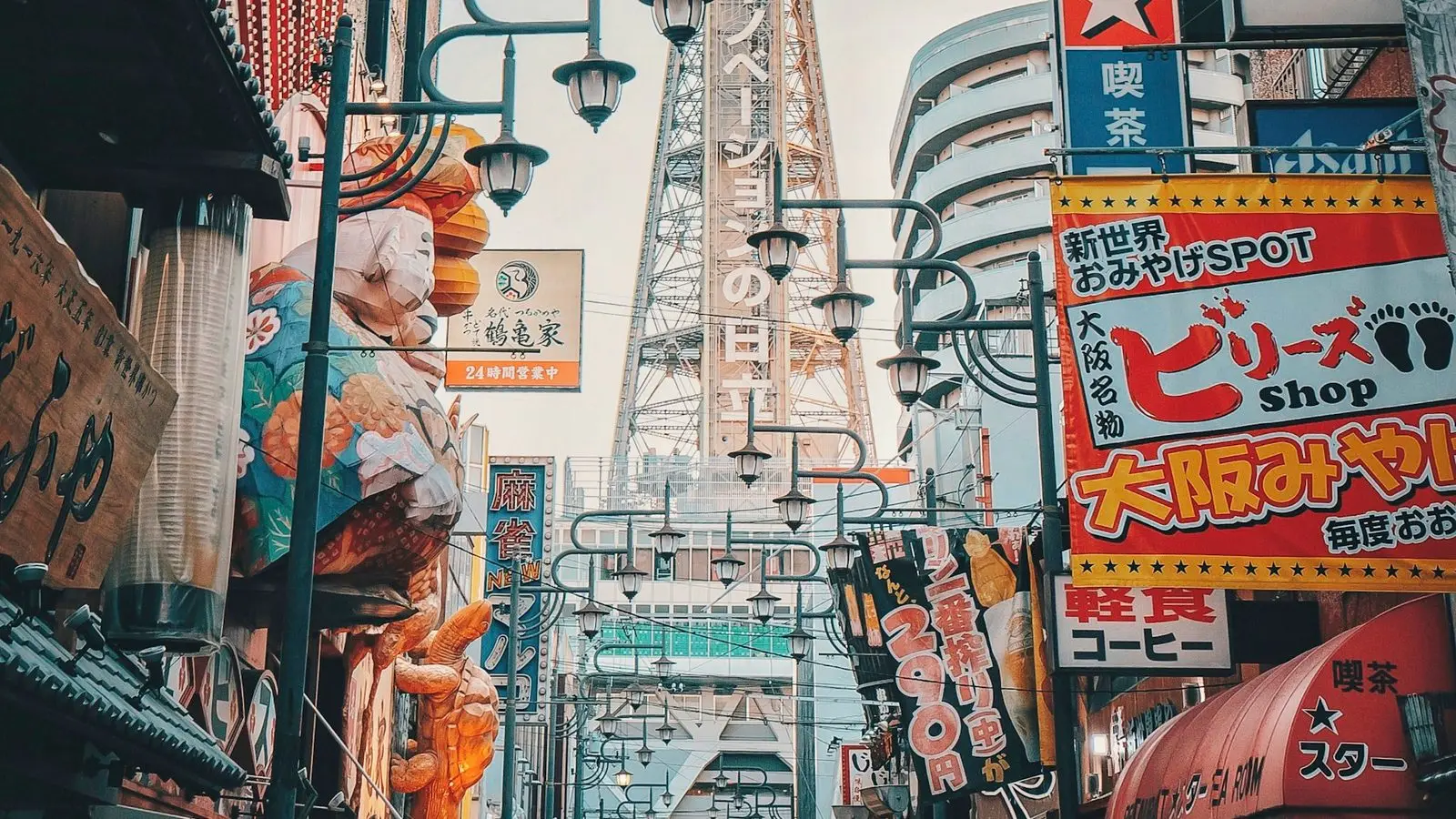
5 Best Value Hotels Near Osaka Namba & Dotonbori: Nankai Rapi:t Access and Quiet Alleyways
When planning an Osaka getaway, the Namba district invariably claims the top spot for accommodation. Boarding the futuristic Nankai Rapi:t airport express whisks travelers from Kansai International Airport straight into Nankai Namba Station in just 34 minutes without transfers, placing the famous Glico Running Man, sizzling takoyaki stalls, and Shinsaibashi shopping arcades within effortless walking distance. However, booking properties directly along the Dotonbori canal strip often backfires with thumping street noise, rowdy late-night crowds, and micro-sized floor plans that cannot accommodate open suitcases. The secret lies in positioning yourself just two blocks back into tranquil residential corridors like Sennichimae and Hozenji. Here is a definitive guide to five top-value Namba hotels under $100 per night, complete with natural hot spring onsen baths, complimentary late-night ramen, and restful soundproofing.
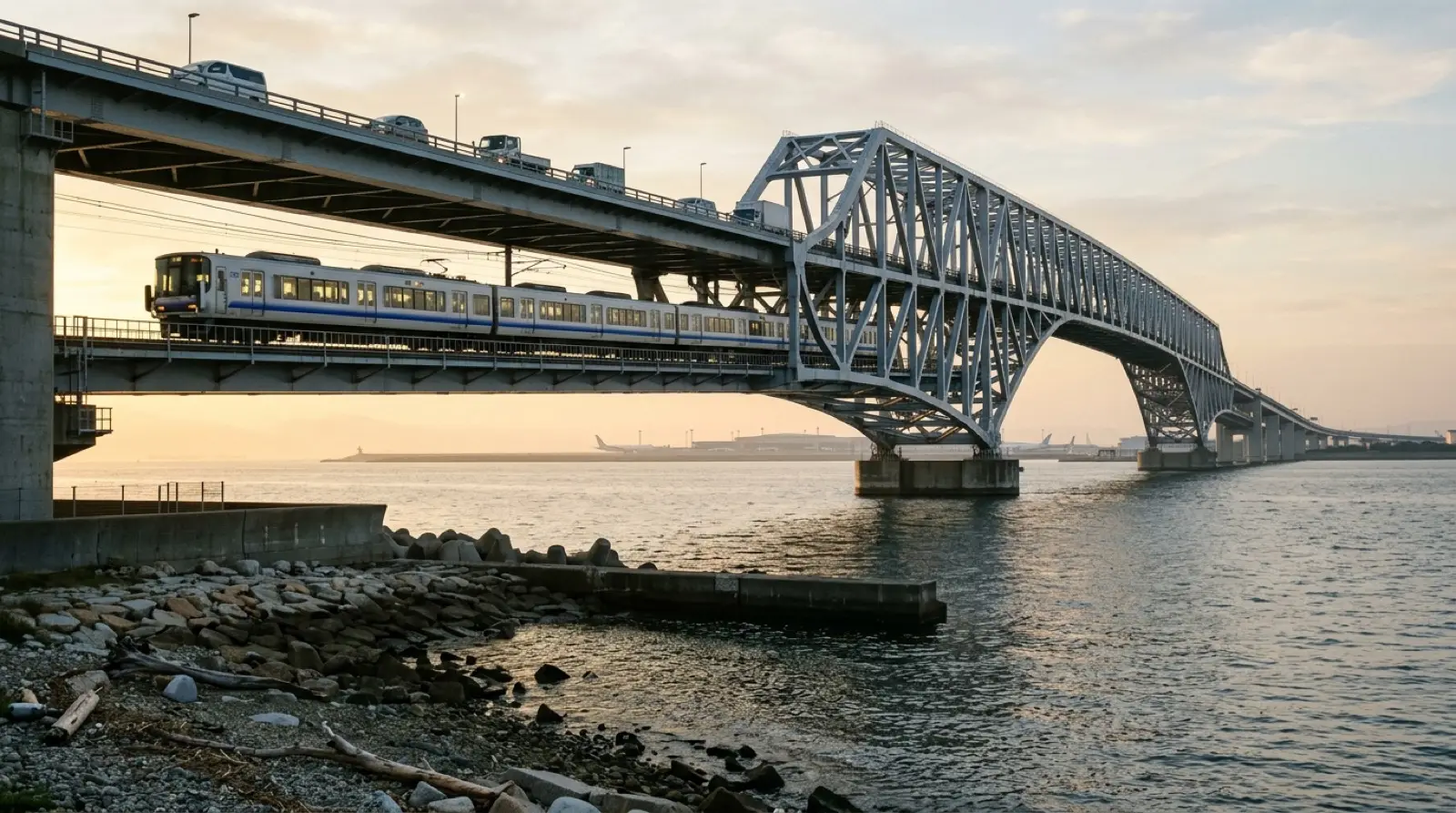
Kansai Airport to Osaka and Kyoto: Train, Bus and Taxi Fares Compared
For a hotel in Namba, the Nankai Airport Express is the cheapest ride at 970 yen and about 45 minutes, while the all-reserved Rapi:t does it in as little as 34. For Osaka Station, Shin-Osaka and Kyoto, JR's Haruka runs direct in about 47 and 80 minutes, and the discounted one-way ticket for short-term visitors brings Kyoto down to 2,200 yen. Land late and your options shrink to a cashless-only night bus to Umeda (0:15 from Terminal 1) or a taxi.
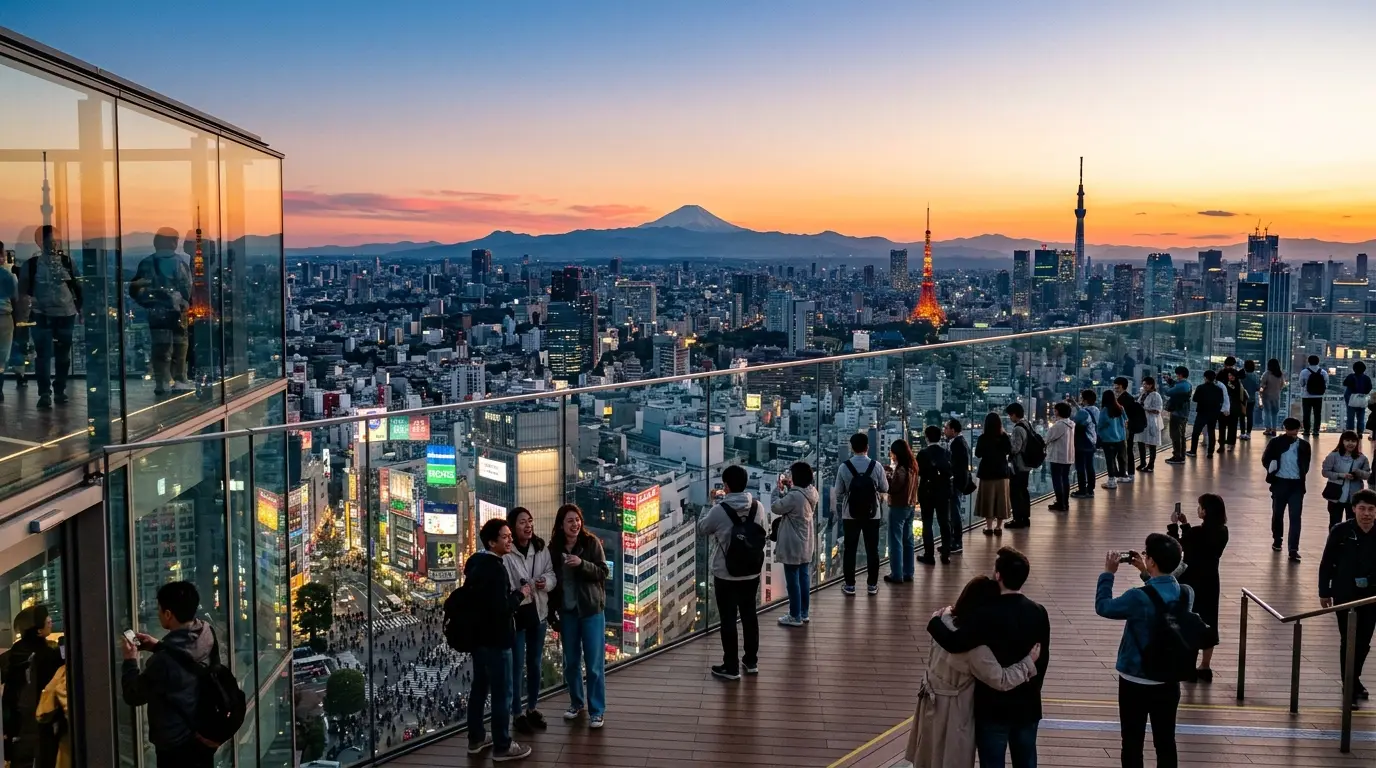
Where to Stay in Tokyo: Shinjuku vs Shibuya vs Ginza
Comparing room footprints across Shinjuku, Ginza, and Ueno, locking in sudden 14-day cancellation drops, and eliminating DCC fees with clean Yen checkout.
7 Budget Hotels in Tokyo Under $100 on the Yamanote Line
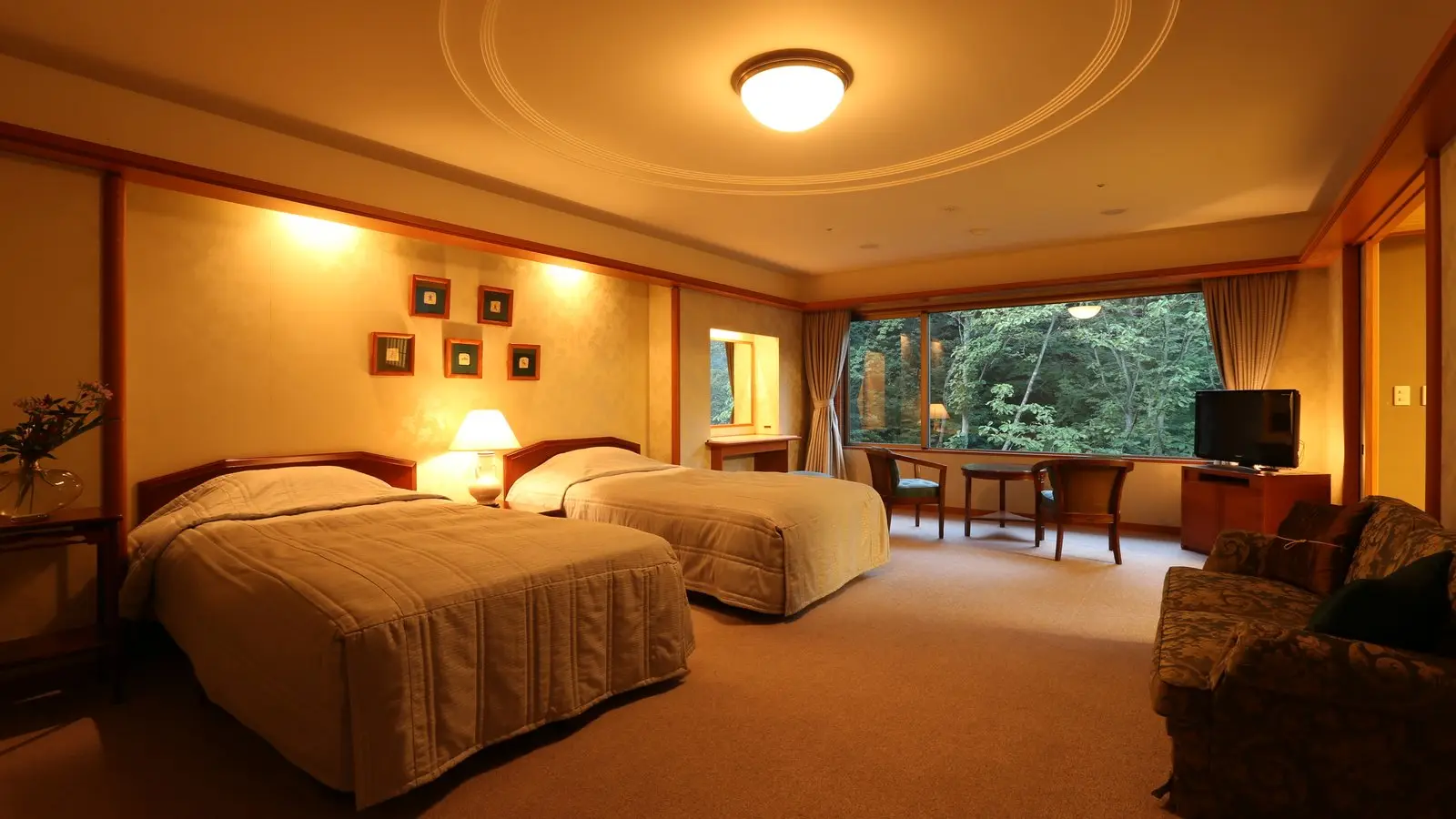
Even amid yen fluctuations, central Tokyo hotel rates have soared. Learn how to secure Yamanote loop line hotels at half the price of Shinjuku, compare onsen bath chains like Dormy Inn, trigger secret Agoda VIP and Booking.com Genius discounts, and dodge hidden currency fees with yen settlement.
How to Read the Tokyo Subway Map and Where to Stay on the Yamanote Line
How to choose between Keisei Skyliner and Narita Express, avoid the Tokyo Subway Ticket trap, use Apple Wallet Suica, and select the ideal hotel base in Tokyo.