
TokyoGuide
Tokyo Day 2 Itinerary: Booking Shibuya Sky, Harajuku Backstreets and Roppongi at Night
Shibuya Sky four-week sunset booking tricks, Omotesando architecture walks, Meiji Jingu forest, and midnight Roppongi Hills.
Meiji Jingu Forest and Omotesando: Morning Serenity to Modern Architecture
Day 2 in Tokyo commences before concrete corridors fully awaken, breathing crisp cedar phytoncide beneath towering tree canopies. Emerging from the west exit of JR Harajuku Station, travelers encounter a colossal weathered timber Torii gate. This marks the entry into Meiji Jingu, an artificial sacred forest comprising 100,000 donated trees from across the Japanese archipelago.
The rhythmic crunch of fine gravel beneath shoes and morning sunlight angling through ancient cypress leaves dispels lingering travel fatigue. Bow twice, clap twice, and bow once more before the main hall in accordance with Shinto rites, perhaps inscribing a wooden Ema plaque with travel wishes. At 9:00 AM, the sanctuary grounds offer blissful contemplative isolation unmarred by tour crowds.
Departing the shrine complex across Harajuku station immediately shifts the sensory landscape into an architectural runway. Broad, tree-lined Omotesando boulevard unfolds a museum of modern structural masterworks: Tadao Ando's Omotesando Hills, SANAA's translucent Dior flagship, and Herzog & de Meuron's crystalline Prada boutique. Diverging into quiet alleys reveals the winding spine of Cat Street.
Meandering south toward Shibuya, pedestrian Cat Street serves as Tokyo's indie fashion and artisanal coffee nexus. Bypass commercial conglomerates to sip a single-origin pour-over from a neighborhood microroaster, browsing curated denim racks and vintage boutiques while strolling unhurriedly downhill toward Shibuya.
Shibuya Scramble and Hachiko: Navigating 3,000 Pedestrians in Motion
Winding out of Cat Street into central Shibuya quickens the city's pulse exponentially as you approach the legendary Shibuya Scramble Crossing. When traffic lights turn green in unison, up to 3,000 pedestrians surge across interlocking crosswalks simultaneously, demonstrating Tokyo's kinetic urban vitality in its purest manifestation.
Before plunging into the crosswalk, greet the bronze Hachiko statue positioned outside the station exit. Commemorating the steadfast Akita dog who waited a decade for his deceased master, this plaza buzzes with travelers posing for souvenir portraits. When signals flash green, slip smoothly into the human tide, traversing the broad intersection toward QFRONT.
Experiencing the crossing on foot warrants complementary overhead surveillance. While the second-floor windows of Starbucks inside QFRONT represent the historical vantage, seats are constantly besieged. Superior, relaxed vistas await from the seventeenth-floor open terrace of CÉ LA VI inside Shibuya Fukuras, or the rooftop sky deck atop Magnet by Shibuya 109.
Shibuya Station's subterranean levels comprise a notoriously disorienting labyrinth. Rely consistently on alphanumeric wall plaques (e.g., A12, B7) rather than intuitive orientation. Ascend to street level to visit Nintendo Tokyo and the Pokemon Center on the sixth floor of Shibuya PARCO before gearing up for your afternoon appointment atop Shibuya Sky.
Shibuya Sky: 229-Meter Rooftop Sunset and Flawless Booking Strategy
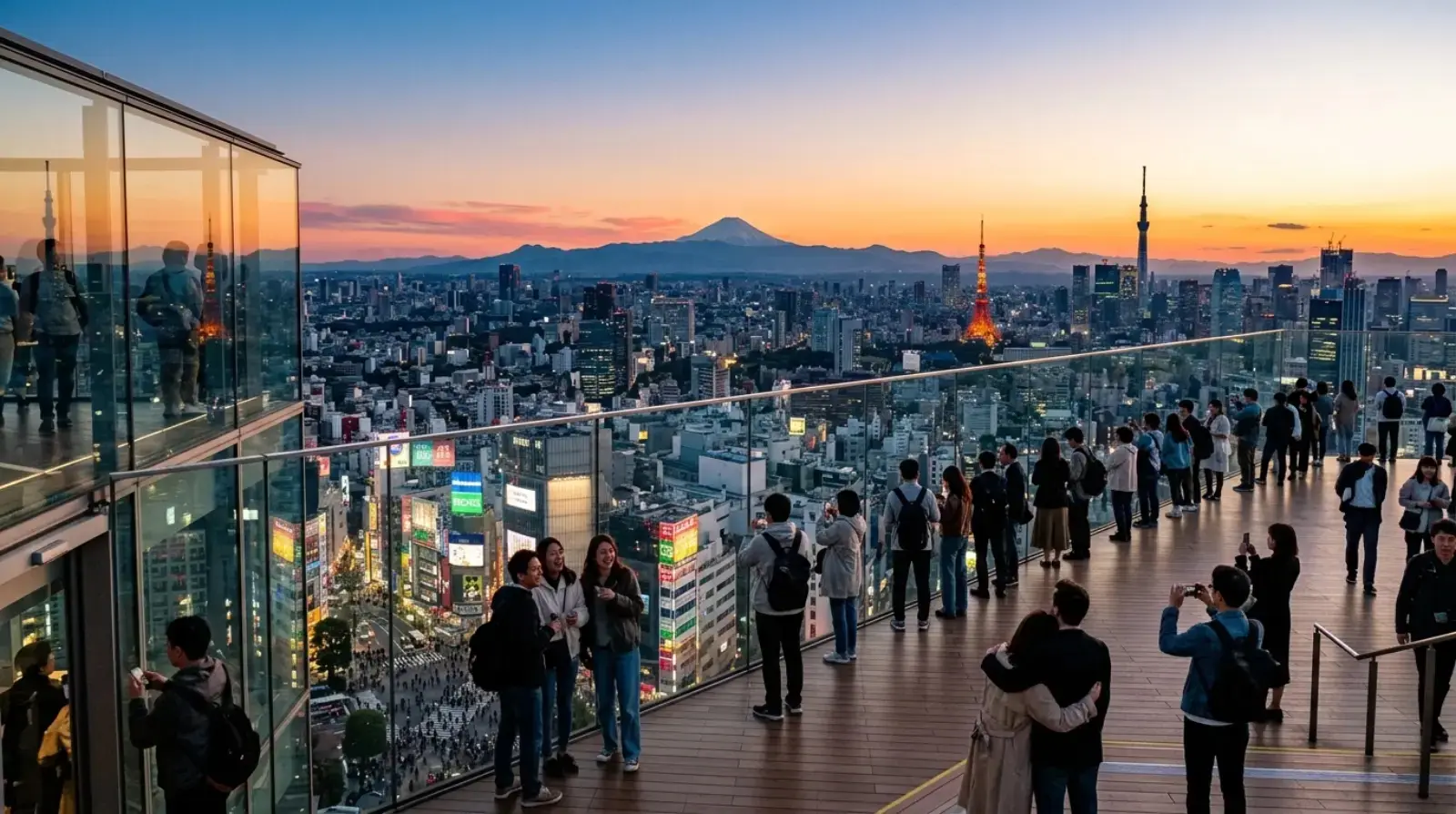
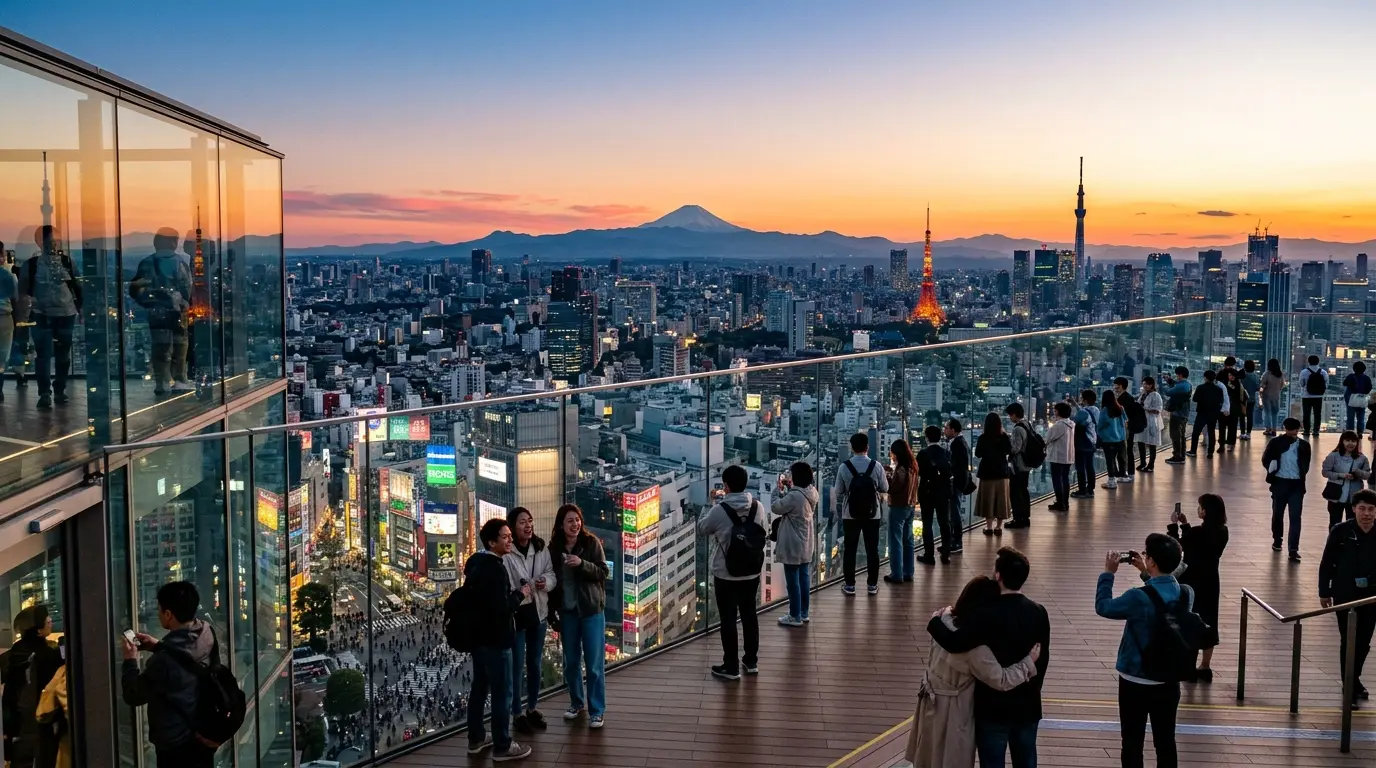
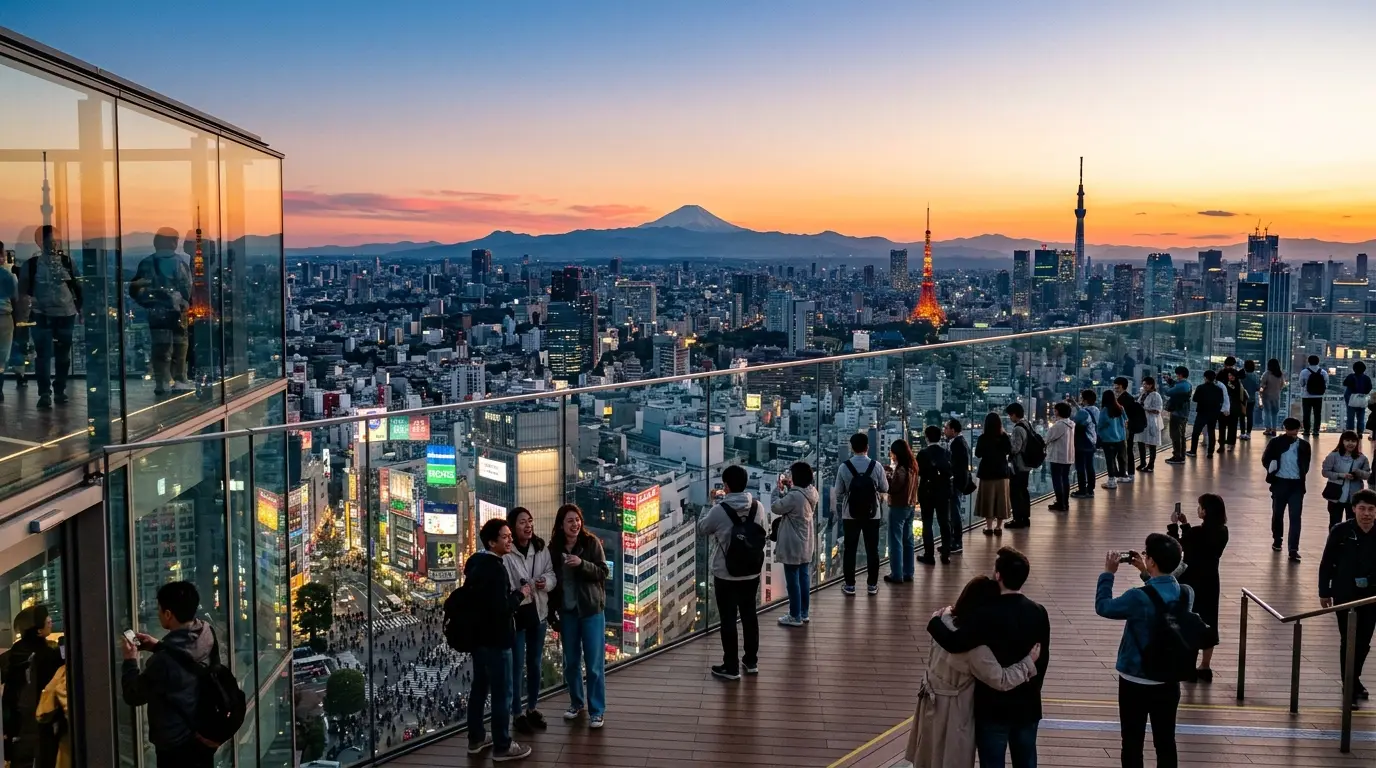
The crowning highlight of Day 2 is ascending 229 meters above Shibuya Scramble Square onto the open-air rooftop observatory: SHIBUYA SKY. Providing unobstructed 360-degree vistas across Greater Tokyo, this skydeck during twilight golden hour is widely regarded as one of travel's most coveted panoramic moments.
Securing sunset allocations necessitates tactical foresight. Inventory unlocks precisely four weeks (28 days) in advance at midnight Japan Standard Time (00:00 JST) via the official portal. Target timeslots roughly 30 minutes prior to official sunset. Booking a 5:40 PM slot during summer, for example, lets a single admission ticket bridge brilliant daylight, saturated pink twilight, and illuminated evening nightscapes.
Upon reaching the 46th-floor concourse, marshals direct guests into the central locker room. To prevent windborne drop hazards into city streets below, bags, backpacks, tripods, umbrellas, scarves, and beverage containers are strictly barred from the open roof. Only cameras and smartphones secured with dedicated neck or wrist cords may proceed outside. Keep a 100-yen coin handy for the refundable locker deposit.
Riding the glass escalator onto the breezy rooftop helipad takes your breath away. Directly below, miniature pedestrians cross Scramble Crossing; toward the western horizon, the majestic volcanic cone of Mount Fuji silhouettes against amber clouds; to the east, Tokyo Tower and Tokyo Skytree ignite their evening beacons in sparkling unison.
Queue briefly at the transparent corner enclosure known as the 'Sky Edge' to snap exhilarating portraits floating above the metropolis. Reclining upon artificial turf hammocks as dusk deepens into cobalt night cements this single hour as the emotional crescendo of your Tokyo journey.
Roppongi Hills and Tokyo Tower: The Most Romantic Crimson Evening
Descending from Shibuya Sky, board the Hanzomon subway line to Aoyama-itchome, transferring smoothly to the Oedo line into Roppongi, Tokyo's premier enclave for high art and evening gastronomy. Roppongi Hills Mori Tower presents the quintessential vantage point for admiring the iconic crimson lattice of Tokyo Tower from an immaculate horizontal angle.
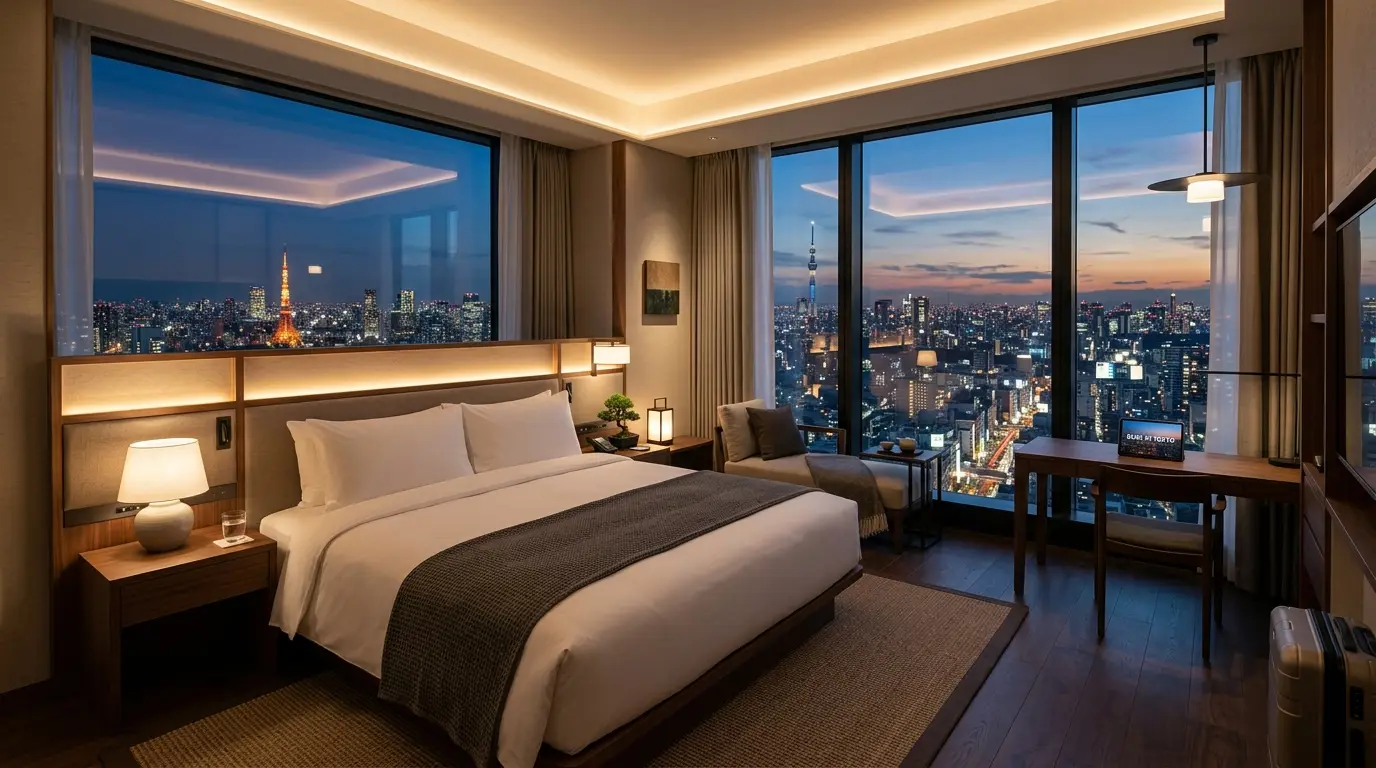
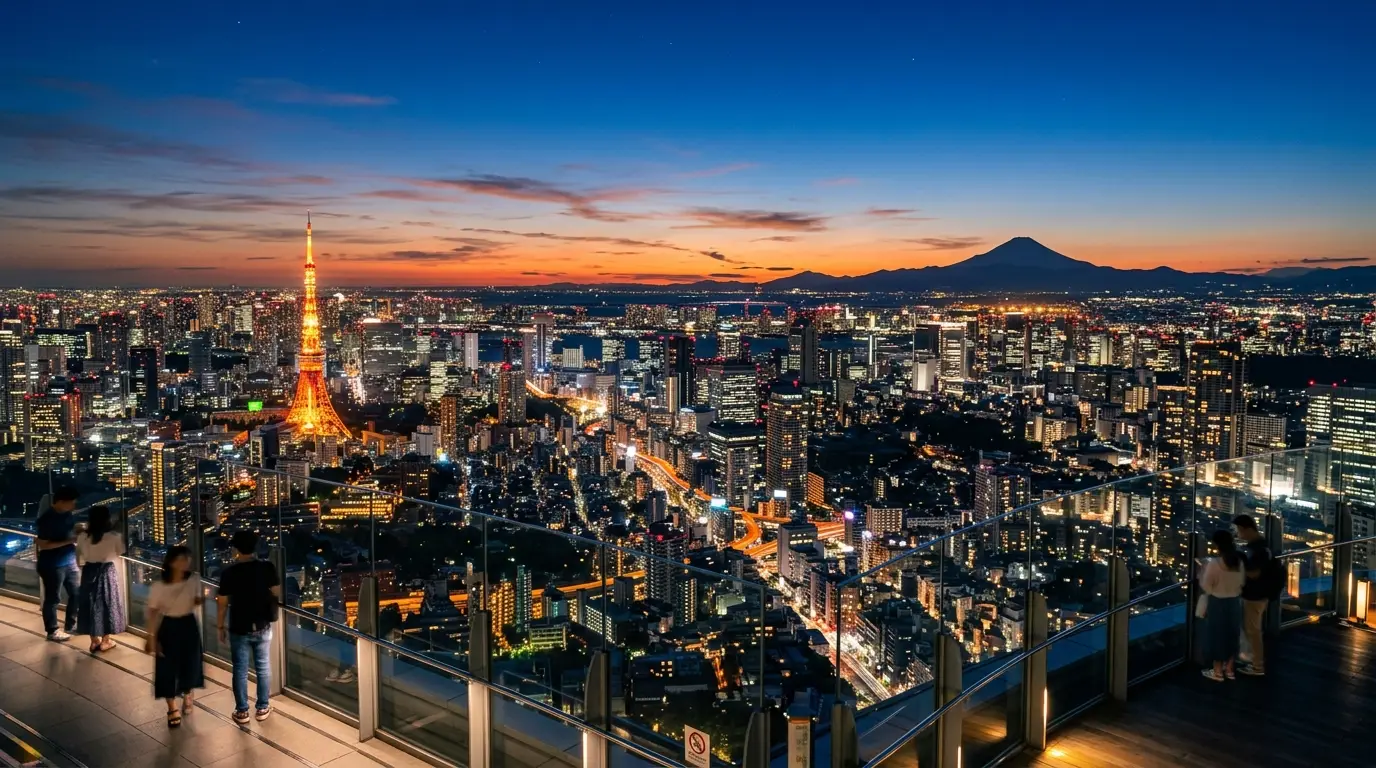
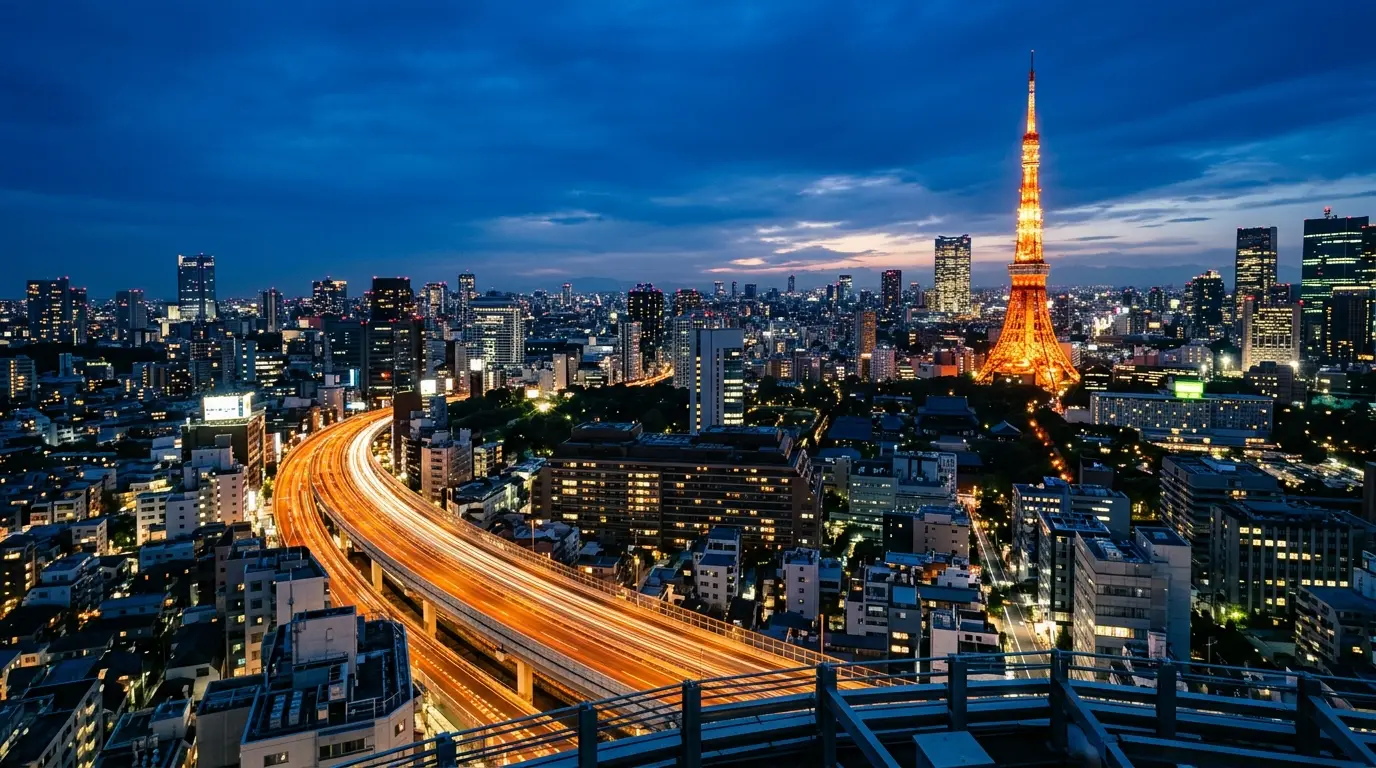
The Tokyo City View observation deck on the 52nd floor features floor-to-ceiling glass windows framing Tokyo Tower blazing like an orange torch amidst an infinite sea of illuminated architectural gridlines. While Shibuya Sky celebrates kinetic modernity, the vista from Roppongi Hills conveys deeply nostalgic, cinematic romance.
After descending from the observation gallery, stroll across the open plaza to inspect Louise Bourgeois's monumental bronze spider sculpture, 'Maman'. Designed as an open-air cultural ecosystem, every corner of Roppongi Hills integrates bespoke designer benches and artistic lighting installations.
Wander along Roppongi's quieter backstreets, uncovering intimate hidden wine bars and artisan bistros. The nocturnal atmosphere here, blending international expatriates with creative Japanese professionals, showcases Tokyo at its most cosmopolitan.
Late-Night Sanctuary: Omoide Yokocho Yakitori and Last-Train Timers
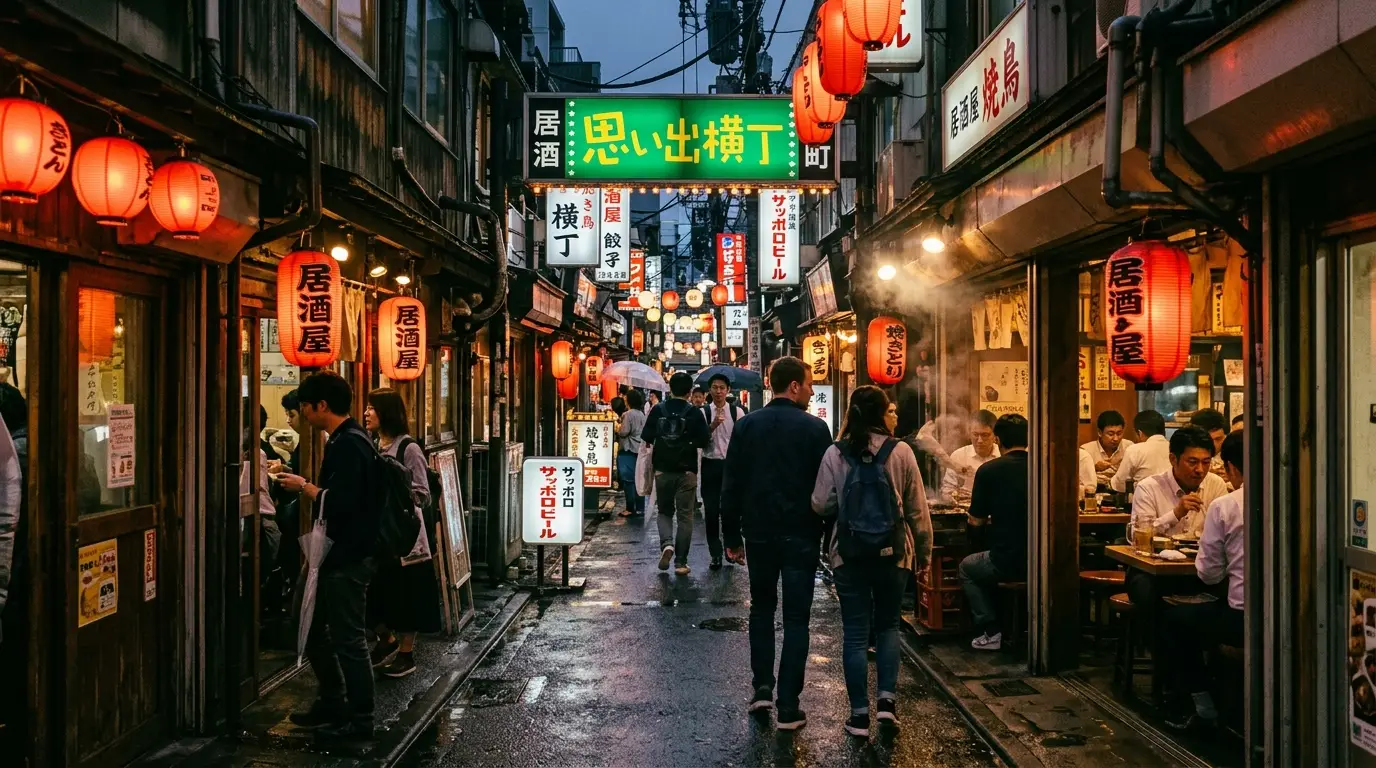
Refusing to conclude Day 2 prematurely, make your way toward the narrow railway alleyway of Omoide Yokocho (Memory Lane) beside Shinjuku Station's west exit, or Golden Gai on the east side next to Kabukicho. Retaining evocative post-war Showa-era architectural grit, roughly eighty miniature izakaya stalls stand shoulder to shoulder beneath glowing crimson paper lanterns.
Slide open a rattling wooden door and squeeze onto a counter stool in a six-seat stall. Order a sizzling yakitori skewer assortment (Yakitori Moriawase) alongside a tall, chilled Suntory Kaku highball. Select between sea salt (Shio) or sweet caramelized soy glaze (Tare); skewers grilled over searing binchotan charcoal arrive steaming directly before you.
Clink glasses with neighboring salarymen and international wanderers, absorbing the smoky camaraderie of Tokyo after hours. Most establishments apply a modest mandatory seating charge (Otoshi) of 300 to 500 JPY per guest with a small appetizer, and cash remains the preferred transaction medium.
Amidst the convivial chatter, monitor your smartphone clock closely. The JR Yamanote Line and Tokyo Metro lines cease operations between 11:50 PM and 00:30 AM. Missing the final train triggers a steep 20 percent late-night taxi surcharge, so settling your bill around 11:30 PM ensures a relaxed subway ride back to your hotel. Hydrate, rest your feet, and celebrate a flawless Day 2 landmark triumph.
Frequently Asked Questions
Field-tested answers to transit navigation, neighborhood choices, and payment traps.
Q1.When and how should travelers book sunset entry slots for Shibuya Sky?
Q2.What is the optimal morning walking sequence connecting Meiji Jingu, Harajuku, and Omotesando?
Q3.What baggage and camera gear restrictions are enforced on the Shibuya Sky open-air roof?
Q4.What are the midnight transit cutoffs for Tokyo subways, and how do late-night taxi surcharges work?
The Smart Traveler's Essential Toolkit
Prepare instant mobile data, private airport transfers, and skip-the-line passes in one place.
Pick a base in Tokyo by your route
Choose the places you want to see and get the neighbourhood with the shortest travel.
Compare Tokyo Hotel Rates
Find the cheapest channel across Agoda and major booking engines with Tripdify.
Share This Guide with Your Companions
When shared via chat or social media, a curated summary card is sent along.
Recommended Guides
Where to Stay in Tokyo: Shinjuku vs Shibuya vs Ginza
Comparing room footprints across Shinjuku, Ginza, and Ueno, locking in sudden 14-day cancellation drops, and eliminating DCC fees with clean Yen checkout.
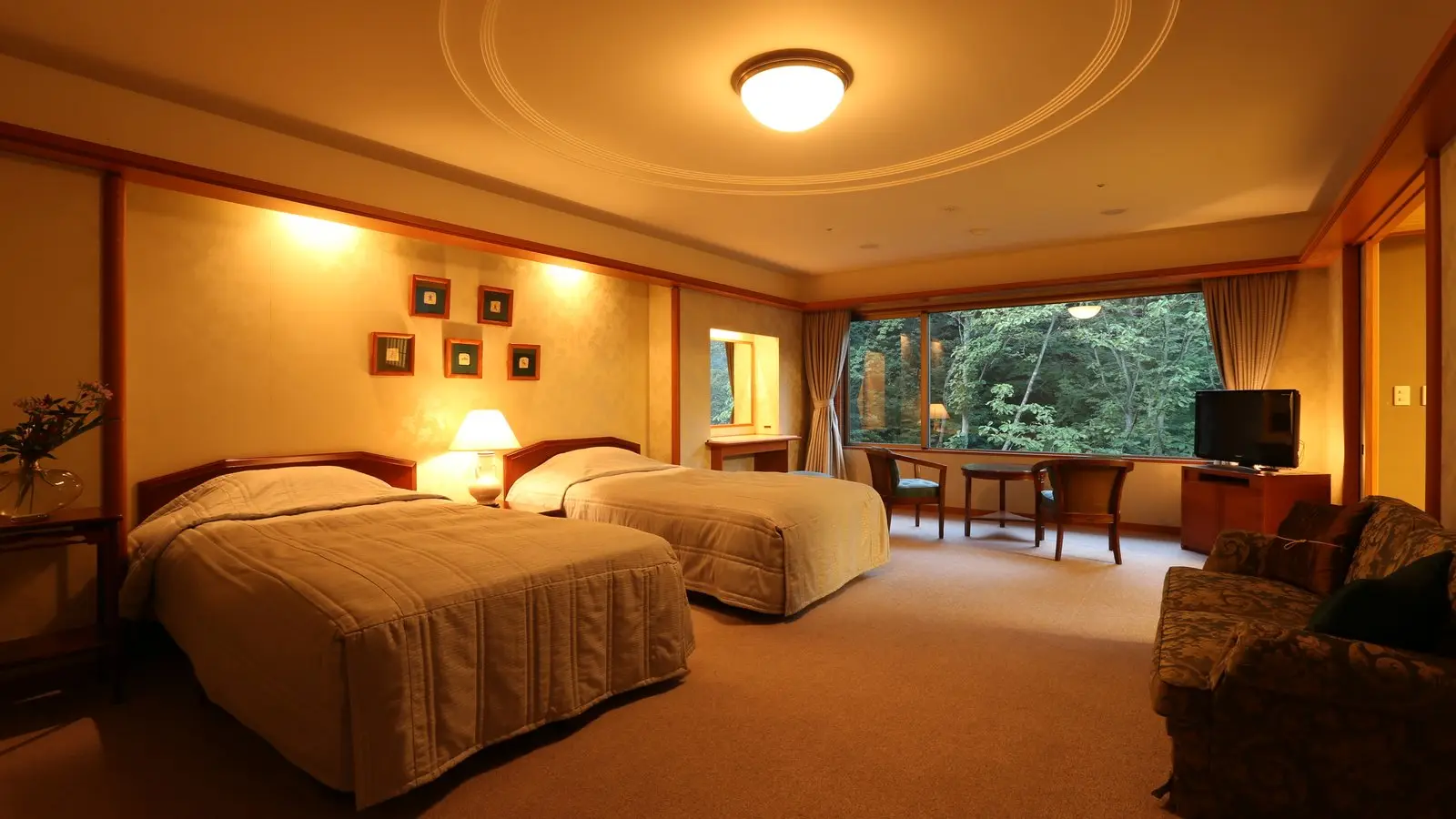
7 Budget Hotels in Tokyo Under $100 on the Yamanote Line
Even amid yen fluctuations, central Tokyo hotel rates have soared. Learn how to secure Yamanote loop line hotels at half the price of Shinjuku, compare onsen bath chains like Dormy Inn, trigger secret Agoda VIP and Booking.com Genius discounts, and dodge hidden currency fees with yen settlement.
How to Read the Tokyo Subway Map and Where to Stay on the Yamanote Line
How to choose between Keisei Skyliner and Narita Express, avoid the Tokyo Subway Ticket trap, use Apple Wallet Suica, and select the ideal hotel base in Tokyo.
Tokyo Day 1 Itinerary: Narita Airport to the City and Your First 24 Hours
From stepping off at Narita Airport to mastering high-speed trains, navigating Tokyo's sprawling transit hubs, ordering counter ramen effortlessly, and catching sunset from Roppongi Hills. A definitive guide for your first 24 hours in Tokyo.
Tokyo Day 3 Itinerary: Asakusa, Akihabara, Ginza Depachika and Flying Home
The ultimate finale for your Tokyo stay: tranquil morning worship at Sensoji, retro subculture in Akihabara, Ginza Six architectural rooftop views and basement depachika feasts, capped by seamless Skyliner and N'EX airport connections.
Exchange Rate Tricks and Hidden Fees When Booking Hotels Abroad
An investigative playbook uncovering why OTA final totals escalate, why card issuer partner links are worth comparing against mobile app rates, and the exact local-currency checklist to stop hidden fees.

eSIM vs Roaming vs a Local SIM: Which Is Cheapest for Travel Data
Never wait in line for physical SIM swaps or haul heavy battery packs again. From solo weekend getaways to multi-week family tours, here is how to pick the right mobile data setup without wasting money.
Does Incognito Mode Make Flights Cheaper? What Dynamic Pricing Really Does
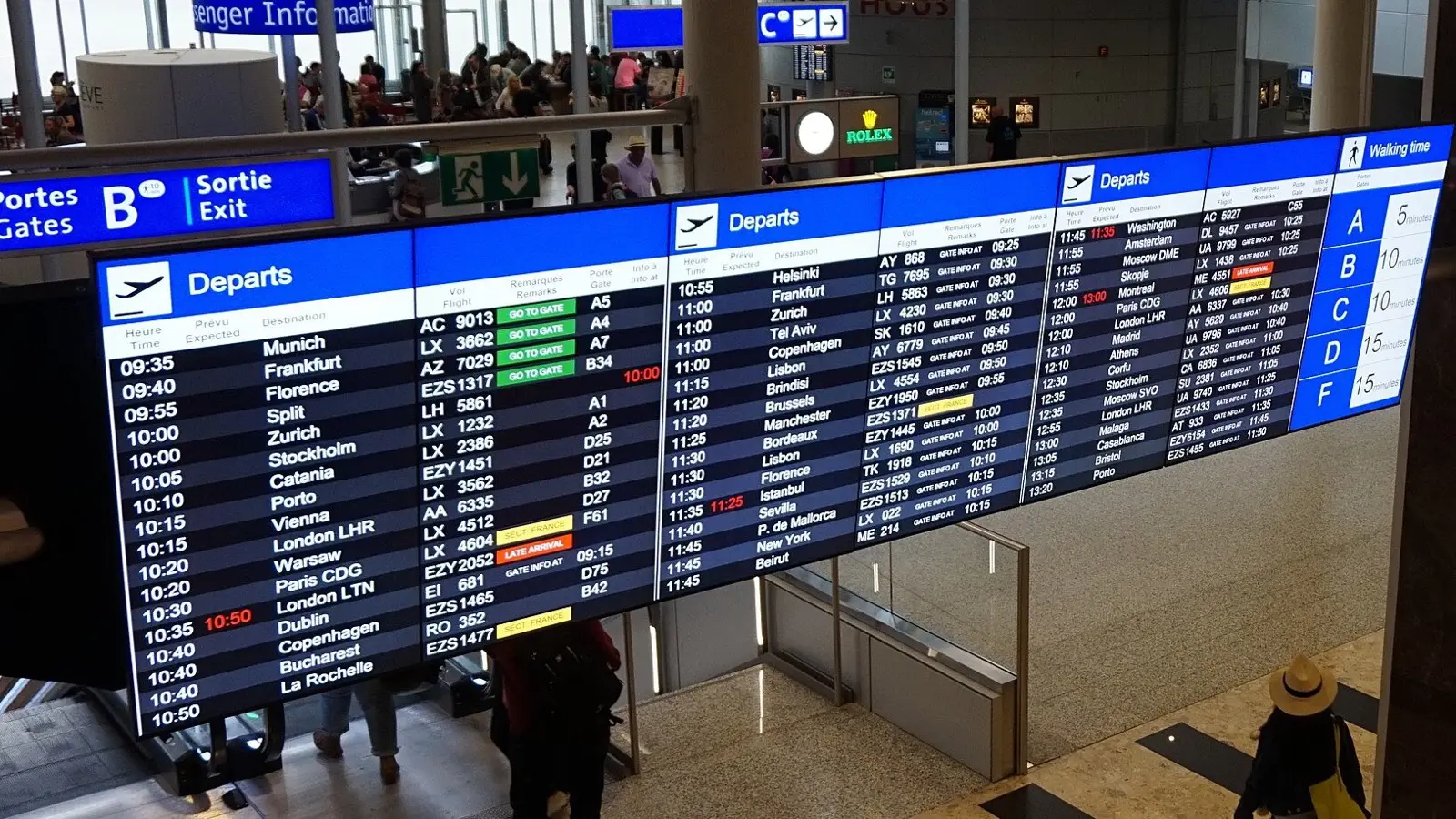
Does clearing cookies or going incognito actually save cash on flights and hotels? We pull back the curtain on airline revenue management engines, fare bucket mechanics, currency routing quirks, and what day-of-week booking data really shows.
Tax-Free Shopping in Japan: How It Works and What Voids It
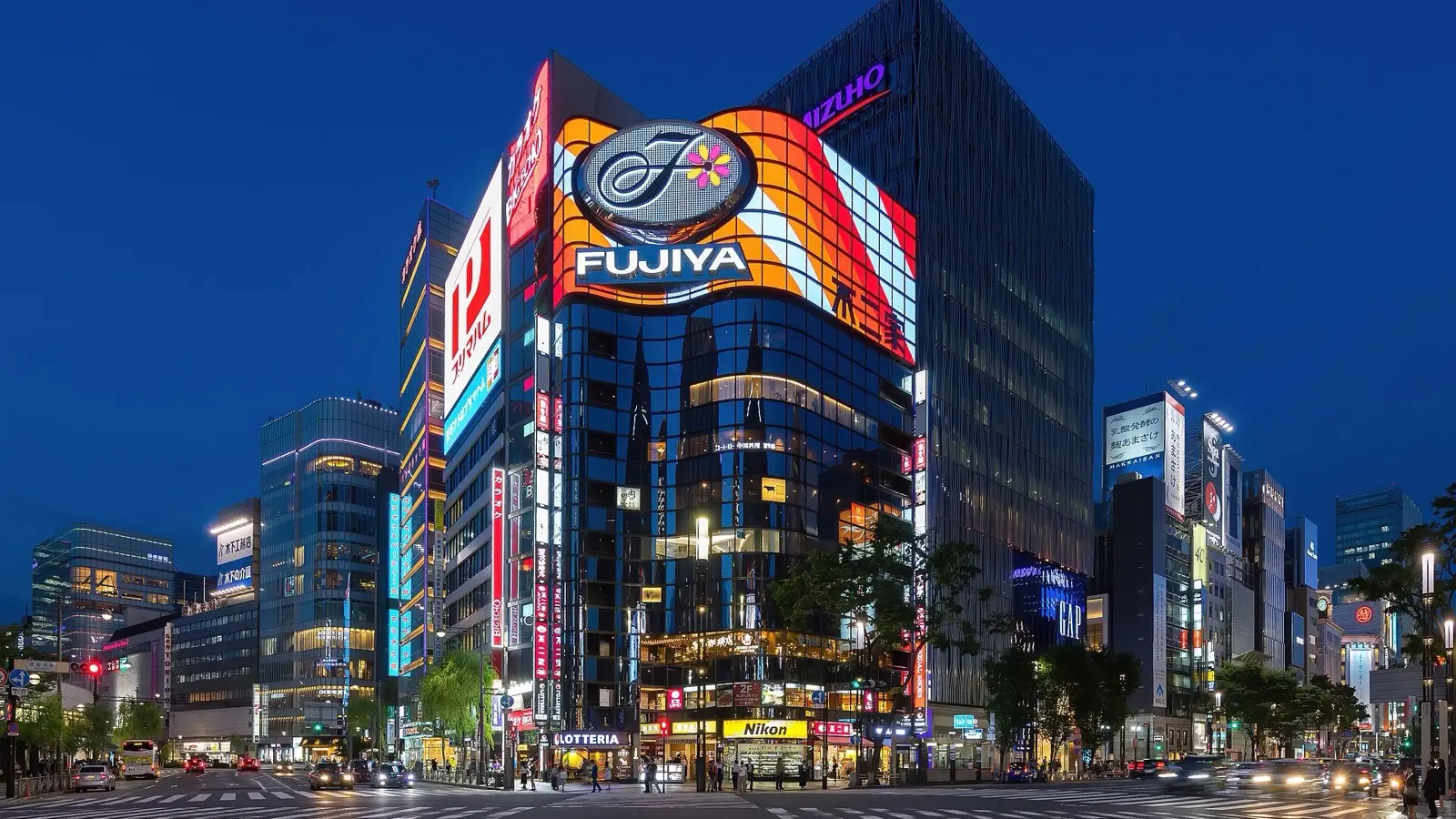
While enjoying ten percent consumption tax exemptions in Japan is a cornerstone of travel, the country enforces rigorous customs data tracking and strict packing rules. From general goods accidentally locked inside tamper-evident consumable bags to department stores taking a 1.55 percent handling fee and airport electronic customs audits clawing back taxes on broken seals, here is your essential guide to navigating Japan duty-free shopping without penalty.
Tokyo's Yanaka Ginza Shitamachi Walk: Crispy Croquettes, Quiet Cat Alleys, and Showa Retro Soul
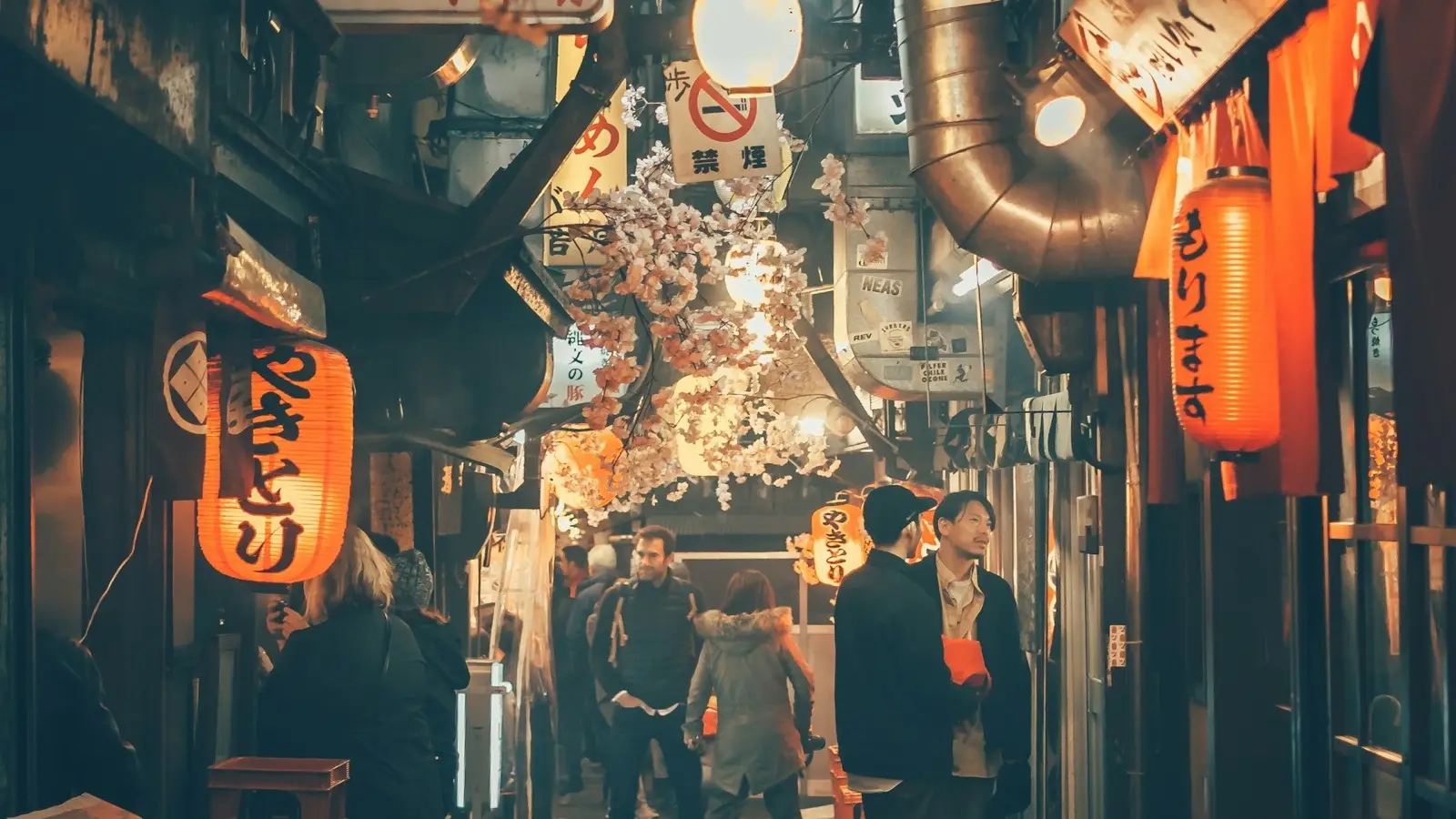
When the sensory overload of Shinjuku's neon billboards and Shibuya's scrambling crosswalks wears thin, seek refuge in Yanesen (the historic triangle of Yanaka, Nezu, and Sendagi), one of the exceedingly rare Tokyo neighborhoods that miraculously escaped both the 1923 Great Kanto Earthquake and World War II firebombings. Beginning from the west exit of JR Nippori Station, this serene walking route descends the famous Yuyake Dandan (Sunset Steps) into the nostalgic, pedestrian-only Yanaka Ginza shopping arcade. From biting into crispy beef menchi-katsu freshly fried at a multi-generational butcher stall to greeting neighborhood alley cats and sipping dark pour-over coffee on the tatami mats of 1938-built Kayaba Coffee, here is your definitive field guide to Tokyo's enduring Showa-era soul.

The Japan Shinkansen Booking Playbook: Mount Fuji Row E Strategy, Oversized Luggage, and Smart EX Savings
Slicing through Japan's industrial and cultural heartland between Tokyo, Kyoto, and Osaka, the Tokaido Shinkansen bullet train network represents the pinnacle of railway engineering. Cruising smoothly at 285 km/h, the Nozomi super-express covers the 515-kilometer corridor in just two hours and twenty minutes. Yet navigating the nuances of seat selection dictates whether your journey becomes a dream sightseeing passage or a cramped logistical hassle. Missing out on the coveted two-abreast 'Row E' window seats when departing Tokyo forfeits uninhibited vistas of Mount Fuji. Furthermore, failing to pre-book dedicated Oversized Baggage seats for luggage whose total dimensions exceed 160 cm triggers an unexpected 1,000 JPY penalty fee enforced by conductors on board. This tactical manual reveals the exact seat reservation rules, paperless Smart EX mobile discounts, oversized luggage exemptions, and post-price-hike JR Rail Pass breakeven mathematics.
Tokyo Shibamata Retro Journey: Taishakuten Temple Relic Carvings, Yamamoto-tei Garden, and Fresh Kusadango Sweets
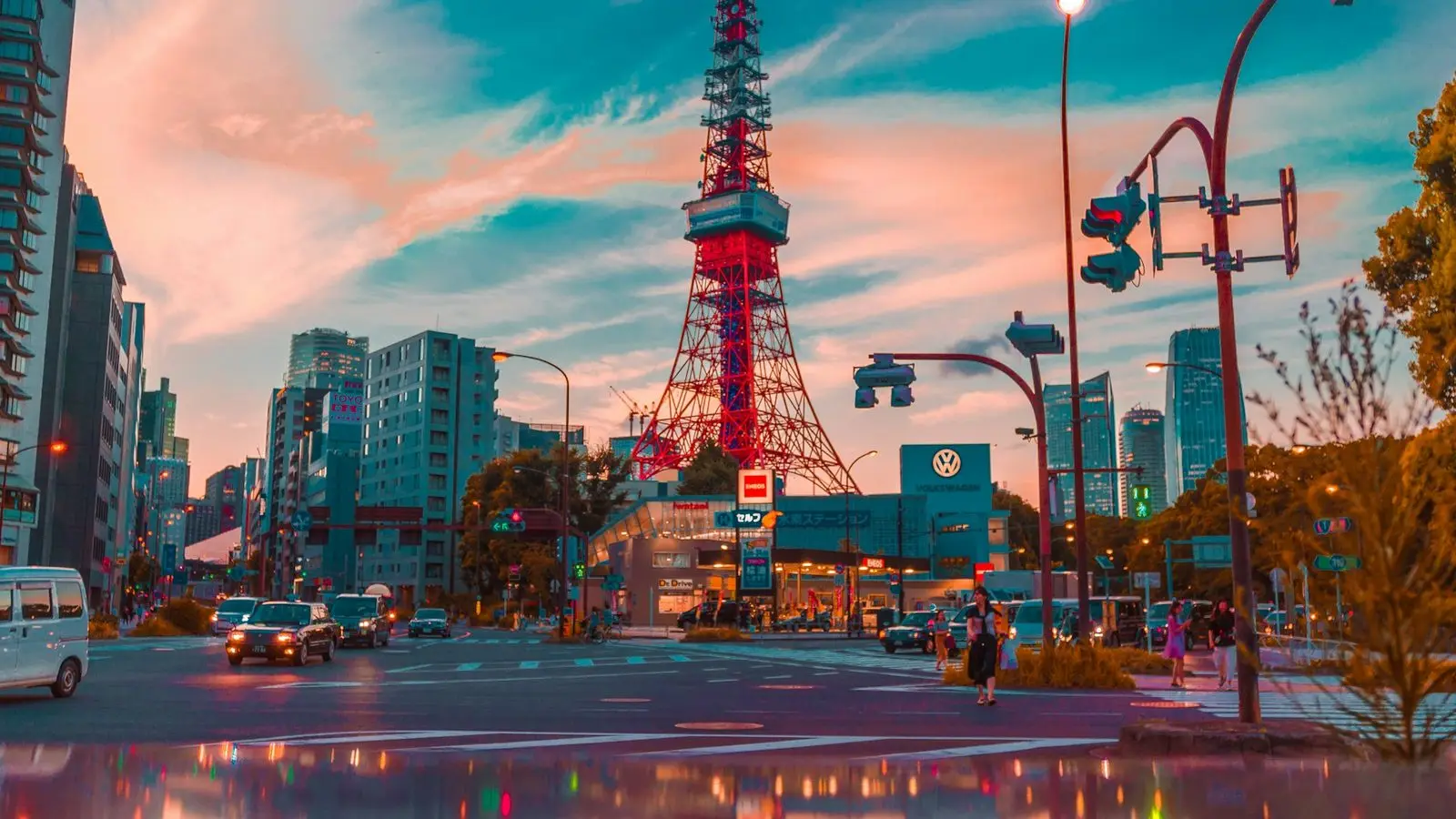
When the hypnotic kaleidoscope of Shinjuku digital screens and Shibuya pedestrian swarms begins to exhaust your senses, head northeast toward the serene time-capsule village of Shibamata in Katsushika ward. Transferring onto the charming single-track Keisei Kanamachi Line shuttle whisks travelers back into the gentle, human-scale Tokyo of the 1960s Showa era. Stepping past the nostalgic bronze statue of wandering peddler Tora-san at the station square, a pedestrian pilgrimage avenue lined with Edo-period wooden facades unfolds before you. Here, the soothing aroma of freshly pounded green mugwort dumplings (Kusadango) and crackling hand-toasted rice senbei drifts through the air. Beyond the historic Daikyo-ji temple gate lies an astonishing museum corridor of intricate, three-dimensional Lotus Sutra wood reliefs, followed by the hybrid Taisho-era architecture of Yamamoto-tei and Edo River hand-rowed ferries.