
Fukuoka Yatai Night Market Odyssey: Street Food Secrets Across Nakasu and Tenjin
From cover charges and drink minimums to district rivalries across Nakasu, Tenjin, and Nagahama, here is how to dine like a local.
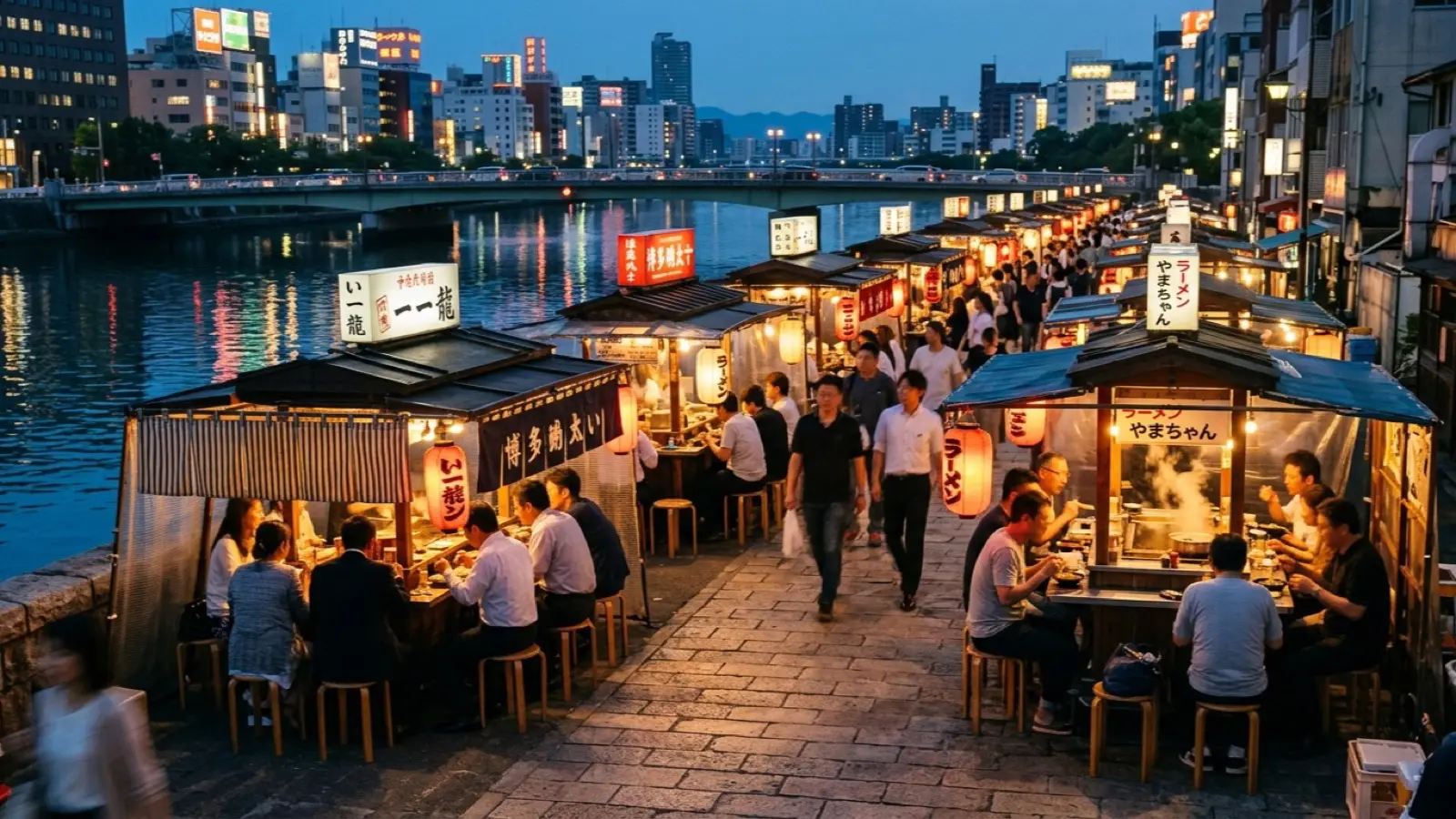
Riverside Twilight Romance: What Makes Fukuoka Yatai Legendary
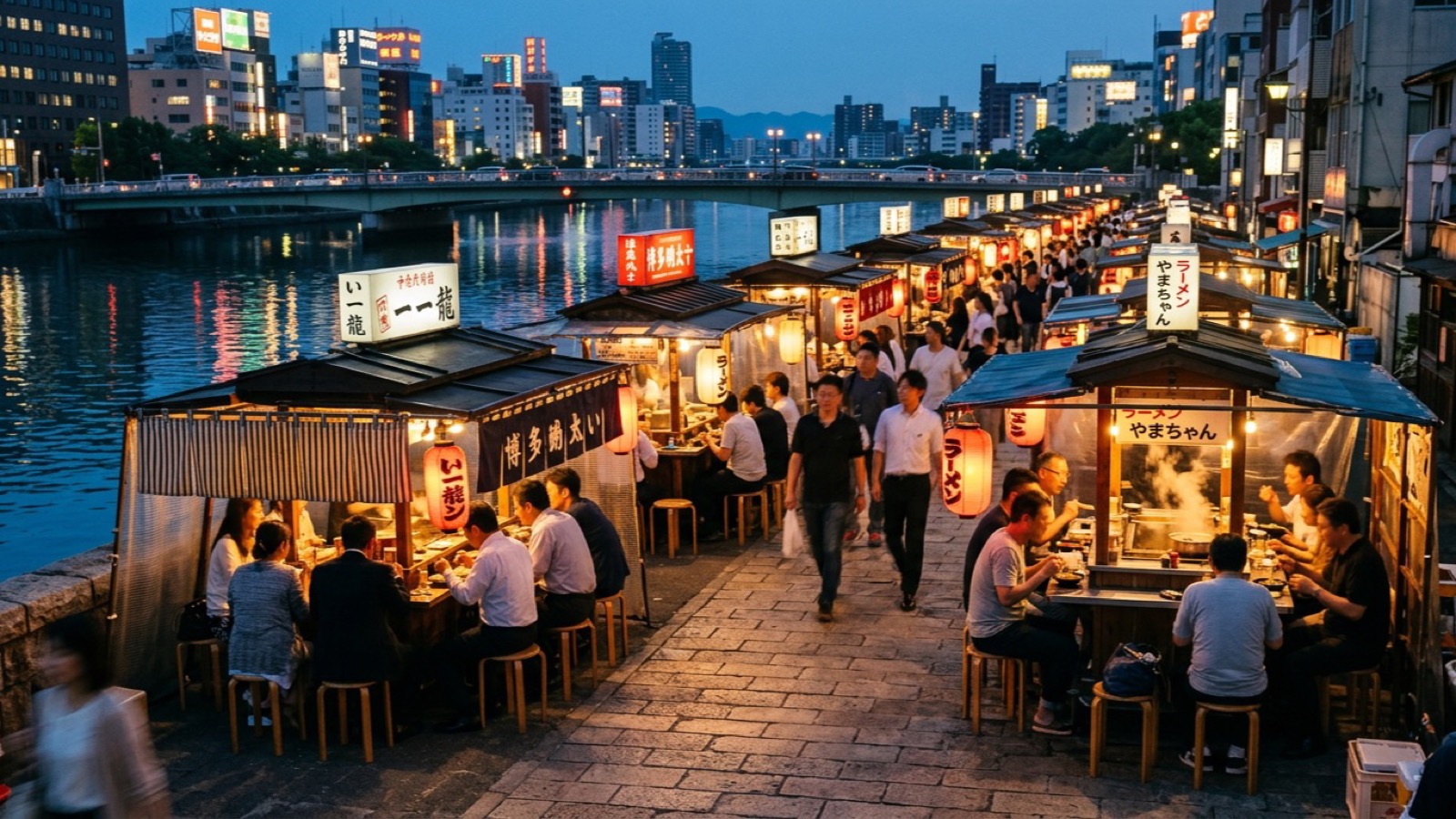
As 6:00 PM approaches, small utility trucks pull up along the sidewalks of central Fukuoka. Wooden mobile stalls on heavy wheels are unloaded from flatbeds, and seasoned craftsmen rapidly assemble gas canisters, cooking burners, and eight to ten wooden folding stools. When red and white lanterns ignite and canvas noren flaps unfurl, quiet pedestrian walkways transform into intoxicating hubs of culinary warmth.
While municipal regulations eliminated open-air street stalls from Tokyo and Osaka decades ago, Fukuoka preserved its roughly one hundred yatai stalls through visionary municipal bylaws and strict sanitation inspections. Only officially licensed masters who pass plumbing, grease collection, and hygiene audits are permitted to operate.
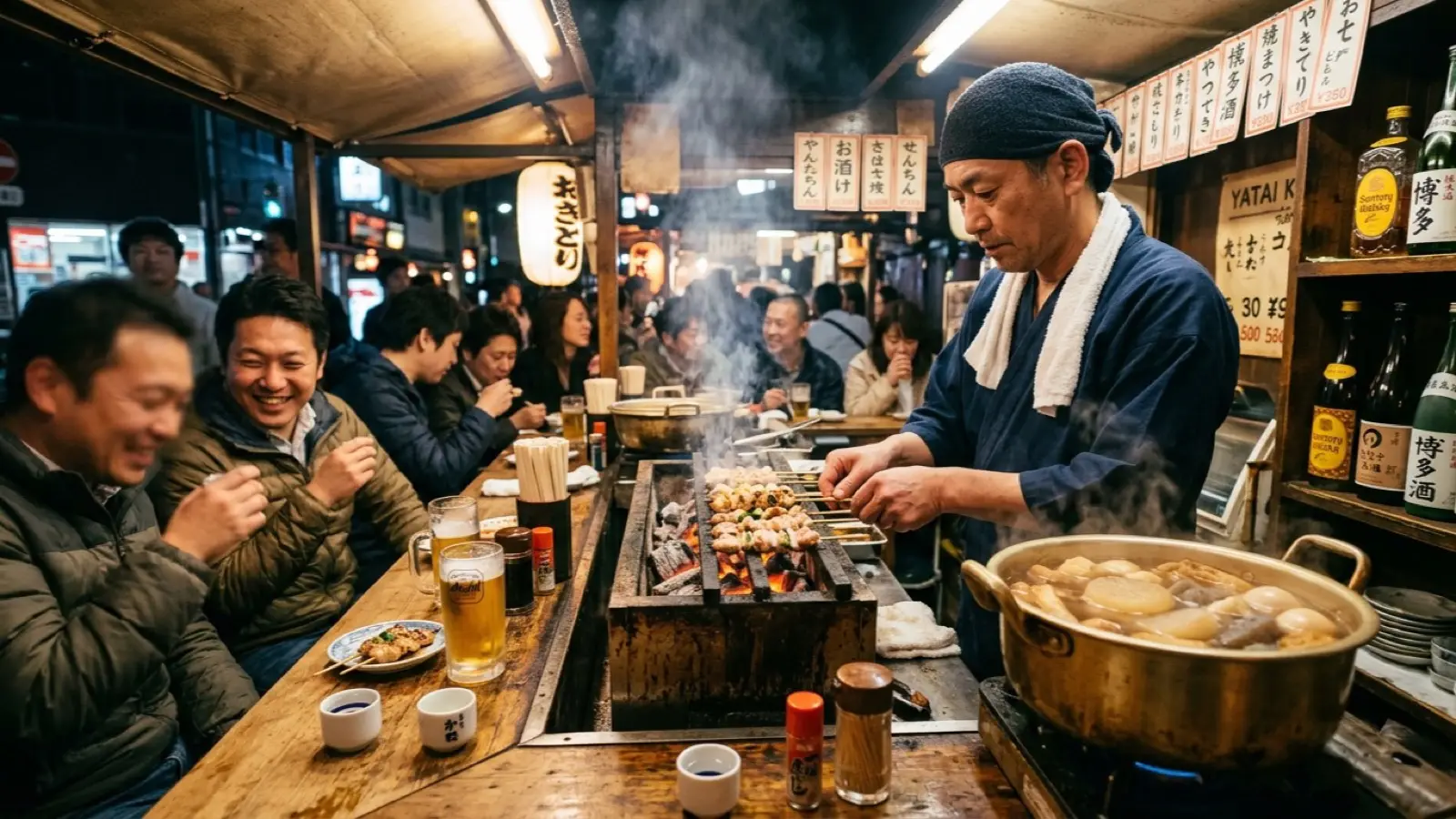
The true magic of a yatai lies in the spontaneous camaraderie born of intimate quarters. Sitting shoulder-to-shoulder on wooden stools, you clink cold draft beer glasses with local salarymen, chatting with the master as he tends glowing coals and ladles simmering broth. It is an unvarnished travel warmth that five-star hotel dining simply cannot replicate.
However, stumbling into a tourist trap without knowing local customs can result in surprise seat charges or unlisted price gouging. Understanding the foundational rules of yatai culture ensures an unforgettable, friction-free evening that maximizes your travel budget.
[Nakasu vs. Tenjin vs. Nagahama] Fukuoka's Three Stalls Districts
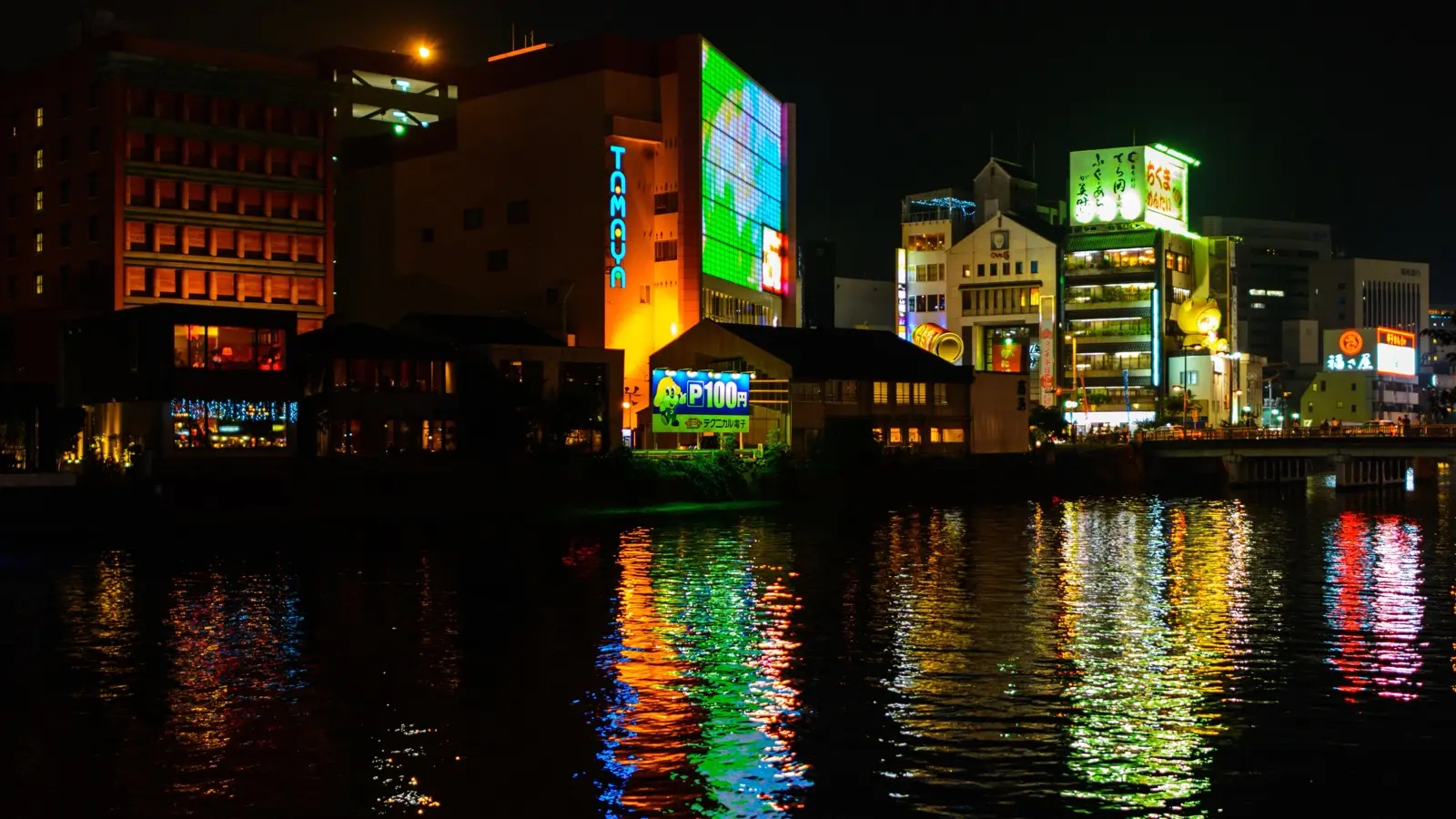
The famous Nakasu district along the Naka River at Seiryu Park features twenty stalls lined up against shimmering water. While neon reflections make it the premier postcard photography backdrop, it carries tourist-trap drawbacks. Pricing runs twenty to thirty percent higher than other areas, and relentless queues discourage relaxed banter with the chefs.
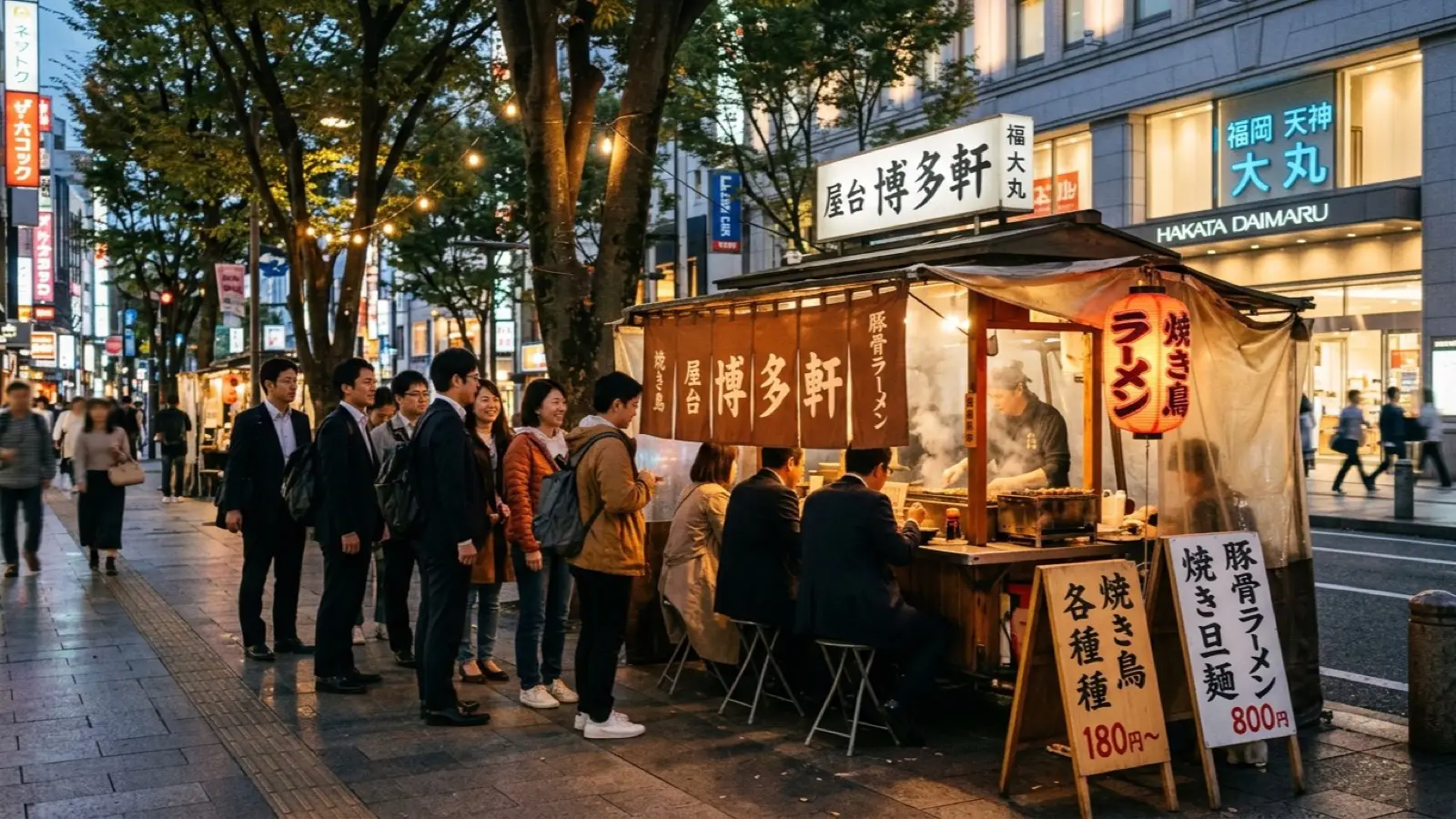
In contrast, the downtown Tenjin sector serves as an authentic evening refuge for local office workers and creative youth. Scattered around the Tenjin subway exits and Hakata Daimaru department store sidewalks, Tenjin hosts innovative concepts including French bistro stalls pouring natural wine, handcrafted cocktail carts, and artisan coffee roasters alongside classic noodle carts.
The third hidden stronghold is Nagahama, the historic birthplace of original Hakata tonkotsu ramen near the central fish market. Recently revitalized under municipal programs, Nagahama offers authentic thin-noodle ramen and charcoal skewers at genuine local rates, welcoming visitors with quiet warmth and virtually no tourist markups.
The golden strategy: stroll the picturesque Nakasu river promenade early in the evening for sunset photographs, then migrate to Tenjin or Nagahama for authentic dining and relaxed late-night drinks.
Seat Charges and Drink Mandates: Three Essential Rules for Beginners
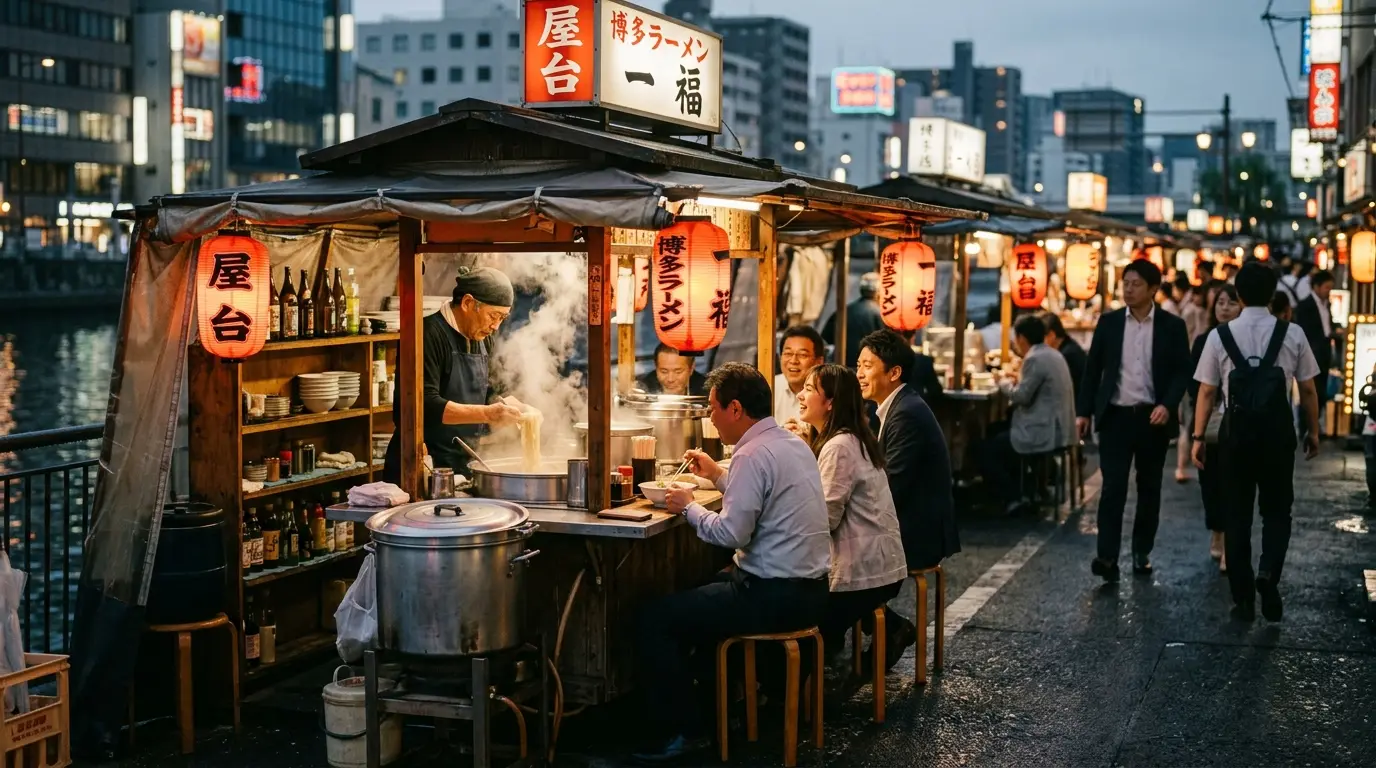
Before taking a seat, always check whether a physical menu with clear prices is displayed outside. Reputable, honest operators prominently display their pricing: ramen between 700 and 900 yen, yakitori skewers from 150 to 300 yen each. Avoiding stalls that lack posted menus or aggressively tout passersby is the golden rule of scam prevention.
The second universal rule is the one-drink minimum per customer. Operating on eight to ten seats requires high turnover to sustain a livelihood. Three people occupying seats while sharing a single bowl of noodles breaches fundamental etiquette; ordering at least one beer, sake, or oolong tea per person is expected.
Third, understand the seating charge (otoushi). Certain stalls serve a tiny appetizer plate upon seating and add 300 to 500 yen per person to the final bill. If in doubt, ask before sitting down: 'Otoushi arimasu ka?' (Is there a cover charge?). Honest masters will immediately clarify their policy.
Lastly, cash remains king. While digital payments and credit card readers are gradually appearing, mobile networks occasionally fail inside compact food carts. Keeping several 1,000-yen notes ready in your wallet prevents payment awkwardness.
Flawless Orders: Tonkotsu Ramen, Yakiramen, and Mentaiko Tamagoyaki
Once settled onto your wooden stool, order a chilled draft beer (nama-biiru), highball, or local barley shochu with water (mizuwari). Accompanying your first drink with tender daikon radish, boiled egg, or beef sinew ladled directly from the brass oden cauldron is the classic local routine.
For your signature appetizer, order Mentaiko Dashimaki (rolled omelet stuffed with spicy cod roe). A whole lobe of savory, salted mentaiko is encased in sweet, delicate dashi egg, bursting with rich umami that pairs exquisitely with cold beer.
Do not miss Yakiramen, Tenjin's famous dry stir-fried ramen. Thin ramen noodles, pork slices, and shredded cabbage are flash-fried on an iron flat-top grill with rich tonkotsu reduction and savory Worcestershire sauce, creating an addictive late-night specialty.
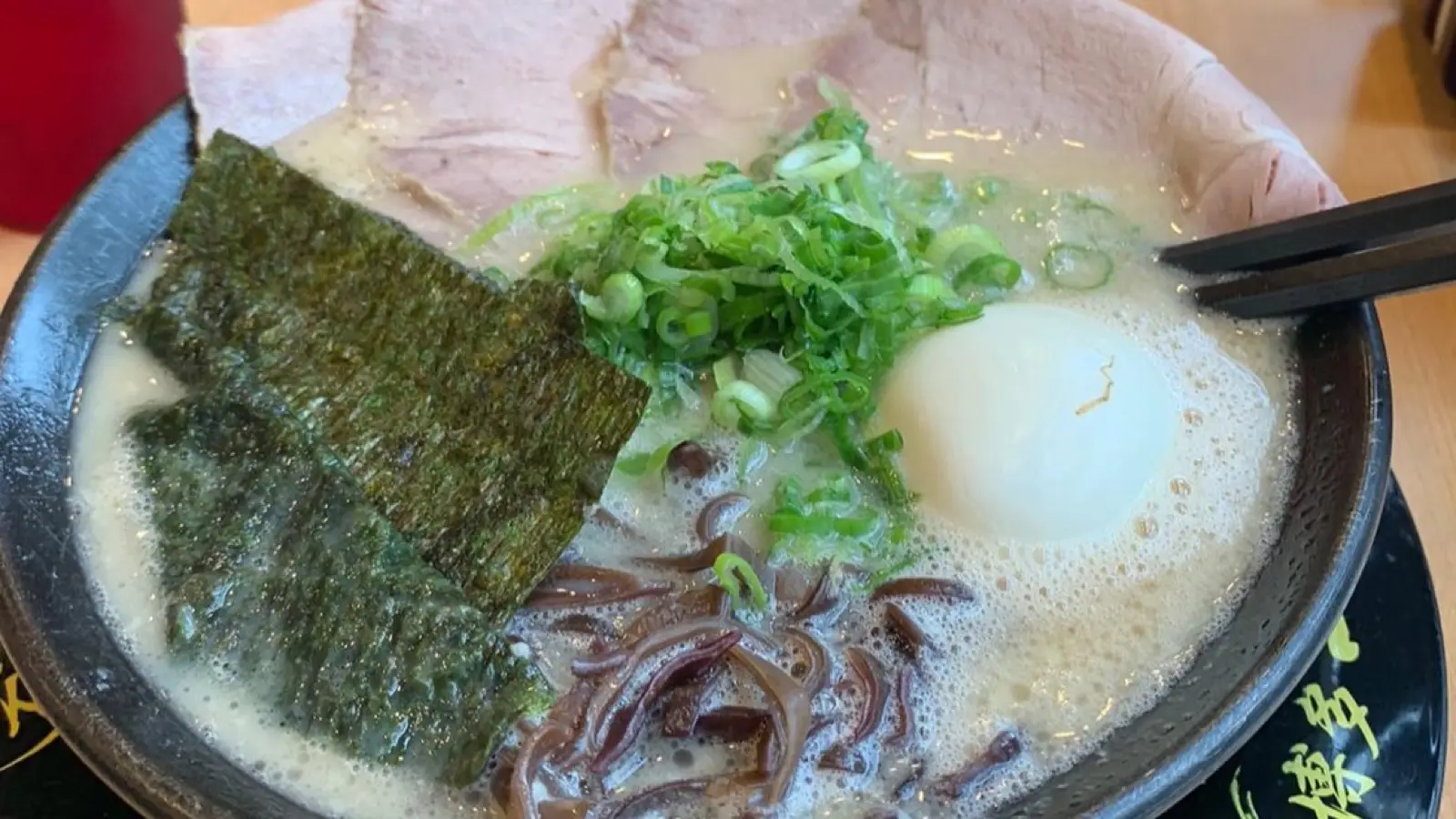
Conclude your night with a bowl of classic Hakata tonkotsu ramen. When ordering your noodle firmness, request barikata (extra firm) or katame (firm). The toothsome bite of thin straight noodles submerged in velvety pork-bone broth provides the ultimate comforting nightcap.
Restroom Navigation, Turnaround Etiquette, and the Senbero Crawl
A crucial practical consideration is restrooms. Due to their compact temporary structure, yatai stalls contain no plumbing or bathrooms. Asking the master, 'Toire wa doko desu ka?' will yield quick directions to nearby public park facilities, convenience stores, or subway stations. Inform your companions before stepping away.
Additionally, yatai are not intended for lingering over multiple hours like standard izakayas. When other patrons are queuing outside in the evening chill, finishing your meal and vacating your stool within forty-five to fifty minutes upholds the community ethos.
Rather than anchoring at a single stall, adopt the local tradition of hashigozake (bar hopping). Order a skewer and a drink at one stall, then stroll down the block to sample dumplings or ramen at another. You will experience the pinnacle of senbero (getting comfortably tipsy for a thousand yen) while keeping spending reasonable.
Rubbing shoulders with strangers over steaming bowls under the Fukuoka evening breeze creates memories that linger far longer than conventional sightseeing. Let the warmth of the broth and genuine human hospitality welcome you into the true soul of Hakata.
Frequently Asked Questions
Field-tested answers to transit navigation, neighborhood choices, and payment traps.
Q1.What time do Fukuoka yatai food stalls typically open and close?
Q2.How do you queue when a yatai stall is completely full?
Q3.Are credit cards or mobile payments accepted at yatai stalls?
Q4.Is Nakasu or Tenjin better for first-time visitors?
The Smart Traveler's Essential Toolkit
Prepare instant mobile data, private airport transfers, and skip-the-line passes in one place.
Pick a base in Fukuoka by your route
Choose the places you want to see and get the neighbourhood with the shortest travel.
Compare Fukuoka Hotel Rates
Find the cheapest channel across Agoda and major booking engines with Tripdify.
Share This Guide with Your Companions
When shared via chat or social media, a curated summary card is sent along.
Recommended Guides
The Fukuoka Insider Booking Guide: 5 Rules for 4-Star Stays in Tenjin & Hakata
A complete guide comparing Hakata Station vs Tenjin hotel zones, avoiding DCC currency markup with JPY payments, and handling local accommodation taxes.
Fukuoka Transit & Neighborhood Blueprint: Airport Bus Secrets, Metro Hacks, and Hakata vs Tenjin
How to bypass crowded airport terminal shuttles with direct buses in Fukuoka, master contactless subway gates, and pick the best base between Hakata and Tenjin.
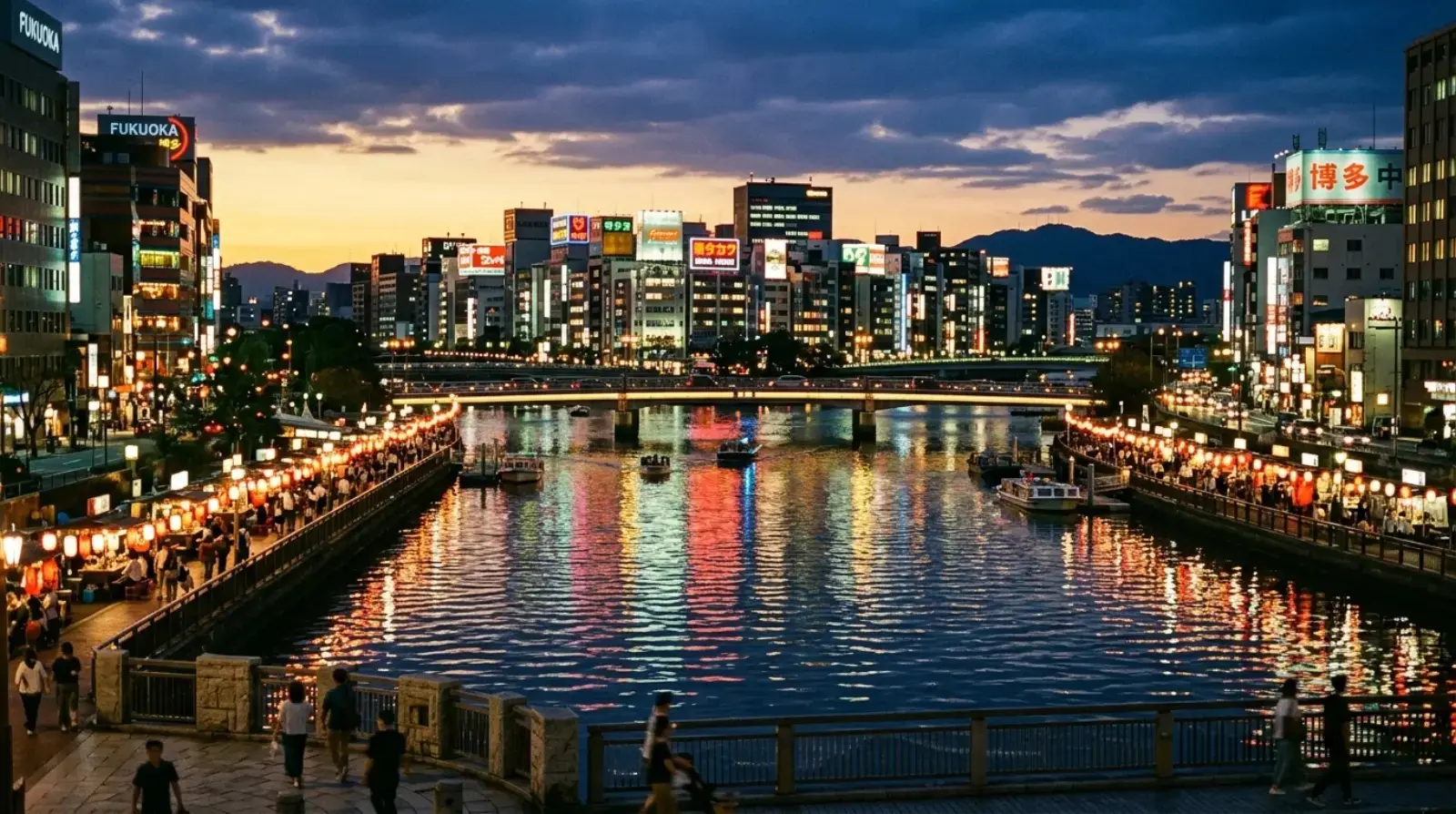
Fukuoka Day 1 Arrival Playbook: Two-Stop Airport Subway Escape, Hakata Ramen, and Nakasu Yatai
From reaching Hakata Station in five subway minutes to securing station lockers, ordering authentic tonkotsu ramen with custom firmness, and navigating Nakasu yatai etiquette. A veteran guide to your first 24 hours.
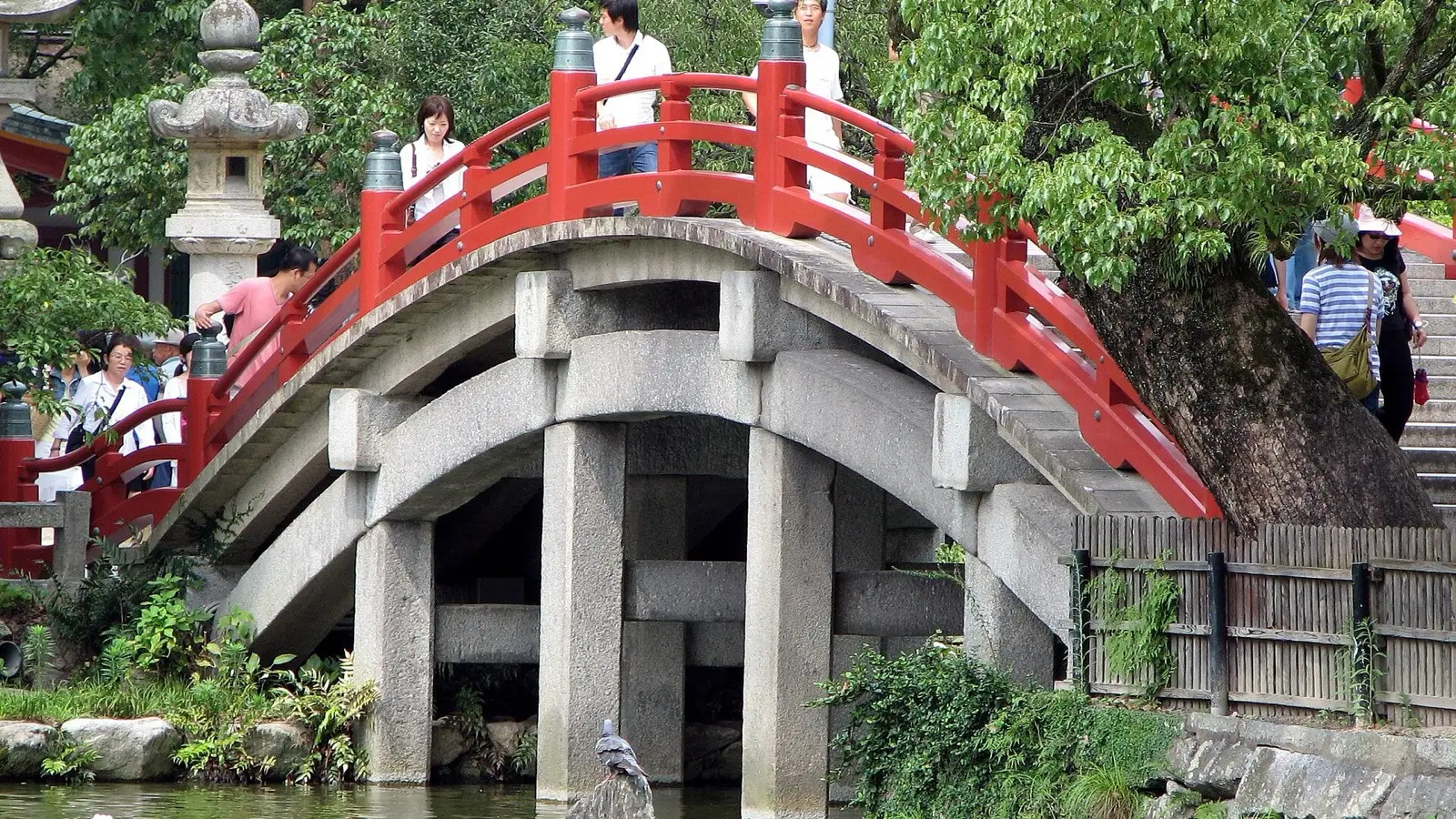
Fukuoka Day 2: Dazaifu Tenmangu Morning, Ohori Park Tranquility, Tenjin Arcades, and Motsunabe Feasts
Day 2 immerses you in Fukuoka's finest cultural textures: riding the Nishitetsu express to ancient Dazaifu Tenmangu for crispy plum rice cakes, unwinding along the weeping willows of Ohori Park, exploring Tenjin Underground Mall's vaulted corridors, and dining over bubbling motsunabe beef offal hotpots.
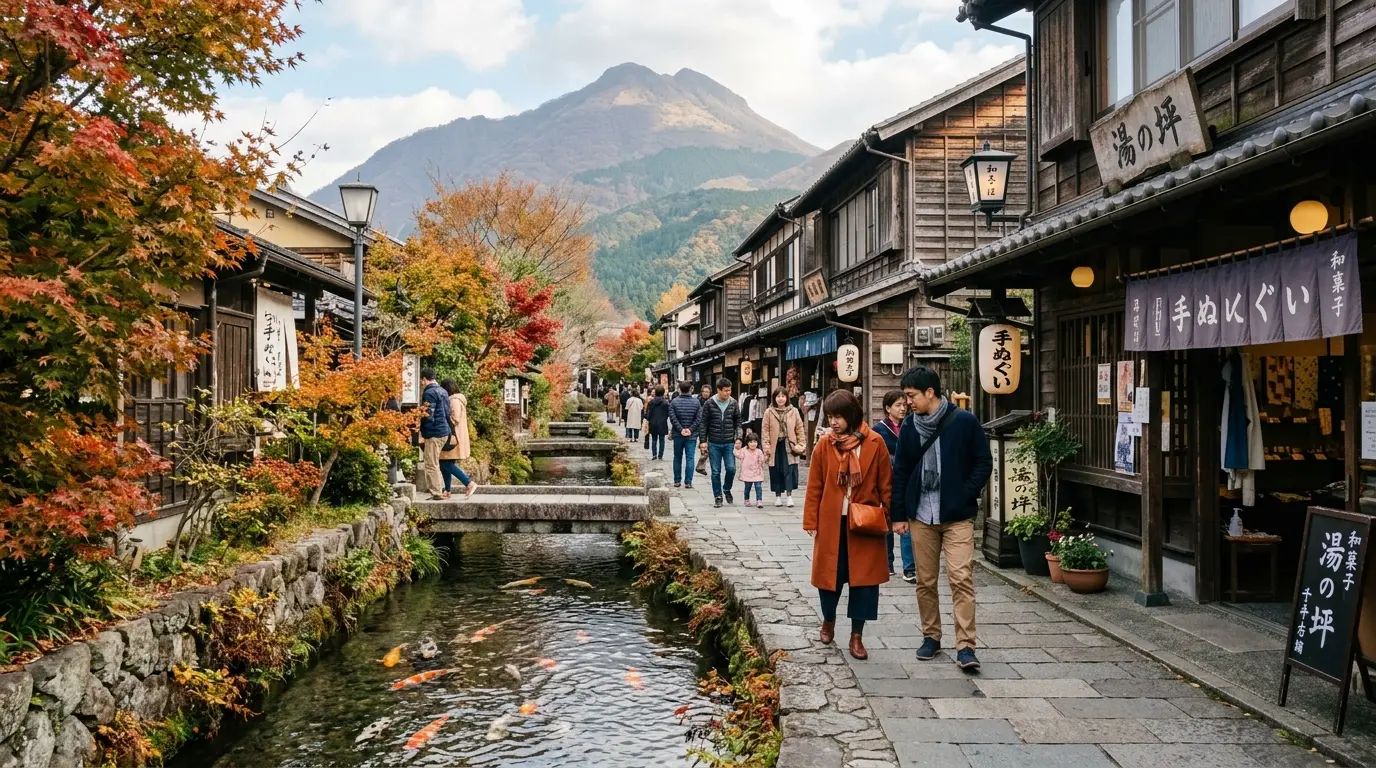
Fukuoka Day 3: Kushida Shrine, Canal City, Hakata Station Sweets, and 5-Minute Airport Access
The ultimate finale for your Fukuoka journey: morning serenity at eighth-century Kushida Shrine, dynamic musical water shows at Canal City Hakata, souvenir hauls at Hakata Hankyu, and world-class subway airport transit clocking in at just five minutes flat.
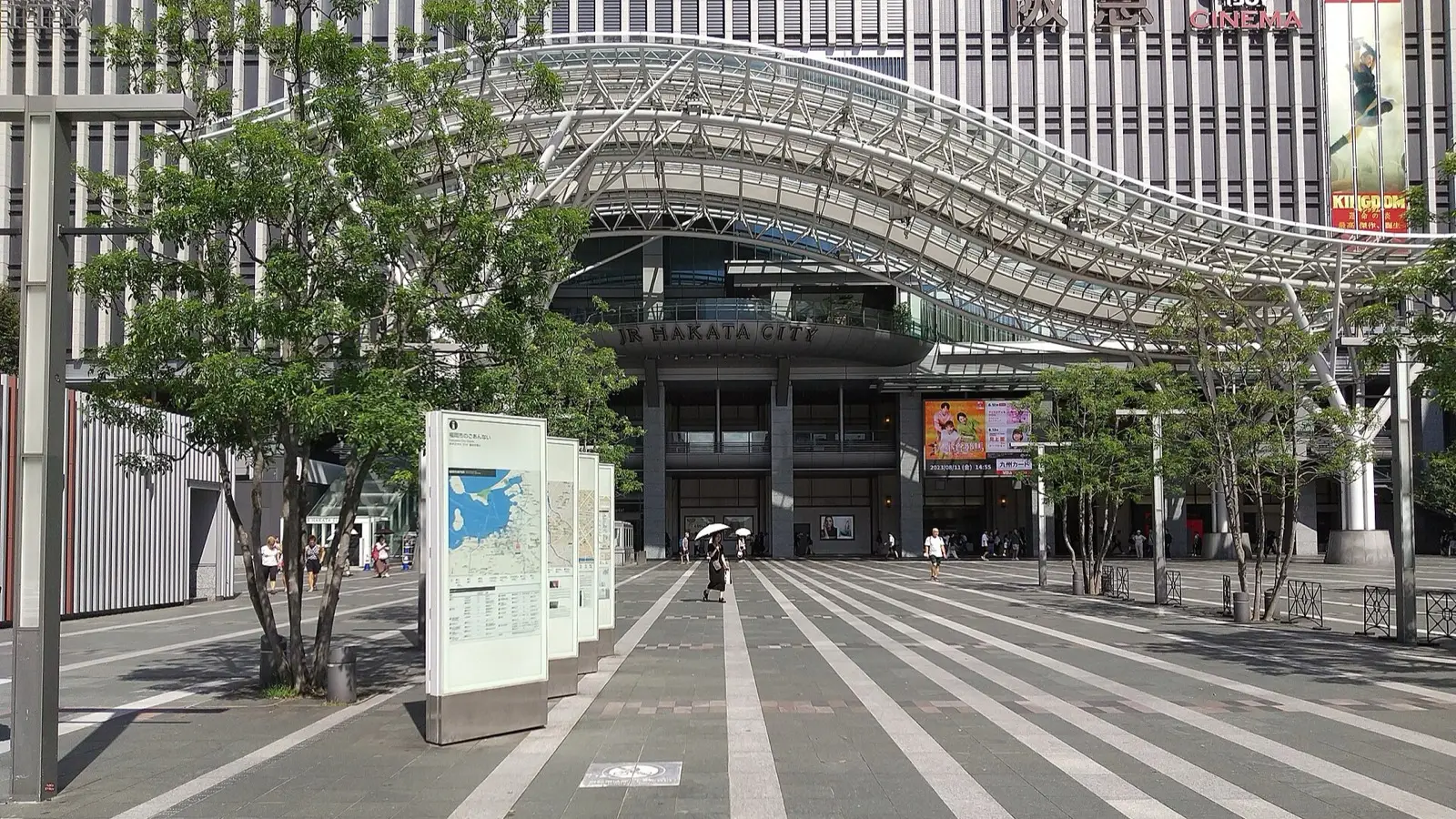
Fukuoka Hotel Curation: Hakata Station vs Tenjin, Transit Hubs, and Nightlife Stays
The eternal question when planning a trip to Fukuoka is whether to stay in Hakata or Tenjin. From Hakata Station's unrivaled transit power just five minutes by subway from the airport, to Tenjin's lively department stores and nightlife, plus riverside Nakasu in between, we curate four standout stays tailored to your travel priorities.
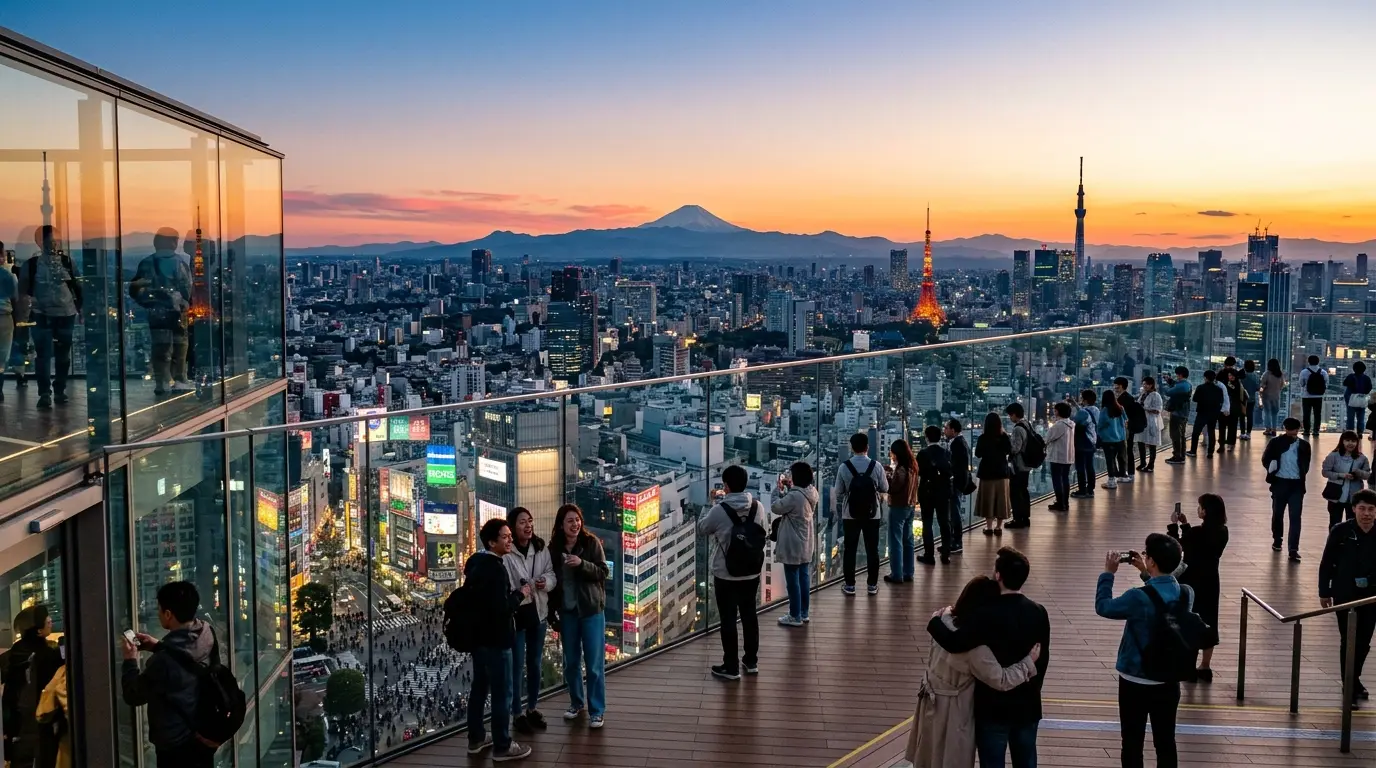
Before Regretting a 13-Sqm Shoebox: The Tokyo 3-Zone and 14-Day Booking Playbook
Comparing room footprints across Shinjuku, Ginza, and Ueno, locking in sudden 14-day cancellation drops, and eliminating DCC fees with clean Yen checkout.
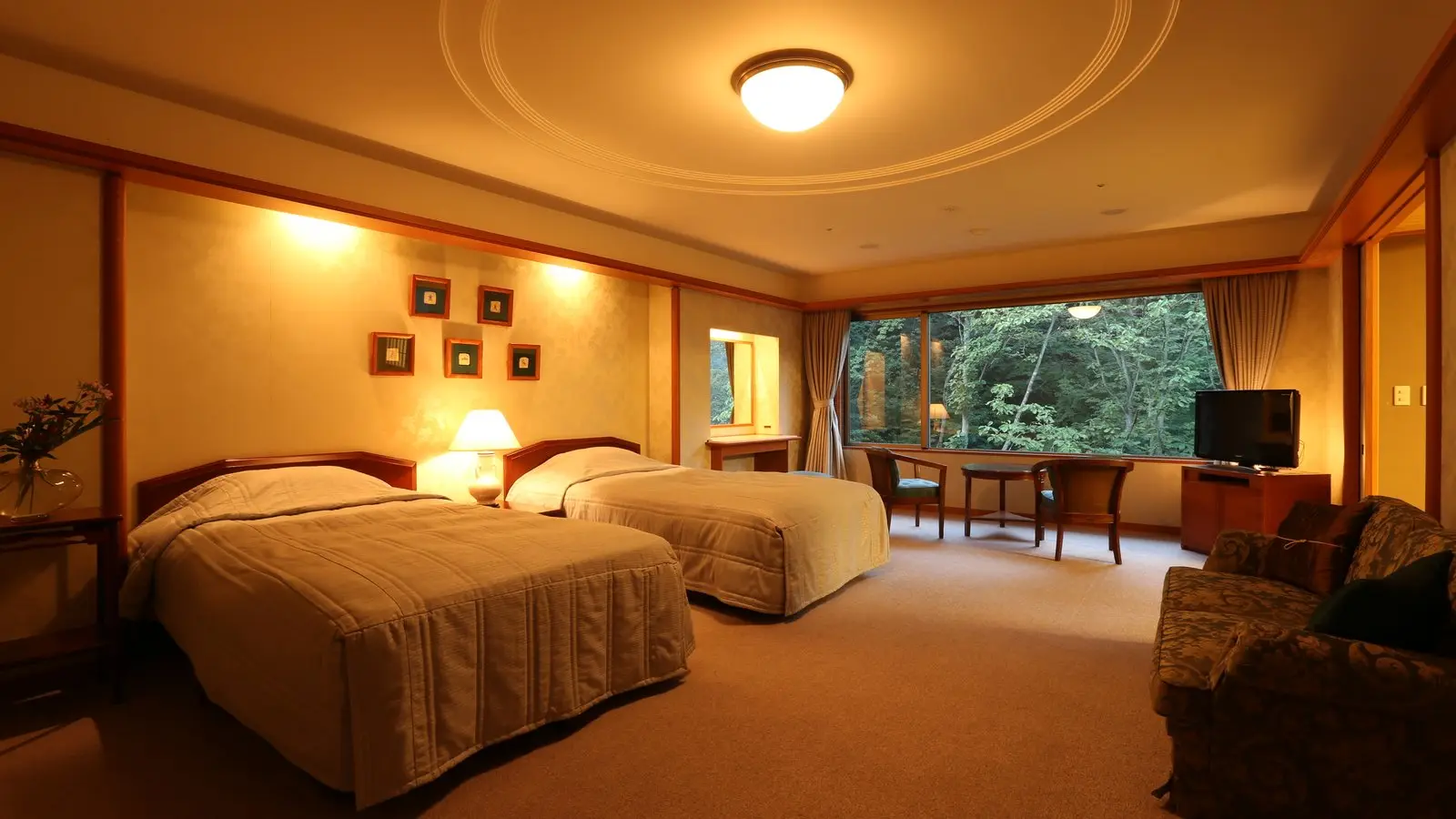
Tokyo Value Hotels Playbook: 7 Smart Yamanote Stays, Onsen Baths and OTA Rate Hacks
Even amid yen fluctuations, central Tokyo hotel rates have soared. Learn how to secure Yamanote loop line hotels at half the price of Shinjuku, compare onsen bath chains like Dormy Inn, trigger secret Agoda VIP and Booking.com Genius discounts, and dodge hidden currency fees with yen settlement.
Tokyo Transit Survival Blueprint: Airport Rail Hacks, Metro Pass Math, and Yamanote Hubs
How to choose between Keisei Skyliner and Narita Express, avoid the Tokyo Subway Ticket trap, use Apple Wallet Suica, and select the ideal hotel base in Tokyo.
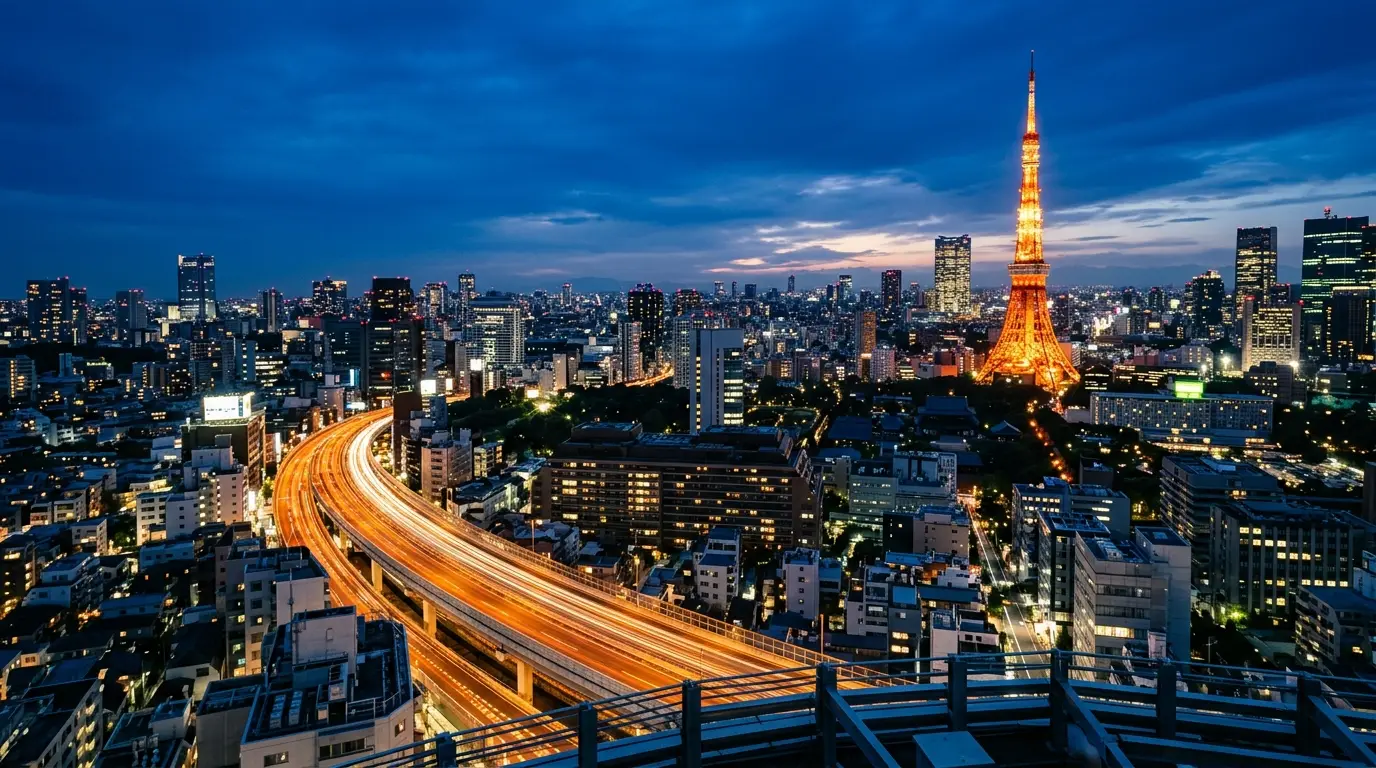
Tokyo Day 1 Arrival Blueprint: Narita Skyliner, Frictionless Ramen, and 24-Hour Settlement
From stepping off at Narita Airport to mastering high-speed trains, navigating Tokyo's sprawling transit hubs, ordering counter ramen effortlessly, and catching sunset from Roppongi Hills. A definitive guide for your first 24 hours in Tokyo.
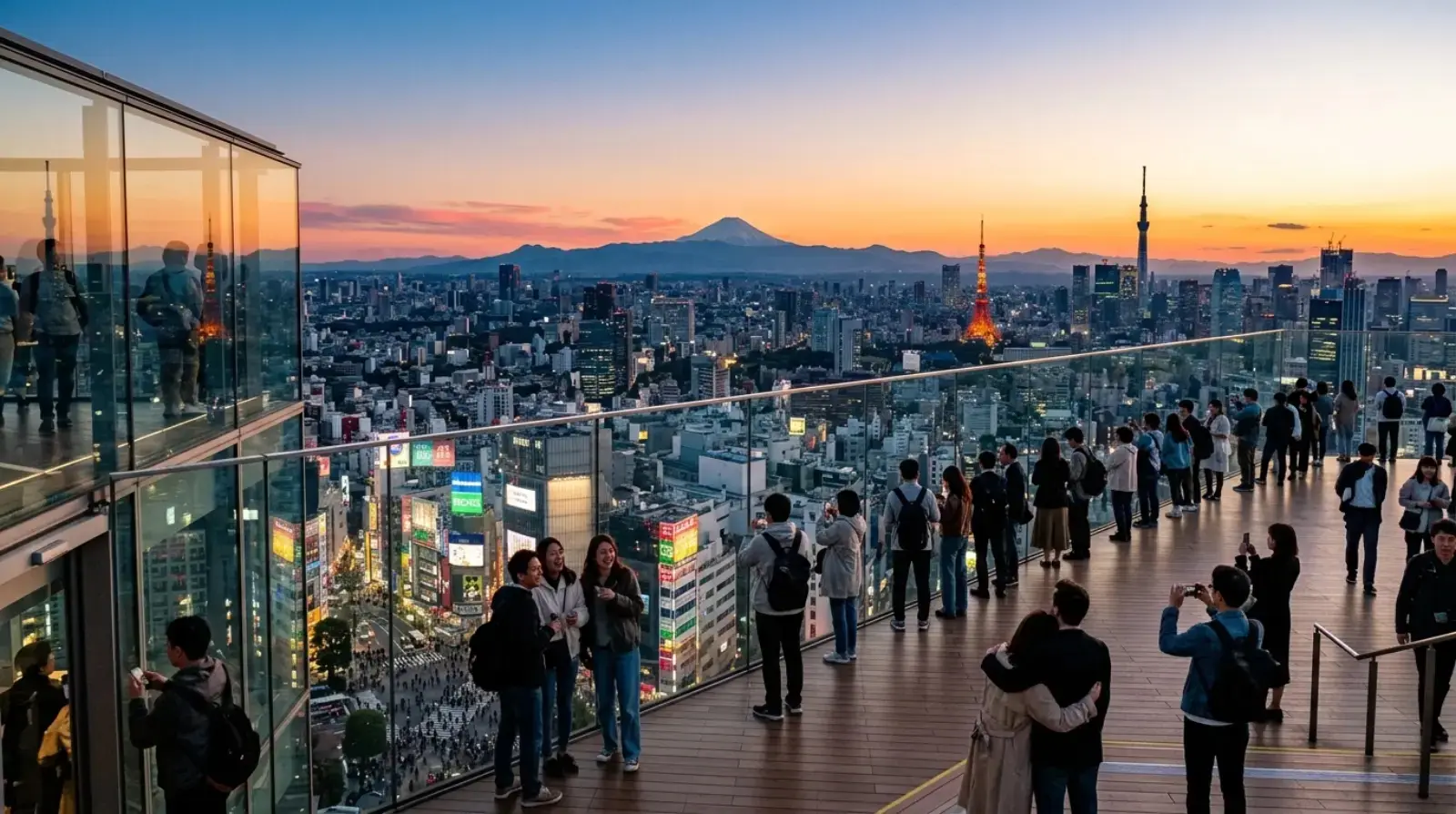
Tokyo Day 2 Iconic Sights Playbook: Shibuya Sky Sunset Booking, Harajuku Alleys, and Roppongi Nightscapes
Securing prime sunset slots atop Shibuya Sky, navigating hidden boutiques along Harajuku Cat Street, immersing in the forested serenity of Meiji Jingu, and marveling at the crimson glow of Tokyo Tower from Roppongi Hills. A masterclass in Day 2 pacing.
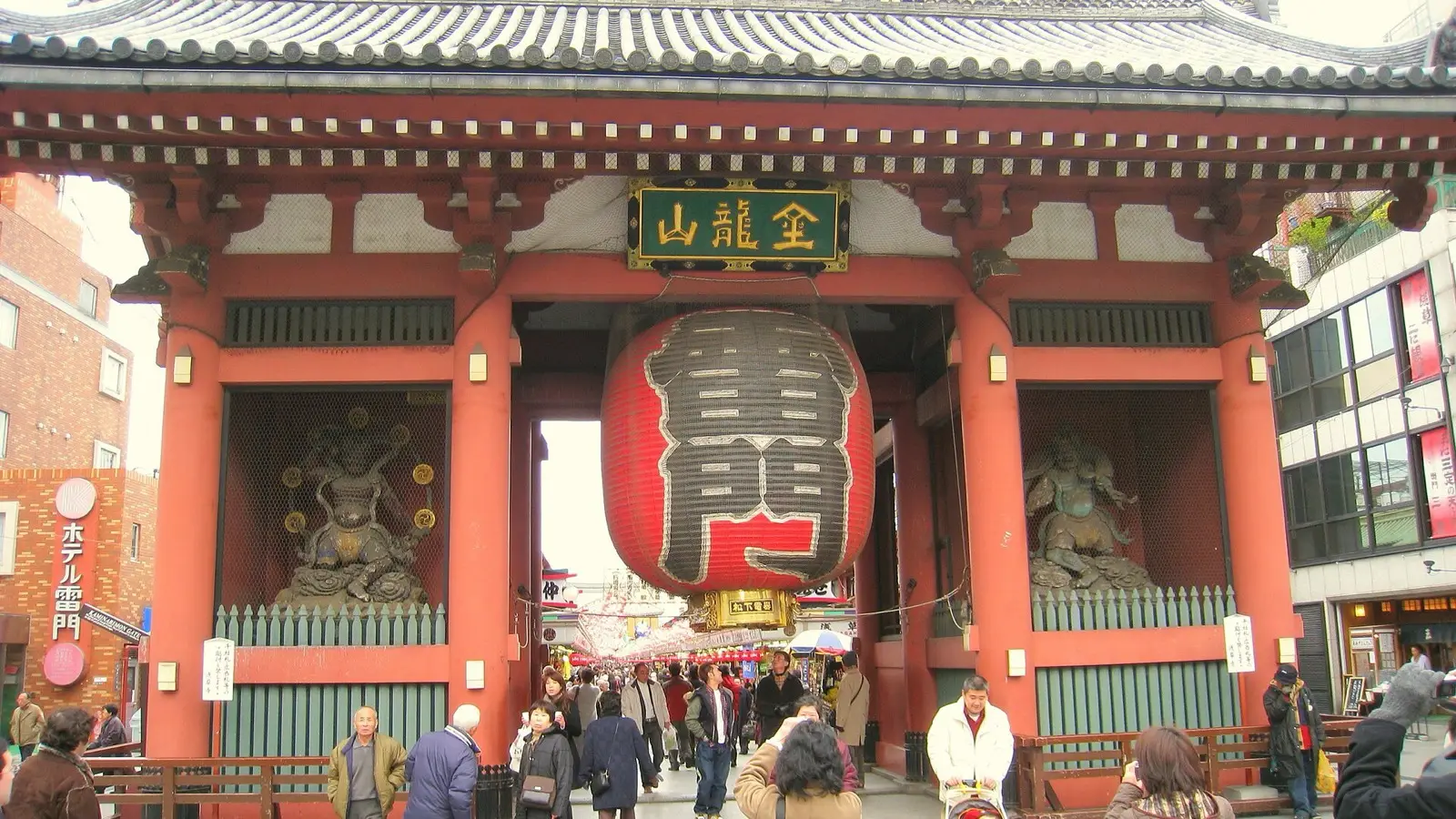
Tokyo Day 3: Asakusa Heritage, Akihabara Pulse, Ginza Depachika, and Seamless Airport Departure
The ultimate finale for your Tokyo stay: tranquil morning worship at Sensoji, retro subculture in Akihabara, Ginza Six architectural rooftop views and basement depachika feasts, capped by seamless Skyliner and N'EX airport connections.